by HRH Princess Eugene Majuru
Colonial Constitutions as Instruments of Control
When the British colonized Zimbabwe (then Southern Rhodesia), they quickly realized that direct military conquest alone was insufficient to maintain long-term control. They therefore turned to law and constitutional engineering as tools of domination.
Constitutions were crafted not to promote equality, but to institutionalize racial hierarchies and neutralize indigenous political structures:
Africans were denied equal political rights and excluded from legislative bodies.
Chiefs were stripped of autonomous authority, reduced to “Native Commissioners’ assistants.”
Traditional power structures that could challenge settler dominance were systematically dismantled.
Thus, the colonial constitution was never a neutral document. It was a weapon of suppression, designed to secure settler hegemony.
The Targeting of the Mbari Clan
The Mbari clan, custodians of Harare and its surrounding areas such as Mazowe aka Mazoe and Mount Hampden, became a special target of this constitutional suppression.
Geostrategic Importance of Harare
Harare (formerly Salisbury) was established as the colonial capital.
To entrench settler presence, colonial authorities sought to erase the authority of the indigenous custodians of that land.
Exclusion from Chieftainship
While other regions retained chiefs (albeit weakened), Harare was constitutionally barred from reinstating traditional chieftainship.
This exclusion was not coincidental: it was a deliberate attempt to prevent the Mbari from reclaiming recognition as rulers of the capital.
Clan Scattering as Policy
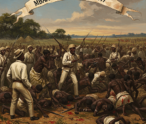
The Mbari were scattered across Zimbabwe — from Mashonaland West to Central, and beyond.When the Mbari genocide happened the clan dispersed in many directions and settled fsr away from each other as they were in danger of being killed. This displacement continues till today.
This continued displacement was designed by British colonisers to erase clan cohesion and obliterate the possibility of a unified claim to the ancestral seat in Harare.
Independence Without True Independence
Zimbabwe attained political independence in 1980. Yet, paradoxically, the colonial constitutional framework remained largely intact.
Inherited Structures: Instead of drafting an entirely new people-cantered constitution immediately after independence, the state continued operating under frameworks shaped by the Lancaster House Agreement of 1979.
Restrictions on Chieftainship: Even in post-independence Zimbabwe, Harare remains without traditional chieftainship, meaning the Mbari remain disenfranchised in their ancestral land.
Selective Restorations: While other displaced chieftaincies were reinstated, the Mbari’s continued exclusion reflects not only colonial legacy but also the failure of the independent state to decolonise fully.
This contradiction leads to the fundamental question: How can Zimbabwe claim full independence when its constitutional foundations still reflect colonial suppression?
The Broader Implications
The Mbari story highlights a larger national dilemma:
Partial Sovereignty: True sovereignty requires not only political freedom but also cultural and constitutional reclamation. Erasure of Identity: By refusing to restore the Mbari chieftainship in Harare, the constitution effectively continues the colonial project of erasing indigenous authority.
Capital Without Custodians: Unlike other African capitals where indigenous custodians are recognized (e.g., the Ga Mantse in Accra, Ghana), Harare exists as a capital divorced from its ancestral rulers.
Why the Mbari Suppression Matters
Historical Justice: The Mbari were custodians of Harare long before colonial occupation. Denying them recognition perpetuates historical injustice.
Cultural Continuity: Chieftainship is not only political; it is cultural and spiritual. To suppress it is to break the link between people and land.
National Unity: A Zimbabwe that excludes one of its founding clans cannot claim complete reconciliation with its past.
Comments
About Author