BY DR MASIMBA MAVAZA
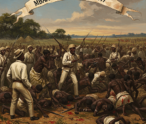
London, England. (News of The South) – As the blood of the heroes flows beneath our freedom, reminding us that every expression of joy and every fruit of freedom was watered by the blood of our heroes.
It will become history if we do not remind each other. Because of this need to keep our heroes alive in our minds we have set aside the second Monday of August, of every year to take time to reflect on the lives of the heroes who were not corrupted neither were they overcame by pride but laid down their lives for our freedom. Our youth have quickly sold their souls for the fiction of the world. They have no connection with the men and women who did not have a chance to be ushered in the computer age. They have forgotten that men and women used their bodies to cement the foundation of today’s freedom. With the new generation now gracing our land the sweat and blood of our heroes has been weakened in its power. They have forgotten who has been a hero and who has sacrificed for them to be here today.
hat must be in knowlledge is the heritage and background of the people who gave us the freedom and life we have today. The only country we can call ours in the whole universe is Zimbabwe. We have to hold it dear it is the only country we have and indeed it is ours.
Our heroes are not a myth they graced this land once the breathed they had feelings once. They were indeed here in Zimbabwe. Who are they?
JOSIAH TONGOGARA
Tongogara was born in Selukwe now Shurugwi on 4 February 1938. He was killed on the 26th of December 1979 soon after the Lancaster House Agreement which gave birth to the independent Zimbabwe.
Tongagara grew up in Shurugwi, on a farm which was owned by Ian Smith‘s parents. Tongogara’s parents were employed at this farm and subsequently Tongogara also became an employee on that same farm. He was educated up to Standard Six and after failing to be enrolled for secondary education, he left the country for Northern Rhodesia (present-day Zambia) in 1960.
It is believed that the death of Percy, Tongogara’s brother, influenced Tongogara to join the nationalist movement, becoming a politician-cum-military genius. Percy drowned in the Kafue River and Tongogara believed that this was a result of political foul play.
Tongogara began his revolutionary activities in 1963 in Zambia, working in ZANU PF’s youth wing while waiting to be sent to China to receive military training. After completing his training, he led the first group of people undergoing military training in China, in 1966.
In April 1975, Tongogara was arrested and detained in Zambia. Whilst in prison, he signed the agreement which was forwarding the formation of a joint military force, the Zimbabwe People’s Army (ZIPA) which was to be composed of guerrillas from ZANLA and the Zimbabwe People’s Revolutionary Army (ZIPRA), which was the military wing of ZAPU. In 1976, Tongogara was acquitted and he managed to attend the Geneva Conference which was held in the same year.
Ironically the hero who defied guns was to be killed in a car accident. Who ever killed him if indeed it was true will also die one day. But Zimbabwe would never had been free without Tongo. The hero per excellence.
2.JOSHUA NKOMO
Nkomo was born on the June 19, 1917, in Bukalanga or Bulilima, now referred to as Semokwe Reserve, Matabeleland South and was one of eight children. His father, Thomas Nyongolo Letswansto Nkomo, worked as a preacher and a cattle rancher and worked for the London Missionary Society.
After primary school in Southern Rhodesia (present-day Zimbabwe) he went to South Africa to complete his education in Natal and Johannesburg. Returning home in 1945, he worked for the Rhodesian Railways and by 1951 had become a leader in the trade union of the black Rhodesian railway workers. In 1951 he also obtained an external B.A. degree from the University of South Africa, Johannesburg.
Nkomo became increasingly political, and in 1957 he was elected president of the African National Congress (ANC), the leading Black Nationalist organisation in Rhodesia. When the ANC was banned early in 1959, Nkomo went to England to escape imprisonment. He returned in 1960 and founded the NDP. In 1961, when the NDP was banned, he founded ZAPU. Nkomo helped lead the guerrilla war against white rule in Rhodesia, but his forces are perceived to have played a relatively minor role compared with those of Mugabe, who headed ZANU. The two groups were joined in an uneasy alliance known as the Patriotic Front after 1976.
After white-ruled Rhodesia became black-ruled Zimbabwe in 1979–80, Nkomo and ZAPU were increasingly eclipsed by Mugabe’s ZANU, whose base of support was the majority Shona people. ZANU resoundingly defeated Nkomo’s ZAPU in the 1980 parliamentary elections. The parties’ relationship remained strained, and overt ethnic strife broke out between the Shona and the Ndebele people after Mugabe dismissed Nkomo from the cabinet in 1982. After a complete breach between the two leaders for a few years, they agreed in 1987 to merge their respective parties in order to try to achieve ethnic unity in their country.
In 1990, Nkomo became a vice president under Mugabe. In 1996 Nkomo was diagnosed with prostate cancer. His deteriorating health forced him to retreat from public life, although he continued to hold the title of vice president until his death in 1999.
Joshua Nkomo is also known as “Mdalawethu” and is by far one of the most celebrated fallen heroes and his legacy has endured.
SALLY MUGABE nee Sarah Francesca Hayfron
Sally was born in 1931 in the Gold Coast now known as Ghana, then a British colony. Sally and her twin sister, Esther, were raised in a political family, which was part of the growing nationalist politics in the colonial Gold Coast. She attended Achimota Secondary School and she went on to university to study before qualifying as a teacher.
Sally Hayfron Mugabe was a trained teacher who asserted her position as an independent political activist and campaigner. She demonstrated this activism as early as 1962 when she was active in mobilising African women to challenge the Rhodesian constitution which resulted in her being charged with sedition and sentenced to five years imprisonment, part of which was suspended.
She had met her future husband, Robert Mugabe, at Takoradi Teacher Training College where they were both teaching.
In 1978 she was elected ZANU deputy secretary for the Women’s League. In 1980 she assumed a new, national role as spouse of Zimbabwe’s first black Prime Minister. She was elected secretary-general of the Zimbabwe African National Union Patriotic Front (ZANU-PF) Women’s League at the party’s congress in 1989. Amai Sally Mugabe founded the Zimbabwe Child Survival Movement and launched the Zimbabwe Women’s Co-operative in Britian in 1986.
She died of kidney failure on the 27th of January 1992 in Harare. Sally Mugabe left behind the legacy of a nation’s mother figure who had passionate care for the less privileged with a particular focus on women and children. Due to her commendable work through the Child Survival Movement initiative, Sally was posthumously honoured with a Zimbabwe Postage stamp in her honour. A school in Harare was also named after her due to her role as the mother-figure of the nation who had compassion for the less privileged. A residential area in Harare was also named Sally Mugabe Heights due to her commitment towards the empowerment of women particularly widows and single mothers.
There are many more people that helped Zimbabwe achieve independence many of whom we may never know and the work and lives of these fallen heroes and heroines whether highly celebrated or unsung in the public space is appreciated and reflected on Heroes’ Day and it is only fitting that every Zimbabwean know a little bit more about them.
Solomon Mujuru
Solomon Mujuru (born Solomon Tapfumaneyi Mutusva; 5 May 1945 – 15 August 2011), also known by his nom-de-guerre, Rex Nhongo, was a Zimbabwean military officer and politician who led Robert Mugabe’s guerrilla forces during the Rhodesian Bush War. In post-independence Zimbabwe, he went on to become army chief before leaving government service in 1995. After leaving his post in the Zimbabwe National Army, he got into politics becoming Member of Parliament for Chikomba on a Zanu PF ticket. He was generally regarded as one of the most feared men in Zimbabwe. His wife, Joice Mujuru, became Vice-President of Zimbabwe in 2004 and was later fired for wanting to topple Mugabe.
Rex Nhongo was burnt while in his sleep at his farm in Beatrice. The cause of the fire is still a mystery but one day our children will bust the mystery. Heroes do not die they just rest.
Tapfumaneyi Maurice Nyagumbo Mhofu ye mukono (12 December 1924 – 28 April 1989) was a Zimbabwean politician.
Nyagumbo was born in Makoni near Rusape, and had his primary education at St Faith Anglican Mission and St Augustine’s Penhalonga. Working in South Africa in the 1940s, he joined the South African Communist Party.In 1955 he became a founding member of the Zimbabwe Youth League. In 1959 he joined the African National Congress and later that year he was detained. He spent most of the subsequent years until 1979 in prison in Rhodesia. During his time in detention he wrote a book, With the People: An Autobiography From the Zimbabwe Struggle, which was published soon after independence (Allison & Busby, 1979). He associated with Joshua Nkomo and James Chikerema, and they were arrested together in 1964.
Nyagumbo was elected to the House of Assembly in 1980. He was a ZANU (the Zimbabwe African National Union) representative in the 1985 talks to merge ZANU and Nkomo’s ZAPU.[2] Nyagumbo was later was appointed Minister of Mines, and then was Minister of Political Affairs until 1988, when he became Senior Minister of State for Political Affairs. He resigned from his ministerial post and his post as administrative secretary of the governing party on 13 April 1989, in the wake of a report investigating corruption involving the sale of vehicles on the black market by Willowvale Motor Industries.
Nyagumbo committed suicide in 1989, aged 64, by drinking rat poison after being charged with perjury during so-called Willowgate scandal,ashamed of his role in the Willowvale scandal and that he had betrayed the trust of the people he had fought so hard to liberate. Nobody ever carried such trust. Nyagumbo did not value his life he paid for the shame. That was a heroic stance. We remember Mhofu Nyagumbo forever.
Jason Ziyaphapha Moyo
(1927–1977) was founder of the Zimbabwe People’s Revolutionary Army (ZIPRA).
Jason was born in Plumtree to a Kalanga family.[1] Having trained as a builder Jason became an active trade unionist in Bulawayo, joining the African Artisans Union there.
The JZ Moyo High School was named after him.
Edgar Zivanai Tekere (1 April 1937 – 7 June 2011), nicknamed “2 Boy”,was a Zimbabwean politician. He was the second and last Secretary General of the Zimbabwe African National Union (ZANU) who organised the party during the Lancaster House talks and served in government before his popularity as a potential rival to Robert Mugabe caused their estrangement.
oseph Luke Culverwell, was a Zimbabwean liberation fighter, psychologist and Former Minister of State in the President’s Office responsible for National Scholarships and Former Deputy Minister of Education and Culture. He passed on in 1993. He was active in getting Zimbabwe to accept the threat of HIV and Aids, especially for the young population.
Herbert Wiltshire Pfumaindini Chitepo (15 June 1923 – 18 March 1975) led the Zimbabwe African National Union until he was assassinated on March 1975. Although his murderer remains unidentified, the Rhodesian author Peter Stiff says that a former British SAS soldier, Hugh Hind was responsible.
We are here because someone was there before us. Someone died for us. This is the time we must ask our selves what can we do to make our country better. What can I do for my country. Blood was spilled now we sit down and remember in great honour those who died for us.
Vazet2000@yahoo.co.uk
Comments
About Author