By Princess Eugene Majuru
The Lake Kariba ferry disaster has left Zimbabwe facing a painful question: could this tragedy have been prevented?
At least 44 people have died after the passenger ferry Mbuya Nehanda capsized on Lake Kariba on Tuesday, with the death toll expected to rise as search and recovery operations continue. The vessel was designed to carry about 90 passengers but was reportedly carrying more than 120 people, with some accounts putting the number as high as 153.
Behind those numbers are mothers, fathers, children and entire families whose lives have been shattered.
For many Zimbabweans, the tragedy is not simply about bad weather or an unfortunate accident. It raises serious questions about regulation, enforcement, maintenance, passenger capacity, emergency preparedness and the responsibility of government authorities to protect citizens using public transport.
Was this disaster preventable?
Lake Kariba is not an ordinary body of water. It is a vast reservoir where communities depend on boats and ferries for transportation, fishing and access to remote areas.
That makes proper maritime safety regulation absolutely essential.
Reports indicate that the ferry was severely overcrowded. Survivors have also described passengers raising concerns about the rough conditions and asking for the vessel to turn back before it eventually capsized.
These accounts demand answers.
Who inspected the vessel before it departed?
Was its passenger capacity enforced?
Were sufficient life jackets available for every passenger, including children?
Was the vessel mechanically and structurally fit for service?
Was the weather assessed before departure?
Were the operators properly licensed and trained?
And most importantly, why was an overcrowded vessel allowed to carry people across one of Africa’s largest artificial lakes?
These are not questions that should disappear once the bodies have been recovered and buried.
Government oversight must be questioned
It would be wrong to declare the final cause of the disaster before the official investigation is completed. Strong winds and rough water have been identified as factors, and authorities must establish precisely what happened.
However, bad weather alone cannot explain the presence of an overcrowded passenger vessel on the lake.
Government has a responsibility to establish and enforce safety standards for public transport.
Zimbabwe has experienced previous boating tragedies on Lake Kariba. In 2021, five people died after a boat carrying eight people capsized, while other fatal accidents have occurred on the lake in subsequent years. In 2023, four people died after another boat capsized near Tsetse Island.
The warning signs have therefore been there for years.
Local fishermen have previously called for patrol boats to monitor the lake and ensure that operators comply with safety regulations.
So the question is: what lessons were actually implemented?
Kariba deserves better
Kariba is one of Zimbabwe’s most important tourism destinations. International and domestic visitors come to experience its wildlife, fishing, scenery and enormous lake.
Tourism can generate significant economic activity, but the people who live in Kariba must not remain spectators while tourism develops around them.
Where are the properly equipped hospitals?
Where are the reliable emergency services?
Where are the modern transport systems?
Where are the properly maintained roads and infrastructure?
Where are the rescue vessels capable of responding immediately to an emergency on the lake?
A world-class tourism destination should not have communities depending on unsafe or inadequate transport simply because they have no alternative.
Tourism development must benefit local people, not merely the businesses and investors operating around them.
The same pattern exists elsewhere
The concerns raised by the Kariba disaster also reflect a broader problem in Zimbabwe.
In mining communities, enormous mineral wealth is extracted while local residents frequently complain about environmental degradation, damaged land, pollution and inadequate infrastructure.
Communities living alongside the country’s natural resources should not be left with environmental damage while others enjoy the economic benefits.
The same principle applies to Kariba.
If Kariba is important enough to generate tourism revenue, electricity and commercial activity, then it is important enough to receive safe transport, modern healthcare, emergency response infrastructure and serious government investment.
We must stop waiting for disasters
Perhaps the most disturbing part of many disasters is what happens afterwards.
A tragedy occurs.
There is mourning.
There are statements from officials.
There are promises.
There may be new equipment or a new boat.
Then public attention moves on.
That cannot be the cycle anymore.
Zimbabwe needs a comprehensive and independent review of passenger transport safety on Lake Kariba.
Every passenger vessel should undergo regular, documented inspections. Passenger limits must be strictly enforced. Life jackets must be available and properly fitted for every passenger. Weather conditions must be monitored. Operators must meet clear licensing and competency requirements. Rescue boats and emergency medical services must be strategically positioned around the lake.
And inspection records should not simply sit in government offices. The public has a right to know that vessels carrying their families are safe.
Do not wait for another funeral
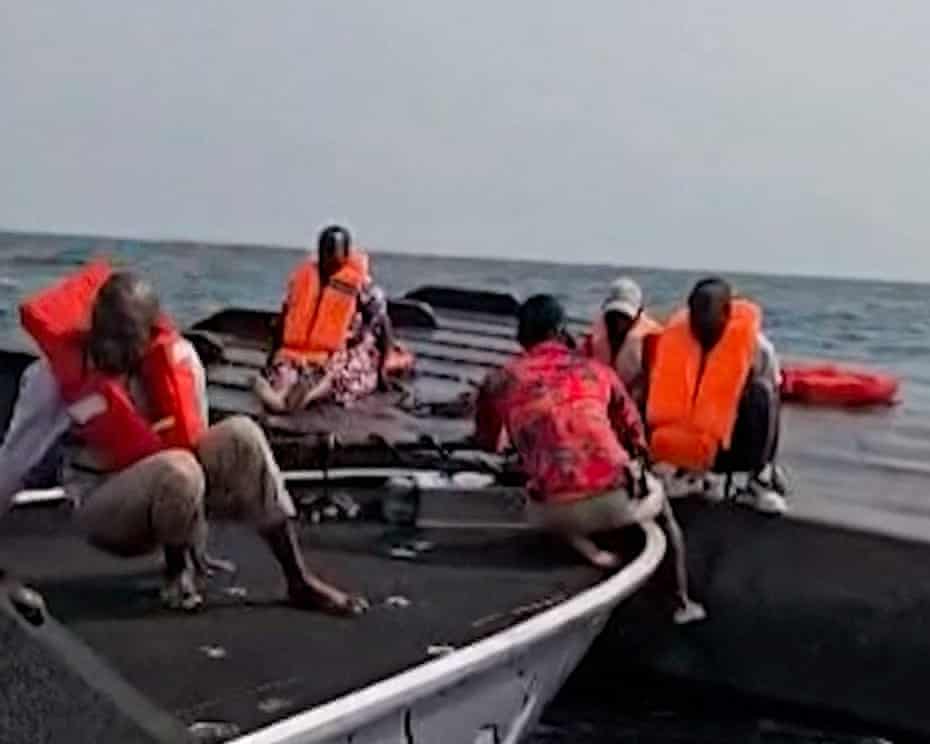
The images and stories emerging from Kariba are heartbreaking. Women travelled with babies. Families boarded expecting to reach their destinations safely. Instead, many never came home.
Those lives cannot be brought back.
But their deaths must not become another statistic.
The government must investigate not only what happened on the day of the accident, but also whether there were failures in regulation, inspection, enforcement and preparedness that allowed the circumstances to develop.
Zimbabweans deserve accountability.
They deserve safe public transport.
And the people of Kariba deserve to benefit from the tourism and natural resources surrounding them.
A new boat after a disaster is not enough. What Zimbabwe needs is a system that prevents the next disaster from happening in the first place.
The families who lost loved ones deserve nothing less.

Comments
About Author