By Robert Dex – Evening Standard
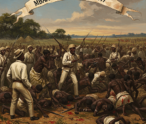
undreds of cultural treasures seized from Ethiopia by British soldiers have been identified in the capital after new research.
Author Andrew Heavens, whose book The Prince and the Plunder details how the treasure was brought back to this country after the British invaded in 1868, has catalogued 538 items in London including everything from scraps of manuscript torn up and stuffed inside a charm bracelet to royal finery and holy relics. They can be found everywhere from major institutions to council collections. Mr Heavens, who worked in Ethiopia as a journalist, said one of the most striking things was the sheer volume.
He said: “The bulk of the plunder was small-ticket items brought back in soldiers’ knapsacks and pockets. Almost all the items are not on display. I have tracked down these items as a way of telling the story. It is not a campaigning book demanding they be returned. That would be up to Ethiopia.”
Some items are well-known, including a crown and royal wedding dress held by the V&A to holy relics called tabots kept in Westminster Abbey and the British Museum, though others including manuscripts in the Wellcome Collection and a scrap of a scroll measuring less than a centimetre held by Southwark council have previously gone unnoticed.
 Dress belonging to Queen Woyzaro Terunesh / Victoria and Albert Musuem[/caption
The V&A has discussed the prospect of returning items via long-term loans while the Wellcome Collection said it had not received any repatriation requests but would “take such decisions on a case-by-case basis”. Westminster Abbey said it was “ very aware of the importance and significance of the Ethiopian tabot” and it was “kept in a very sacred place within the church, covered and hidden from view”.
The British Museum said: “Our sustained ambition is to lend these objects to an Ethiopian orthodox church in Britain so they can be cared for by the clergy within their traditions.”
Alula Pankhurst, a member of the Ethiopian National Heritage Restitution Committee, said “the sheer scale of it is pretty enormous” but “not everything needs to come back”. Mr Pankhurst, whose grandmother was Sylvia Pankhurst, who lived in Ethiopia for the last years of her life, said: “Some items are more important so the first obvious one is human remains, then there are holy objects.”
He said British museums had “done a great service to humanity by preserving these items” but the argument for returning treasures is now more widely supported.
It comes amid the increasingly contested debate about whether museums should return artefacts to their countries of origin — with the Parthenon Marbles, better known in the UK as the Elgin Marbles, and the Benin Bronzes the most high-profile examples.- Evening Standard
Comments
About Author