By HRH Princess Eugene Majuru, Princess of Harare
POKUASE, GHANA – From an aerial view, it’s a mesmerizing tangle of concrete and asphalt, a testament to modern engineering. On the ground, for many, it’s a daily reality of navigation. The Pokuase Interchange, a colossal infrastructure project in Ghana, continues to shape the lives of commuters and the urban landscape. Commissioned in 2021, this four-tier stack interchange was heralded as a solution to chronic traffic congestion. But two years on, how well is it performing, what challenges persist, and what makes it a success?
Features: A Multi-Tiered Solution to Urban Sprawl
The Pokuase Interchange stands as West Africa’s largest four-tier interchange, a complex web of roads designed to facilitate seamless movement across various axes. Its primary purpose was to ease traffic flow from Accra to Kumasi and from Accra to Pokuase, Kwabenya, and beyond.
Key features include:
Four Tiers: This multi-level design allows for the free flow of traffic in multiple directions without the need for intersections at ground level.
Numerous Ramps and Loops: A sophisticated system of ramps, slip roads, and loops connects the various levels, enabling vehicles to transition smoothly between different routes.
Streetlights and Road Markings: The interchange is well-lit and features clear road markings to guide drivers, especially at night.
Drainage Systems: Extensive drainage infrastructure was incorporated to manage rainwater and prevent flooding on the roadways.
Pedestrian Walkways: While primarily designed for vehicular traffic, provisions for pedestrian movement are integrated, though their effectiveness is a point of discussion.
Challenges: Navigating the Complexities of Modern Infrastructure
Despite its ambitious design, the Pokuase Interchange has not been without its hurdles for the everyday Ghanaian.
Initial Confusion and Navigation Difficulty: Many drivers, particularly in the early days of its operation, reported significant confusion in navigating the complex layers and numerous entry/exit points. Poorly understood signage, or in some cases, a perceived lack of adequate signage, contributed to drivers missing turns or getting lost. Even now, for infrequent users, it can be a labyrinth.
Motorbike and Informal Transport Integration: The sheer volume of motorbikes (okadas) and informal commercial vehicles (tro-tros) navigating the interchange poses unique challenges. Their often erratic driving patterns can create hazards and exacerbate congestion in certain areas.
Maintenance and Upkeep: Like any large infrastructure project, ongoing maintenance is crucial. Concerns occasionally surface regarding the state of certain road surfaces or lighting fixtures.
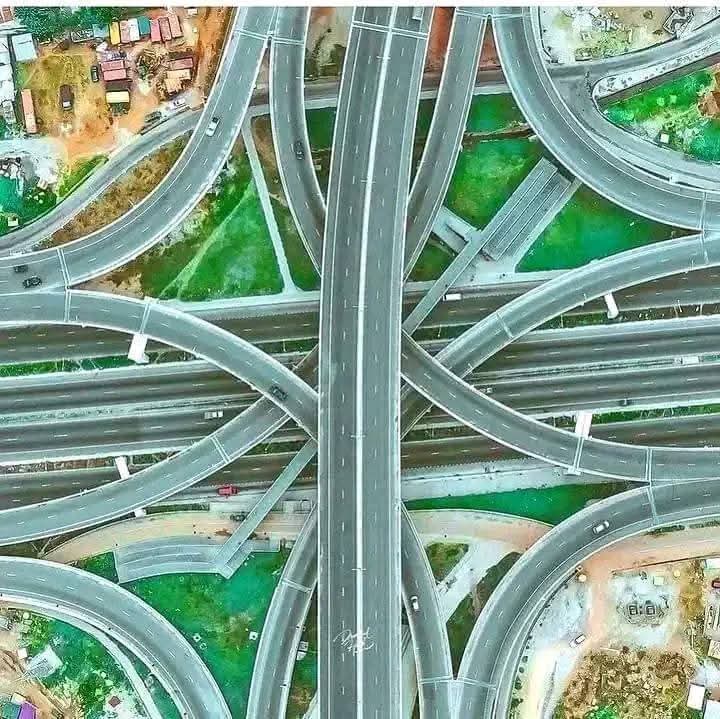
Pokuase Interchange in Ghana
Connectivity to Local Roads: While the interchange effectively handles high-volume arterial traffic, the transition from the interchange to narrower, less developed local roads can sometimes create bottlenecks and localized congestion just off the main structure.
Pedestrian Safety Concerns: Despite designated walkways, the sheer speed and volume of traffic can make navigating the interchange intimidating and potentially dangerous for pedestrians.
What Works Well: A Beacon of Progress
Despite the challenges, the Pokuase Interchange has undeniably brought about significant improvements to traffic management in its operational area.
Reduced Travel Times: For many commuters, particularly those traveling long distances on the major routes it serves, the interchange has dramatically cut down travel times by eliminating notorious bottlenecks.
Improved Traffic Flow: During off-peak hours and even during moderate peak times, the flow of traffic across the interchange is generally smooth and efficient, a stark contrast to the gridlock that once characterized the area.
Economic Benefits: The improved connectivity facilitates trade and commerce, making it easier for goods and services to move, which has a positive ripple effect on local economies.
Modern Image for Ghana: The interchange stands as a symbol of Ghana’s commitment to modern infrastructure development, enhancing the country’s image as a progressive nation.
Future Development Catalyst: The improved accessibility can act as a catalyst for further development in surrounding areas, attracting businesses and residents.
The Pokuase Interchange is a double-edged sword. It’s a colossal achievement in engineering and a vital artery for Ghana’s economic and social development, delivering on its promise of reduced congestion and faster travel for many. However, continuous efforts are needed to address the persistent challenges of user navigation, integration with informal transport, and ongoing maintenance to ensure this impressive piece of infrastructure truly serves all Ghanaians efficiently and safely for decades to come. As Ghana continues its path of development, the lessons learned from the Pokuase Interchange will undoubtedly inform future infrastructure projects.
Comments
About Author