

By Princess Eugene Majuru
Any serious constitutional analysis must eventually move beyond critique and examine balance. While previous discussions have focused on structural tensions, enforcement gaps, and institutional design challenges within Zimbabwe’s 2013 Constitution, it is equally important to recognise what the Constitution gets right. A constitution is not defined only by its weaknesses, but also by its foundational achievements and progressive commitments.
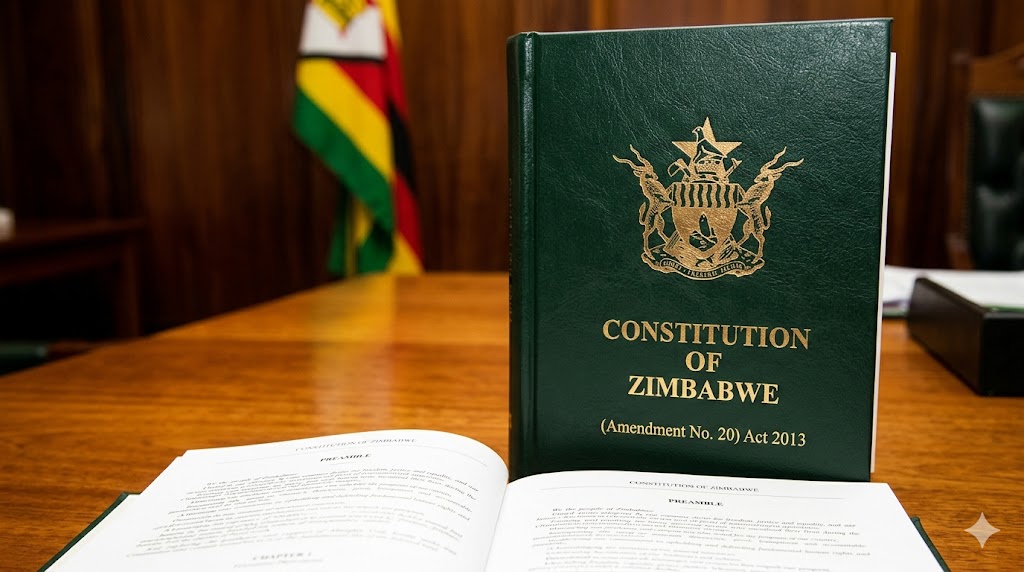
Zimbabwe’s Constitution is, in many respects, one of the more comprehensive constitutional frameworks in Africa. It reflects a deliberate attempt to build a rights-based, accountable, and institutionally structured state after a long period of constitutional transition.
1. A Strong and Comprehensive Bill of Rights
One of the most significant achievements is the depth of Chapter 4 (Declaration of Rights).
Section 44 provides a broad foundation:
“The State and every person… must respect, protect, promote and fulfil the rights and freedoms set out in this Chapter.”
Why this matters:
- rights apply to both State and individuals
- the Constitution creates positive obligations, not just limitations
- enforcement responsibility is clearly articulated
The Bill of Rights includes:
- civil and political rights
- socio-economic rights
- cultural rights
- environmental rights
This breadth is a major constitutional strength.
2. Judicial Independence Is Explicitly Protected
Section 164(1) states:
“The courts are independent and are subject only to this Constitution and the law…”
Strengths of this design:
- clear separation from political branches
- explicit constitutional guarantee of independence
- protection against external interference
The Constitution also strengthens tenure protections for judges, making removal procedurally difficult and legally structured.
3. Recognition of Human Dignity as a Core Value
Section 51 provides:
“Every person has inherent dignity in their private and public life…”
Importance:
- dignity is elevated to a constitutional principle
- it underpins interpretation of other rights
- it aligns with modern human rights frameworks
This creates a value-driven constitutional order, not just a technical legal one.
4. Inclusion of Socio-Economic Rights
Sections such as 75 (education), 77 (health care), and 73 (environment) are particularly notable.
For example, Section 75(1):
“Every citizen and permanent resident of Zimbabwe has a right to a basic State-funded education…”
Why this is significant:
- socio-economic rights are constitutionally recognised
- the State has enforceable obligations
- rights extend beyond civil and political freedoms
This places Zimbabwe among constitutions that recognise development as a legal right.
5. Devolution as a Constitutional Principle
Section 264(1) provides:
“Whenever appropriate, governmental powers and responsibilities must be devolved…”
Strength:
- decentralisation is constitutionally mandated
- governance is intended to be closer to citizens
- local authorities are legally recognised
This is a major structural advancement compared to earlier constitutional models.
6. Independent Commissions for Accountability
Chapter 12 institutions, under Section 232, are described as:
“independent and subject only to this Constitution and the law.”
Key strengths:
- creation of watchdog institutions
- separation from executive control
- institutionalisation of accountability mechanisms
These commissions strengthen oversight architecture significantly.
7. Gender Equality and Inclusion
Section 56(1) provides:
“All persons are equal before the law…”
Section 17 further requires:
“The State must promote full gender balance…”
Strengths:
- equality is constitutionally guaranteed
- affirmative action is explicitly recognised
- gender justice is a constitutional priority
This reflects a transformative constitutional intent.
8. Environmental Protection as a Right
Section 73(1) states:
“Every person has the right to an environment that is not harmful to their health or well-being…”
Why this is important:
- environmental rights are justiciable
- intergenerational protection is recognised
- sustainability is constitutionally embedded
This is forward-looking constitutional design.
A Constitution of Strong Principles and Progressive Design
Zimbabwe’s 2013 Constitution is not a weak document. It is, in fact, a highly structured and rights-rich constitutional framework that reflects modern constitutional thinking.
Its strengths include:
- a broad and enforceable Bill of Rights
- strong judicial independence provisions
- recognition of socio-economic and environmental rights
- institutional checks and balances
- constitutional recognition of equality and devolution
While earlier analysis has focused on gaps and tensions, this balance reveals an important truth:
the Constitution is not fundamentally lacking in ambition or design—it is strong in principle, even where implementation remains contested.
In this sense, Zimbabwe’s Constitution is best understood as a progressive constitutional framework still negotiating its full realisation in practice, rather than a document defined solely by its limitations.
Comments
About Author