

By Princess Eugene Majuru | News of The South
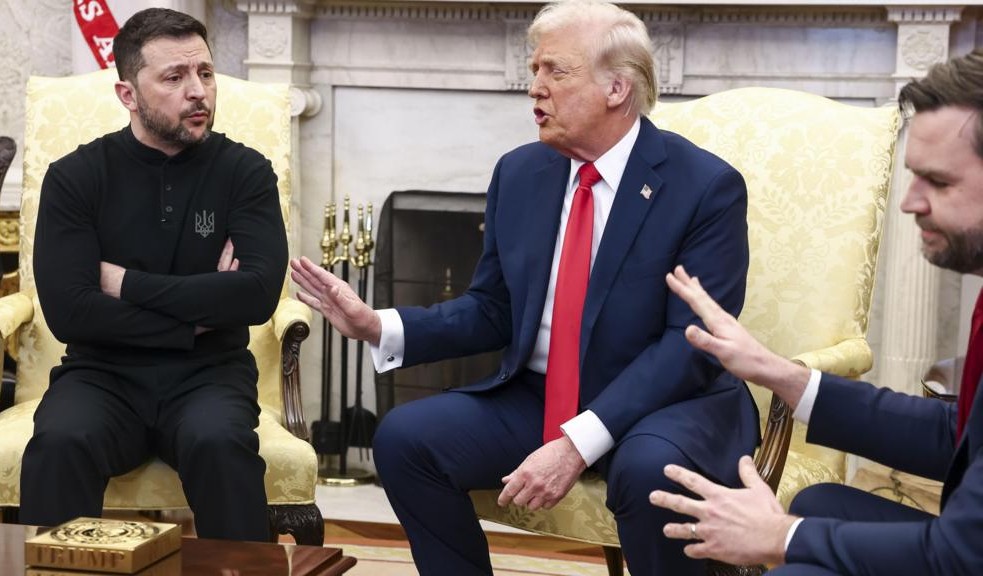
Washington/Kyiv, 17 October 2026 — Relations between United States President Donald Trump and Ukrainian President Volodymyr Zelensky have deteriorated sharply following Washington’s decision to ease economic pressure on Russia, with Trump openly calling for Ukraine to replace its president and Zelensky accusing the American administration of taking decisions that could strengthen Moscow’s position in the ongoing war. The diplomatic confrontation has raised serious questions about the future of American support for Ukraine, the effectiveness of Western sanctions against Russia and whether the United States can continue acting as a credible mediator in efforts to end the conflict. At the centre of the dispute is Trump’s controversial agreement to purchase Russian diesel fuel, followed by his decision on Friday, 16 October, to suspend the enforcement of sweeping new sanctions targeting Russia’s energy revenues. For Zelensky, whose country has been fighting Russia’s full-scale invasion since February 2022, the American decisions threaten to undermine years of international efforts to weaken Moscow’s ability to finance its military operations. For Trump, the immediate concern is rising energy prices, which have become a major political and economic challenge in the United States ahead of November’s congressional midterm elections. The disagreement has now developed into one of the most serious diplomatic confrontations between Washington and Kyiv since Trump returned to the White House.
Trump tells Ukraine to find another president
The dispute intensified on 10 October when Trump publicly suggested that Ukrainians should replace Zelensky with a leader more willing to negotiate an agreement with Russia. Speaking to reporters at the White House, Trump accused Zelensky of failing to take opportunities to end the war and criticised Ukraine’s continuing attacks on Russian oil refineries. The American president argued that Ukrainian strikes against Russian energy infrastructure were contributing to higher international fuel prices. He also expressed frustration that Zelensky had continued targeting Russian refineries despite requests from Washington to stop. Trump’s comments represented a significant escalation because they went beyond disagreements over military tactics or diplomatic negotiations. By publicly questioning Zelensky’s continued leadership, the American president introduced Ukraine’s domestic political future into an already difficult international dispute. Ukraine has not held presidential elections during the full-scale invasion because martial law remains in force. Zelensky has maintained that the Ukrainian people, rather than foreign governments, must determine who leads their country. The controversy raises a fundamental diplomatic question: how far should an allied government go in publicly challenging the leadership of another sovereign nation during wartime?
Russia benefits from controversial diesel agreement
The confrontation began after Trump announced an agreement with Russian President Vladimir Putin to allow Russian diesel supplies into the American and international markets. The White House has presented the arrangement as a measure intended to reduce fuel prices and ease pressure on American consumers. However, the agreement has caused alarm in Ukraine and among European governments that have spent years imposing sanctions designed to restrict Russian energy revenues. Oil and petroleum products remain important sources of income for the Russian economy. Critics of the agreement argue that increasing Russia’s access to international fuel markets could provide Moscow with additional revenue while its military operations in Ukraine continue. Zelensky has warned that easing restrictions on Russian energy sales risks weakening the economic pressure intended to encourage Moscow to negotiate an end to the war. The disagreement exposes a conflict between two policy objectives. Washington wants to address rising energy costs, while Kyiv wants to maintain financial pressure on the country occupying parts of its territory. Whether the diesel agreement significantly reduces American fuel prices remains uncertain. Its economic effects will depend on the volumes supplied, international market conditions and other factors influencing global energy prices.
Trump suspends major sanctions against Moscow
The diplomatic dispute deepened on Friday when Trump signed an executive order suspending the implementation of a new sanctions package targeting Russia. The legislation had received bipartisan support in the United States and was intended to increase pressure on Russian officials, financial institutions and energy-related operations. Its provisions included measures aimed at restricting the movement of Russian oil and gas through international markets. Trump justified the suspension on national-interest grounds. However, the timing has attracted particular attention because the decision followed his agreement with Putin and his public criticism of Zelensky. Russia welcomed the move, while Ukraine expressed concern that the suspension could encourage Moscow to continue its military campaign. On Saturday, Zelensky criticised the decision, arguing that easing sanctions was not an effective way to persuade Putin to end the war. The Ukrainian president suggested that the Russian leader would interpret reduced economic pressure as a favourable development. The contrasting responses from Moscow and Kyiv demonstrate how differently the two countries view Washington’s changing approach.
Ukraine refuses to stop attacking Russian oil facilities
Another major source of disagreement concerns Ukraine’s military strategy against Russian energy infrastructure. Ukrainian forces have repeatedly targeted oil refineries and related facilities inside Russia, seeking to disrupt fuel supplies and reduce the economic resources available to support Moscow’s war effort. Trump has criticised these attacks, arguing that they contribute to higher international energy prices. Zelensky, however, has defended Ukraine’s right to strike military-related economic targets while Russian forces continue attacking Ukrainian cities, electricity networks and other infrastructure. Kyiv argues that stopping its operations against Russian energy facilities without a corresponding halt to Russian attacks would create an unequal arrangement.
The dispute has become particularly important as winter approaches. Russian attacks on Ukrainian power stations and heating infrastructure have repeatedly disrupted essential services, leaving civilians vulnerable during periods of extreme cold. Ukraine therefore considers the protection of its energy system a matter of national survival. For Kyiv, any agreement to suspend attacks on energy infrastructure must involve commitments from both sides. The central question is whether a ceasefire limited to energy facilities can succeed without an effective monitoring mechanism and consequences for violations.
Concerns grow over American intelligence and satellite support
Beyond the public disagreement, reports of interruptions to satellite communications have created further uncertainty about the future of American military assistance. Ukraine relies heavily on advanced communications, intelligence and surveillance systems to coordinate military operations and detect incoming Russian attacks. Recent disruptions affecting satellite services used by Ukrainian forces have prompted questions about whether American support could be reduced as relations deteriorate. Trump has denied that his administration deliberately interfered with the Starlink satellite network and has maintained that intelligence-sharing arrangements with Ukraine continue. Nevertheless, Ukrainian officials have expressed concern about disruptions to systems that are essential for battlefield communications and air defence. The distinction between an accidental technical interruption and a deliberate withdrawal of assistance is critical.
There is no established public finding that the White House ordered the reported disruptions. However, the controversy illustrates Ukraine’s dependence on foreign technology and military assistance during a prolonged conflict. A reduction in reliable access to intelligence, communications or air-defence support could have serious consequences for Ukraine’s ability to protect its population and military positions.
Europe refuses to follow Washington’s approach
The growing tensions between Washington and Kyiv have prompted European leaders to reaffirm their support for Ukraine. At a European Union summit in Brussels on Friday, European Commission President Ursula von der Leyen insisted that European sanctions against Russia would remain in place until Moscow ended the war. European Council President António Costa also warned against reducing pressure on Russia while the conflict continued. Their statements demonstrated an increasingly visible difference between Washington’s approach and that of several European governments. European leaders argue that sanctions remain an important instrument for encouraging Russia to negotiate. They are also concerned about the possibility that Ukraine could face reduced American assistance at a time when its military and civilian infrastructure remain under sustained attack. Zelensky has appealed for additional European financial and military assistance, including air-defence systems capable of protecting Ukrainian cities and energy facilities. European governments are now examining how to strengthen Ukraine’s defence capabilities while managing uncertainty over future American commitments. For Europe, the conflict is not only about supporting Ukraine. It also concerns the wider security arrangements that have shaped the continent since the end of the Cold War.
Is the United States changing its relationship with Russia?
Trump’s recent decisions have prompted questions about whether Washington is moving towards a more accommodating relationship with Moscow. The diesel agreement, suspension of sanctions and criticism of Zelensky have all been welcomed or viewed favourably by Russian officials. However, these developments do not establish that the United States has formally abandoned Ukraine or entered into a strategic alliance with Russia. The Trump administration maintains that its objective is to end the war while protecting American economic interests. Its approach places greater emphasis on negotiations, energy prices and demands for concessions from the parties involved. Ukraine and several European governments remain concerned that concessions made without reciprocal commitments from Russia could weaken incentives for Moscow to compromise. The central disagreement concerns how peace should be achieved. Trump argues that negotiations and economic arrangements can create opportunities to end the conflict. Zelensky insists that negotiations must be supported by credible security guarantees and sufficient pressure to prevent further Russian aggression. These differences are particularly difficult to reconcile while Russian and Ukrainian forces continue fighting.
The human cost of the diplomatic confrontation
While presidents exchange criticism and governments debate sanctions, Ukrainian civilians continue experiencing the consequences of the war. Russian attacks on energy infrastructure have damaged electricity generation and distribution facilities, creating serious challenges as winter approaches. On Saturday, Zelensky reported that Russian forces had targeted more than 15 important energy facilities in one of the largest attacks against Ukraine’s power infrastructure. The Ukrainian president warned that the scale of the attacks was placing enormous pressure on repair teams and the country’s remaining energy reserves. Recent strikes have also killed civilians and injured others. For families living in affected communities, the immediate concerns are electricity, heating, access to medical services and personal safety. The consequences of interrupted military assistance or weakened diplomatic coordination could therefore extend beyond the battlefield. They could affect hospitals, schools, businesses and millions of households already struggling with the effects of prolonged conflict.
What happens next?
Despite the public confrontation, Ukrainian officials have indicated that they remain willing to engage with American representatives in efforts to secure a negotiated settlement. Discussions involving Washington, Kyiv and Moscow remain possible, although the conditions for meaningful progress are uncertain. Three major issues will determine the direction of relations between Trump and Zelensky: whether the United States maintains military and intelligence assistance, whether Washington restores economic pressure on Russia, and whether both countries can agree on the terms of a credible peace process. The response of European governments will also be important, particularly if disagreements between Washington and Kyiv continue. For Trump, the challenge is balancing domestic economic pressures with America’s international security commitments. For Zelensky, the challenge is maintaining essential foreign assistance while defending Ukraine’s sovereignty and negotiating position. For Putin, the dispute presents a changing diplomatic environment in which Western governments are increasingly divided over how to bring the conflict to an end. The wider international community will be watching whether those divisions lead to renewed negotiations or further uncertainty.
A dangerous moment for international diplomacy
The latest confrontation between Trump and Zelensky illustrates how domestic economic pressures, international security commitments and wartime diplomacy can become deeply interconnected. A dispute initially centred on fuel prices and attacks against oil refineries has expanded into disagreements over sanctions, political leadership, military assistance and the future of Ukraine. The consequences extend beyond the two presidents. European security, global energy markets and the lives of millions of Ukrainians are all affected by decisions made in Washington, Kyiv and Moscow. The fundamental question is whether diplomatic pressure can produce a sustainable peace without weakening Ukraine’s ability to defend itself. As winter approaches and Russian attacks continue, the urgency of finding a solution is increasing. The world now faces a critical question: can Washington broker a lasting peace between Russia and Ukraine while its relationship with Kyiv is deteriorating? For the Ukrainian people, the answer is not merely a matter of international politics. It concerns their security, sovereignty and future.
Princess Eugene Majuru is the Founder and Editor-in-Chief of News of The South.
Comments
About Author