


Own Correspondent
Harare, Zimbabwe (News of The South) – Thirty thousand beneficiaries of the Multi-Purpose Cash Transfer Programme in Ushewekunze (Harare South), Mabvuku/Tafara and Mzilikazi in Bulawayo, high density communities are elated by the support they are receiving from DanChurchAid (DCA) with support from the European Union Humanitarian Aid (ECHO).
In an interview with this publication, DCA Social Protection Officer, Emily Abel said registered beneficiaries started off receiving monthly entitlements of US$10 per month per individual in a household in June 2020, through a value-based, Multi-Purpose Electronic Voucher (e-voucher) to purchase food and other non-food items.
Abel added that the monthly entitlements were increased in September 2020, to US$12 per beneficiary to meet the rising cost of living due to run-away inflation currently estimated at over 836 percent, while food inflation was pegged at 977 percent in July 2020 according to the UNWFP Food Security Update, August 2020.
The beneficiaries have welcomed DCA for promoting humanitarian cash transfers for food aid programmes in the country.
“Additional hygienic requirements imposed by the COVID-19 pandemic have also exerted financial pressures on already struggling households and the project is going to support the targeted individuals until the month of January 2021.
“The programme comes at a time when poor households in these high-density suburbs have been hard hit by the national drought and the COVID-19 pandemic which disrupted their informal economic activities”, Abel explained.
DanChurchAid (DCA) is a faith-based organization that operates in marginalized communities supporting the needy through life saving and resilience building interventions using the humanitarian-development nexus. Other than supporting the food insecure households in the targeted districts.
She highlighted that the project is also supporting 7 500 beneficiaries with grants for income generating projects that are meant to enable livelihoods revitalization. Furthermore, the project is supporting 3 000 primary school going learners access education during and post COVID-19 phases.
Abel said urban vulnerability has deepened and has been exacerbated by the COVID-19 pandemic. Women and children have especially been hard hit and exposed to the socio-economic malaise.
The Zimbabwe Humanitarian Appeal of April 2020 showed that more than 2.2 million people in urban areas are in need of immediate food support, a figure which has since increased due to the protracted national lockdown as a result of COVID-19.
The programme started last April, with stakeholder inception meetings and a baseline survey ensued in the three domains to establish the most vulnerable, at risk and food insecure households.
Timely intervention
Some beneficiaries who spoke to DCA acknowledged the timely intervention. Maggie Ndawana, a 42-year-old widowed mother of three who stays in Ushewekunze, Harare South, said life was very hard before this intervention. She narrated how she survived on begging and casual labour which was also challenging because of her condition as a person living with disability while at the same time also caring for a disabled child.
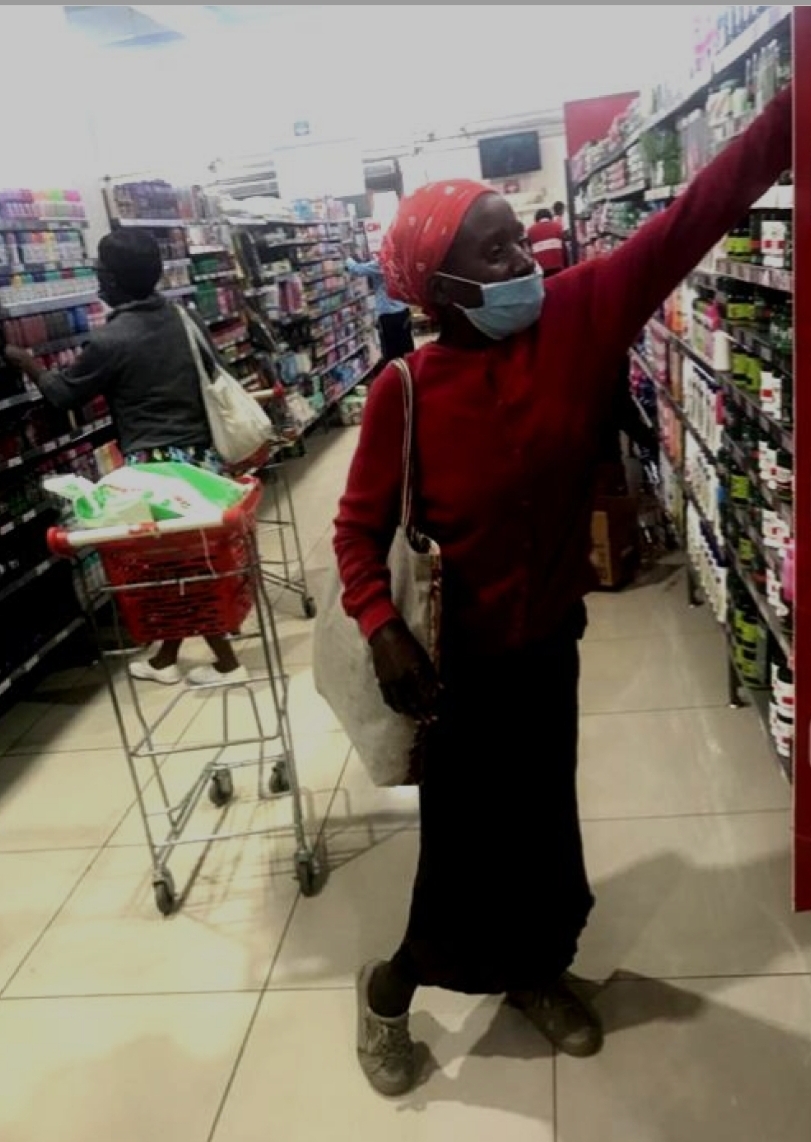
Having to do her shopping at an established chain supermarket, pushing a trolley full of basic household items, Maggie feels dignified.
“My life has really changed because of the assistance and I will always thank the Lord for DCA as it was sent by God,” said Maggie with tears of joy as she narrated her story.
SHOPPING TIME…Maggie Ndawana
The programme has saved her household from severe food insecurity as she can afford three meals and spending more time with her child since she is no longer engaging in casual labor for survival
Another beneficiary from Old Magwegwe in Mzilikazi District, Martha Zulu (63), also applauded the programme for changing her life for the better. She can now provide enough food for the family as they used to have one meal per day. Zulu is a grandmother of four and survived on selling sadza at a local bar.
Zulu is thankful.
“With the cash transfer, I can now buy food and detergents for my family. I was facing a difficult time having no reliable source of income to feed my grandchildren. I used to encourage my grandchildren to go and play outside with friends during the day while waiting for the evening meal. We can now afford to have 3 nutritious meals per day.”
Alleviating food insecurity
Speaking at the same occasion, DCA Social Protection Officer Beauty Ncube, said the programme has alleviated food insecurity among targeted beneficiaries across the three domains, and has proven to be a dignified modality as beneficiaries can make their food choices and is convenient to the user.
“It promotes choice, flexibility and dignifies programme participants.
“For almost all the beneficiaries, having to push a trolley full of food and other household nonfood essentials is self-fulfilling, builds one’s esteem and brings a sense of hope. The programme is positively impacting lives!”, Ncube narrated.
Meanwhile, DCA Project Coordinator, Chido Marimira, thanked the generous donations from DCA’s funding partner, ECHO, for making the programme a success.
Comments
About Author




