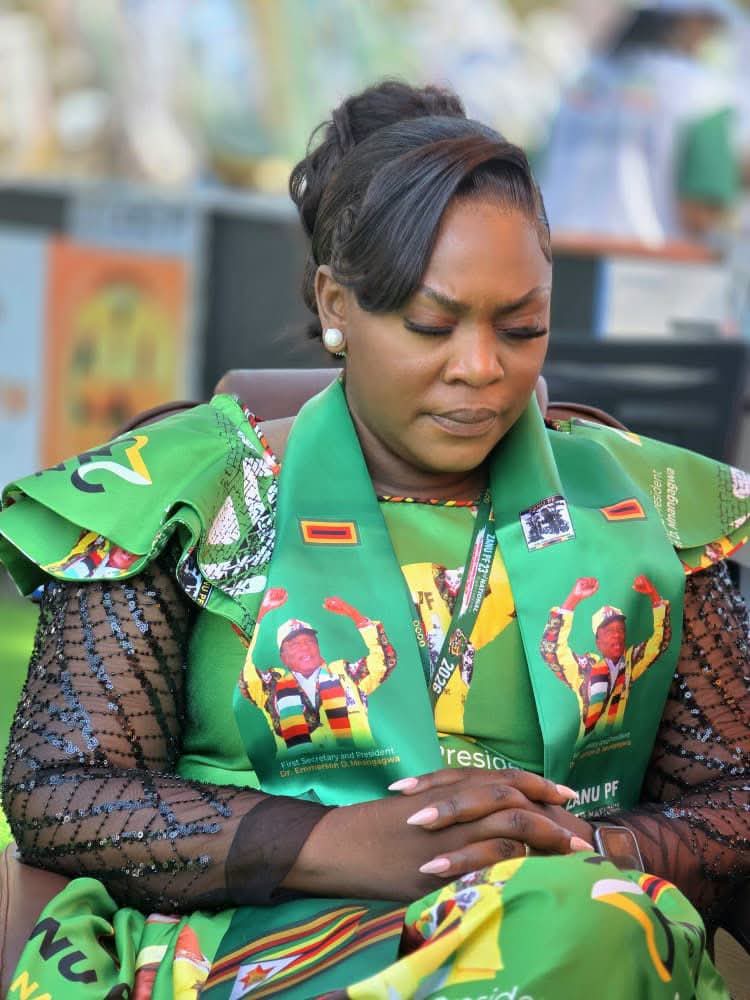


By Princess Eugene Majuru | News of The South
Zimbabwe’s Minister of Information Communication Technology, Postal and Courier Services, Tatenda Mavetera, has come under fierce criticism from Zimbabweans following a Facebook post in which she spoke about church and wished her followers a happy Sunday.
What might ordinarily have been regarded as a harmless religious message has instead attracted angry reactions from social media users, many of whom have questioned the minister’s religious convictions following her recent political remarks at the ZANU-PF conference in Chinhoyi.
The controversy highlights growing public frustration over the relationship between religion, political power and the conduct of public officials in Zimbabwe.
A Sunday Message That Sparked Anger
Mavetera’s Facebook post, which referred to church and extended Sunday greetings to her followers, became a platform for political criticism rather than the religious goodwill traditionally associated with such messages.
Many commenters questioned how the minister could publicly express Christian values while defending political positions they considered inconsistent with the principles of justice, humility, truth and accountability.
Some went further, questioning which God the minister worships, reflecting the depth of anger among those who believe that religious declarations should be accompanied by conduct consistent with Christian teachings. The reaction appears to have been driven less by the Sunday message itself than by the political controversy surrounding her earlier remarks.
Although the comments visible to observers suggest considerable dissatisfaction, the claim that 99 percent of respondents were unhappy would require a systematic count of the comments to establish accurately.
Chinhoyi Conference Remarks Continue to Haunt Minister
At the centre of the controversy is Mavetera’s speech at the recent ZANU-PF conference in Chinhoyi, which has become a focal point of criticism among Zimbabweans questioning the political direction of the ruling party.
For her critics, the Sunday Facebook message presented an opportunity to revisit concerns about the minister’s political statements and the values they believe should guide public leadership.
The backlash also demonstrates how statements delivered at political gatherings can continue to shape public perceptions long after the event has ended. Political speeches may attract applause from party supporters inside conference halls, but the reaction outside those halls can be dramatically different.
In the age of social media, politicians no longer control how their messages are received, interpreted or challenged.
Zimbabwe is a deeply religious society in which Christianity plays a prominent role in public and private life. Political leaders frequently attend church services, quote scripture and invoke God in their public statements.
However, the latest controversy raises an important question: should political leaders expect their religious declarations to be judged independently of their political conduct? For Mavetera’s critics, the answer appears to be no.
Their reactions suggest that they expect public officials who profess Christian beliefs to demonstrate those principles through their words, decisions and treatment of citizens. Yet political disagreement alone does not establish the sincerity or otherwise of an individual’s religious faith. A person’s relationship with God remains a matter of personal conviction, even when their public conduct is legitimately open to scrutiny.
The distinction is important. Zimbabweans have every right to question their leaders’ political statements and actions without claiming certainty about their private spiritual beliefs.
Public Office Comes With Public Accountability
Mavetera is not simply an ordinary social media user. As a Cabinet minister, her statements carry political weight, and her conduct is subject to public scrutiny.
Her Facebook page, like those of other public officials, provides a direct channel through which citizens can express approval, disappointment and criticism. The angry responses illustrate a wider challenge facing political leaders who maintain an active social media presence.
Public platforms cannot always be used exclusively for positive publicity, personal celebrations and religious greetings. They also provide citizens with opportunities to challenge decisions and statements made by those in positions of authority. The controversy further raises questions about whether Zimbabwe’s political leadership is sufficiently attentive to public sentiment beyond the supportive audiences commonly found at party gatherings.
A Growing Divide Between Political Leaders and Citizens?
The criticism directed at Mavetera may also reflect wider frustrations over political accountability and the relationship between elected officials and ordinary Zimbabweans.
When a simple Sunday greeting triggers political anger, it suggests that unresolved grievances can follow public officials into almost every aspect of their online presence.
However, Facebook comments cannot automatically be treated as a representative measure of national opinion. Those responding to a particular post may not reflect the views of Zimbabweans as a whole.
Nevertheless, the intensity of criticism is politically significant because it demonstrates how quickly public dissatisfaction can overshadow the message a politician originally intended to communicate. For the minister, the immediate challenge is not necessarily the religious greeting itself, but the political questions that critics continue to associate with her.
Can Political Leaders Separate Faith From Their Public Conduct?
The controversy surrounding Mavetera presents a broader lesson for Zimbabwe’s political establishment. Religious faith is personal, but political leadership is public. When leaders openly invoke religion, they should expect citizens to examine whether their public conduct reflects the moral principles they profess.
At the same time, criticism should remain focused on verifiable statements, political decisions and official responsibilities rather than assumptions about an individual’s relationship with God.
Mavetera’s Sunday message may have been intended to inspire goodwill, but the response demonstrates that political controversies cannot always be left behind when a leader turns to matters of faith.
For many of her critics, the issue is no longer simply what the minister says on Sunday. It is whether her political words and actions throughout the week reflect the values she publicly embraces. And that is a question extending far beyond one minister, one Facebook post or one political conference.
It goes to the heart of what Zimbabweans expect from those entrusted with public office.
Editorial update: Reports from 18 October provide important context: Mavetera reportedly criticised delegates for standing and cheering Vice-President Constantino Chiwenga at the Chinhoyi conference, arguing that such an ovation should be reserved for President Mnangagwa. Chiwenga had called for political accountability and questioned whether ZANU-PF was repeating past mistakes. This is the specific controversy worth adding to the article.
⋮⋮⋮⋮
Comments
About Author