


By Princess Eugene Majuru, Princess of Harare
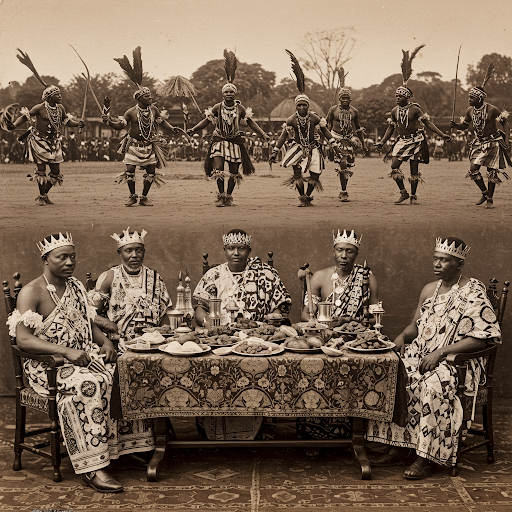
During Colonialism a lot was done to damage African cultures, traditions, beliefs and ways of life. The Colonialists went as far as destroying African Kingdoms and stripping Kings of their titles, they named them “Chiefs “and till today African nations use the term Chief to refer to their Royals. The Colonisation of Africa provoked a great amount of resistance amongst Africans across the continent. Africa has a wealthy and dense history of leadership that is never mentioned in documentation done by the Colonialists, just like European kings and queens.
Most African Nations who claim to be independent have not done enough to restore what was destroyed during Colonialism and this includes Changing names given to various cities, roads, places or buildings as well as calling their royals their correct titles. They all still use the title Chief. Being stripped of Kings titles however does not mean one is no longer a King because its in their blood and in their DNA. Royalty cannot be bought or traded for any amount of money, property or wealth.
Africa still struggles because of the fake history documented by the colonisers. In Zimbabwe the national monument of Great Zimbabwe is the most famous stone building in southern Africa. It is located over 180 kms from Harare, it stands 1,100 km above sea level on the Harare Plateau in the Shashe-Limpopo basin. It is thought to have been built over a long period, beginning in 1200 and ending in 1450. The British who colonised Zimbabwe are well known for sanctioning historians in the 1960s to write fake history on the origins of the Great Zimbabwe, they were instructed to deny the African origins in their documentation. According to Dr Innocent Pikirayi a Lecturer in history and archaeology at the University of Zimbabwe this in the Scholarly World is called “antiquarian revisionism’ – trying to use old values to support a wrong cause altogether.” The accounts of the 19th and 20th century linked Great Zimbabwe with Phoenicia with Saban Arabs with Egypt and the rest of the near East.
This was not different from the accounts of the late nineteenth century and early twentieth century antiquarians, which linked Great Zimbabwe with Phoenicia, with Saban Arabs, with the Egyptians and the rest of the near East. We would call that, in the scholarly world, ‘antiquarian revisionism’ – trying to use old values to support a wrong cause altogether.” – Dr Innocent Pikirayi, lecturer in history and archaeology, University of Zimbabwe.
The terms ‘kingdom’ and ‘kingship’ are widely used but when do Africans speak of ‘kings? According to research carried out by Henri J. M. Claessen this is now a difficult question in anthropology, for the dividing line between a paramount chief and a little king is but thin. Claessen used the term king for those rulers, who at least ruled a polity that might qualify as an incipient, or a typical early state. He noted that in the eyes of Vansina (1992a) the traditional African kingdoms did not qualify as states, but in his opinion the kingdoms used for his analysis all fall within the criteria developed in The Early State (Claessen and Skalník 1978: 640–642; Tymowski 2009, passim; Claessen and Hagesteijn 2012: 4–10).
Colonialism was and continues to be so bad that Africans believe that goods imported from Europe are the best and they have become dependent on them to the extent of not producing much in Africa. The importation of most goods from Europe does not enrich Africa. The policies of colonialism forced the demise of African industry. Had the colonisers encouraged and cultivated self-reliance in Africa the continent would be enjoying better economic and technological position today. Most of Africa is relinquishing in poverty yet they have all the mineral resources and vast amounts of land. Africans will continue to suffer as long as they don’t change their mindset.
Zimbabwe`s government began renaming the country’s provinces in efforts to do away with colonial names
Zimbabwe and Zambia are yet to rename the Victoria Falls their major tourist attraction which still bears the name of Queen Victoria, the late British Queen who had great influence during Colonialism. She commanded the Colonisation from her London Palace. Mali renamed several streets in the capital Bamako, the previous names honoured French colonial administrators. Niger and Burkina Faso have also done the same. Africa can successfully reclaim their dignity by removing all colonial names. The changing of names is a process which assists Africans to decolonise Africa. In Burkina Faso former President Thomas Sankara described changing names as having value in its native tongue.
The current phase of name-changing is a highly significant moment in the decolonisation of Africa and a significant departure from the “flag independence” that has plagued the post-colonial era on the continent. Giving back the titles of King to African royals will help to sweep away over 700 years of humiliation, deep colonisation bestowed on Africa. The Africans themselves have to take charge and promote their culture and teach the younger generations to be proud of who they are and where they come from. It gives them their sense of identity. Africa should do aways with the name Chief and Kings should have their power restored.
Comments
About Author




