


By HRH Princess Eugene Majuru, Princess of Harare
Harare, Zimbabwe ( News of The South) -The concerns raised regarding foreign activities in Zimbabwe, particularly those attributed to certain Chinese enterprises, touch on deep historical trauma, issues of sovereignty, land rights, and national dignity. The perceived lack of enforcement against these actions raises fundamental questions about governance, the protection of citizens’ rights, and the legacy of colonialism.
The Historical Parallel: Mbari, Rhodes, and the Kopje
The comparison between current encroachment by foreign entities and the historical events following the conquest of the Harare area in the 1890s highlights a profound sense of historical continuity and betrayal for the indigenous population.
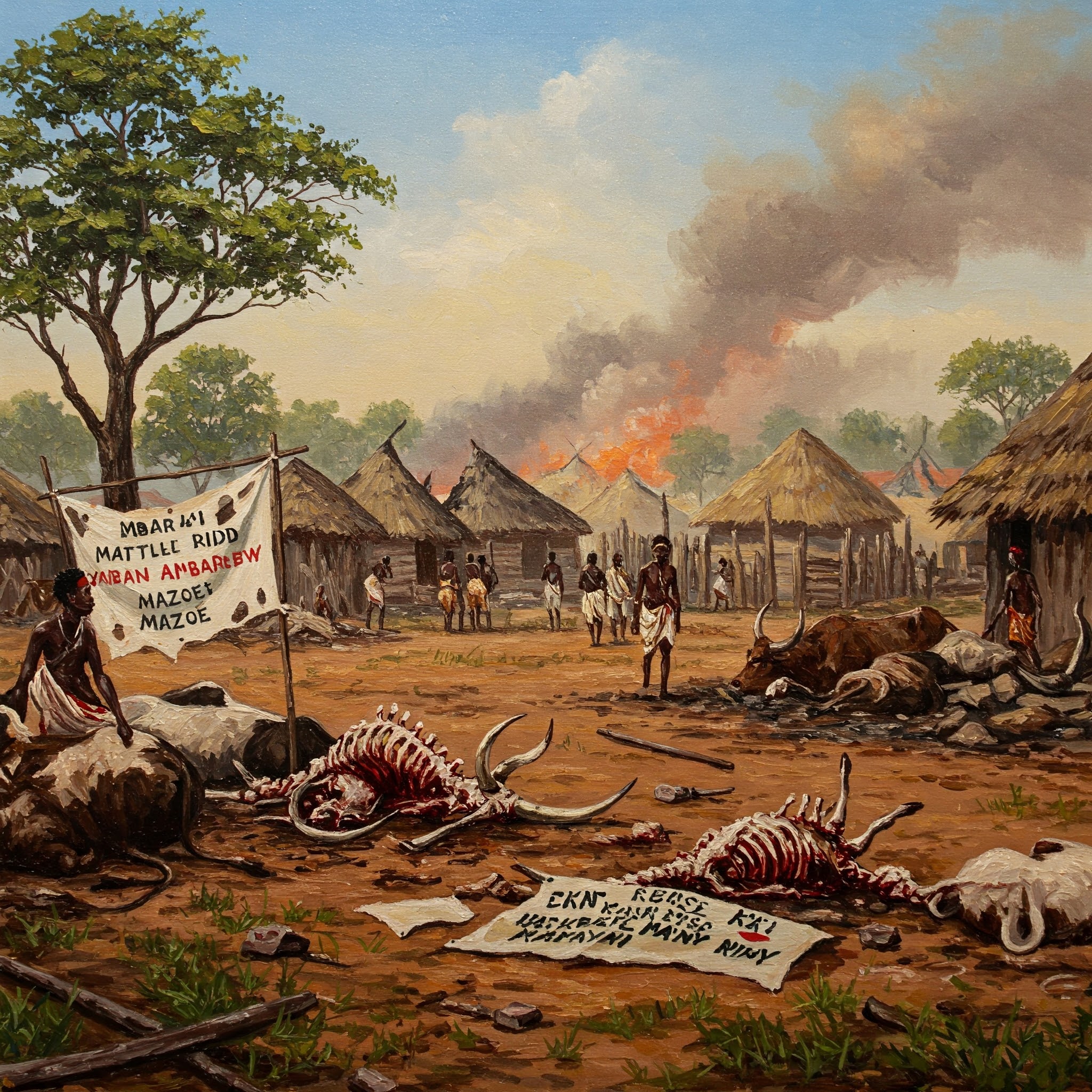
The 1897 Precedent (British Colonialism): The assertion that Zimbabwe’s power centered in Harare (linked to the Mbari Royal family) makes the colonial conquest of that area a symbolic and strategic loss for the nation. The immediate act of hoisting the Union Jack on the Kopje—Harare’s highest point—was the ultimate declaration of displaced sovereignty. It physically marked the end of the previous authority of the Mbari clan and the commencement of British colonial rule (Rhodesia). This act established a devastating precedent: that control over Zimbabwean land and resources could be claimed by force or imposed authority.
The Modern Parallel (Neo-Colonialism): The description of foreign entities arriving, fencing off land, and beginning destructive extraction activities without local consent is seen as a modern manifestation of this 1897 precedent. The feeling of “neo-colonialism” arises from the perception that while the flag has changed, the core dynamic—foreigners seizing control of land, imposing authority, and disregarding local populations—remains the same. This perception is particularly acute when the activities threaten local livelihoods, sacred sites, and ancestral land, effectively displacing citizens economically and spiritually.
Where Does the Power Come From? The Role of Government and Concessions
The key question—“Where do Chinese get the power to do that?”—points directly to the source of legal authority, which is almost always the central government.
Mining Concessions and Licences: In Zimbabwe, the state owns all mineral resources in the ground. Foreign companies do not unilaterally claim land; they are typically granted Exclusive Prospecting Orders (EPOs) or mining concessions by the Ministry of Mines and Mining Development. These agreements often grant vast powers, sometimes legally overriding surface rights (held by farmers or communities) under the Mines and Minerals Act.
Lack of Transparency and Accountability: The power imbalance is amplified by a perceived lack of transparency in how these deals are negotiated and a lack of accountability when things go wrong. Deals are often struck between the government and the foreign investor without sufficient consultation with the affected local communities or traditional authorities (such as the Mbari Royal family).
The “Government Deal, Not People’s Deal” Conflict: This is the core issue of contention. Companies operate under the assumption that their agreement with the central government is supreme, allowing them to dismiss local objections. For the Zimbabwean citizen, however, the government’s deal is illegitimate if it violates their fundamental rights to land and security. This creates a dangerous confrontation where citizens defending their land are met not by the law protecting them, but by the force of the company backed by a government license.
The Vicious Cycle of Destruction and Erosion of Trust
The reported activities—invading farms, digging, fighting locals, and leaving vast trails of environmental destruction—have severe, compounding consequences.
Environmental Havoc: Unregulated or poorly managed mining operations lead to permanent damage: loss of arable land, pollution of water sources, deforestation, and the destruction of biodiversity. This directly impacts the long-term food security and health of local populations.
Social Disruption: The conflict between locals and the foreign entities creates social trauma, insecurity, and division. When locals are arrested or harmed for defending their property, it severely erodes trust in the rule of law and national institutions.
Cultural Destruction: The reported digging and destruction on sites linked to “sacred sites” represents an irreversible cultural genocide, destroying the tangible history and spiritual heritage that the Harare Royal family and other communities are attempting to resuscitate.
The Path Forward: Resuscitating Sovereignty
The sentiment that “Chinese neo Colonialism should not displace more Zimbabweans” requires decisive action that addresses both the legal framework and enforcement.
Legal and Legislative Reform:
Mines and Minerals Act: A fundamental reform of this act is needed to ensure surface rights and traditional authority consent hold precedence over mining licenses. This would empower local communities to veto projects that threaten their land or culture.
Environmental Impact Assessment (EIA): EIAs must be robust, transparent, and genuinely community-led, with strict legal penalties for companies that violate them.
Empowerment of Traditional and Local Authorities: The government must officially recognize the cultural and legal authority of traditional leadership structures, such as the Mbari Royal family, in matters concerning ancestral and sacred lands, ensuring they are mandatory, consenting partners, not just consulted bystanders.
Enforcement of the Law (Non-Discrimination): The government must demonstrate that the law applies equally to local citizens and powerful foreign investors. Any foreigner who engages in violence, invasion, or environmental destruction must be prosecuted and subjected to immediate punitive action, including the revocation of licenses and deportation, as might be expected in nations like Kenya.
International Scrutiny: Civil society, local leadership, and global partners must increase pressure on the Zimbabwean government to honor its commitment to human rights and national sovereignty, distinguishing between beneficial investment and exploitative neo-colonial resource extraction.
The resilience of the Zimbabwean people, as demonstrated by the multi-generational remembrance of the Mbari genocide and the continuous fight for land, is the ultimate safeguard. The message is clear: the deals are with the government, but the final authority rests with the people and the land they protect.
Comments
About Author


