

News of The South | Special Report & Historical Analysis | 16 October 2026
By Princess Eugene Majuru
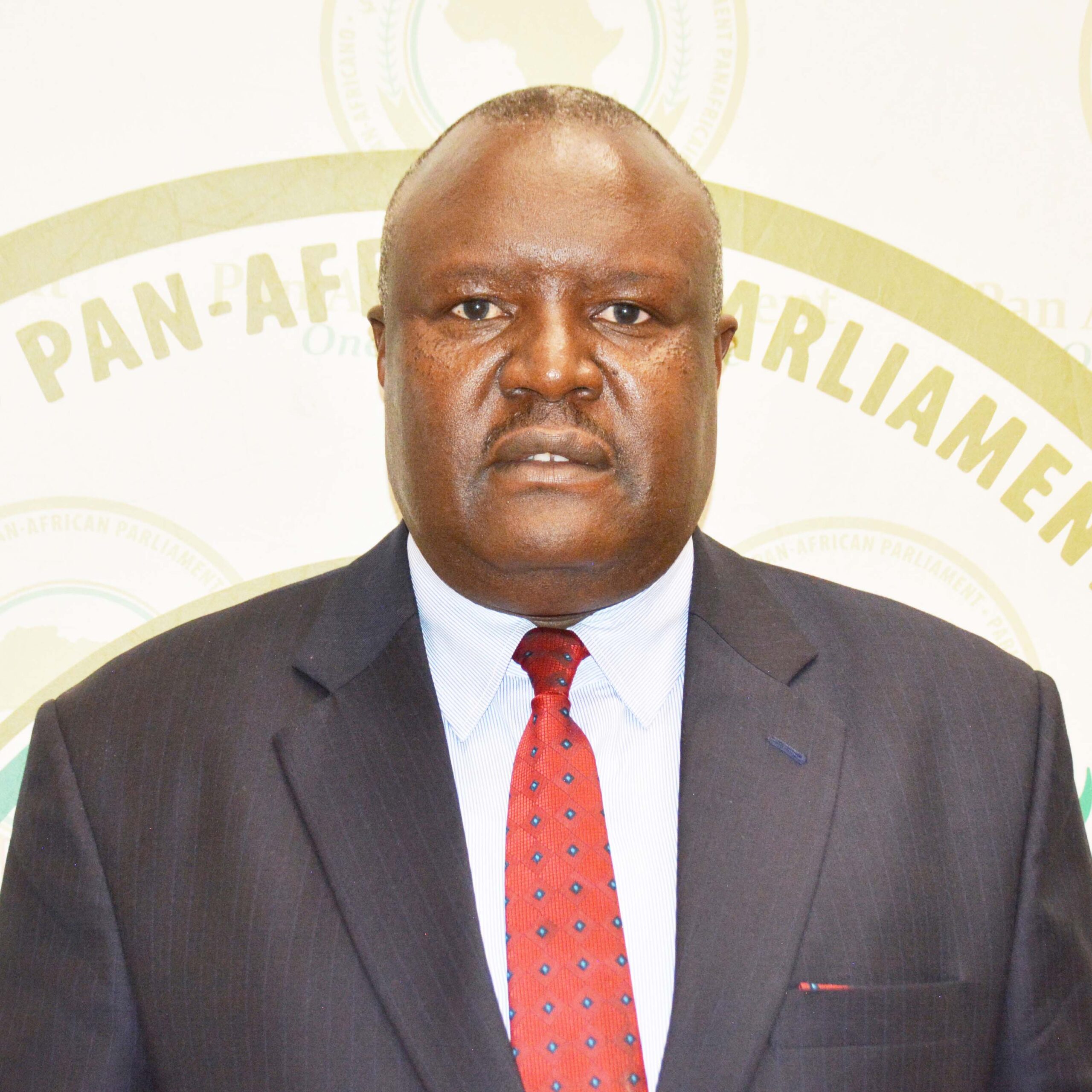
The dramatic recall of Chief Fortune Charumbira from Zimbabwe’s Senate has opened a much bigger debate than the political future of one traditional leader. It has raised fundamental questions about the legitimacy of chieftainships, the influence of colonial authorities in determining who became a chief, the independence of Zimbabwe’s National Council of Chiefs and the difference between hereditary royal authority and government-recognised traditional leadership. For years, Charumbira occupied influential positions within Zimbabwe’s traditional leadership establishment. He served as President of the National Council of Chiefs, became President of the Pan-African Parliament and subsequently held the position of Deputy President of the National Council of Chiefs.
Yet on 14 September 2026, a meeting of the Masvingo Provincial Assembly of Chiefs produced an extraordinary vote recommending his recall, alongside Chief Nhema of Zaka and Chief Chitanga of Mwenezi. Reports indicate that 42 chiefs supported the motion, three opposed it and three abstained.
On 13 October, the Ministry of Local Government and Public Works confirmed that the recall process had received presidential approval and that the relevant authorities, including the Senate, had been formally notified.
The development represents a significant reversal for a man who once stood at the centre of Zimbabwe’s traditional leadership structures. However, the distinction between removal from representative office and removal from a hereditary chieftainship is important. The reported recall concerns his positions within the National Council of Chiefs and the Senate; it does not, by itself, establish that he has been stripped of his substantive chiefly title.
The immediate allegations concern the three chiefs allegedly undermining President Emmerson Mnangagwa, including claims that they opposed the restoration of previously abolished chieftainships and failed to attend installation ceremonies.
But beneath these allegations lies a deeper historical question: who has the authority to determine which families are entitled to rule as traditional leaders in Zimbabwe?
The political fall of a powerful traditional leader
Charumbira’s political difficulties cannot be examined without considering the changing relationship between traditional authorities and the government. For many years, his public political statements attracted criticism from those who believed traditional leaders should remain independent of party politics. His expressions of support for ZANU-PF prompted legal challenges and public debate about the constitutional requirement that chiefs should not act in a partisan manner.
Section 281 of Zimbabwe’s Constitution requires traditional leaders to remain politically neutral, refrain from furthering the interests of political parties and treat people within their jurisdictions fairly. This constitutional principle is important because a chief is expected to represent an entire community, including people who support different political parties.
The latest dispute creates an apparent contradiction. Charumbira previously faced criticism for being too closely associated with the ruling party, yet the reported reason for his recall now involves allegations of insufficient support for presidential decisions. If these accounts accurately reflect the basis of the recall, the controversy raises questions about whether traditional leaders are being assessed according to constitutional duties, internal institutional rules or expectations of political loyalty. It also raises questions about the extent to which the Council of Chiefs can make independent decisions without interference from government officials or political organisations. The presence of political figures at the Masvingo meeting has attracted scrutiny, although their attendance alone does not establish that they directed the outcome.
Were chiefs unhappy with Charumbira long before his removal?
The scale of the vote against Charumbira and his two colleagues suggests that opposition within the provincial assembly was substantial at the time of the decision. However, the vote does not establish how long dissatisfaction had existed or whether chiefs had previously been prevented from speaking openly. Some claims exist that members of the Chiefs’ Council had been privately unhappy with Charumbira for years however the unhappy members never felt safe openly expressing their dissatisfaction with his work, some of it includes lack of meetings for very long periods as they were told there were no funds for the Chiefs council to meet on a regular basis.
There are nevertheless legitimate questions about how leadership operates within the institution. Did provincial chiefs feel adequately represented during Charumbira’s years of influence? Were disputes over traditional succession handled fairly? Did smaller or historically marginalised royal houses have meaningful opportunities to present their grievances? And were chiefs able to challenge decisions without fearing consequences for their positions? These questions matter because traditional leadership should not be reduced to a hierarchy of titles, political appointments and ceremonial appearances. The institution is expected to protect customary law, cultural heritage, community interests and the historical continuity of traditional authority. A council that cannot accommodate disagreement risks weakening the very institution it exists to represent.
The Charumbira chieftainship and its disputed colonial history
Perhaps the most significant historical dimension of the controversy is that the Charumbira chieftainship itself has been the subject of a long-running succession dispute.
This is not merely speculation. A 2019 High Court judgment in Mapingure v Provincial Assembly of Chiefs, Masvingo Province documented a challenge to Fortune Charumbira’s appointment.
The applicant argued that succession within the relevant Karanga community traditionally followed a rotational system involving different royal houses rather than automatic inheritance from father to son.
According to the case, the disputed succession arrangements had their origins in the colonial period. The applicant alleged that following the death of Chief Madyira in 1943, the colonial administration favoured the appointment of his son Mazhira because of his relationship with the colonial authorities. The succession subsequently passed through the family line, with Fortune Charumbira eventually becoming substantive chief in May 2000. The court recorded these historical allegations but did not make a final determination that the Charumbira chieftainship was illegitimate. The application encountered a procedural obstacle because the President, whose role was central to the appointment dispute, had not been joined to the proceedings.
This distinction is essential. There is documented evidence of a serious customary succession dispute, but that is not the same as a judicial finding that the entire chieftainship was invented by British colonialists. The case nevertheless exposes a fundamental problem within Zimbabwe’s traditional leadership system: colonial interference may have altered succession arrangements, and those changes can continue to generate disputes long after colonial rule has ended.
How British colonialism transformed African chieftainships
Before colonial occupation, African societies had established political institutions governed by their own histories, customary laws, family structures and spiritual traditions. Some communities were organised under kings and paramount rulers, while others recognised chiefs, headmen and different forms of hereditary or collective authority. The British South Africa Company and subsequent colonial administrations did not encounter a territory without political leadership. They encountered established African societies whose systems of governance were often incompatible with colonial ambitions to control land, labour, taxation and political power. Colonial authorities subsequently interfered with traditional leadership in several ways.
Some existing chiefs were removed or had their authority reduced. Others were retained but placed under colonial administrative supervision. In certain cases, individuals who had not previously enjoyed the same traditional recognition were acknowledged as chiefs by colonial officials. Succession arrangements were also altered, sometimes favouring candidates considered more cooperative with colonial administrators. This created a lasting distinction between authority derived from a community’s own customary institutions and authority formally recognised by the colonial state. Importantly, colonial recognition did not automatically make a chieftainship illegitimate. Some historically established ruling houses retained their positions under colonial administration. Equally, the possession of a colonial appointment record does not necessarily prove that the holder was the rightful customary successor. Determining legitimacy requires examination of each community’s particular history.
Legitimate chieftainships, colonial appointments and the question of rightful succession
The debate should distinguish between three different forms of authority.
First are historically established chieftainships whose origins predate colonial rule and whose succession is supported by recognised customary practices, genealogies and community traditions.
Second are chieftainships that existed before colonial occupation but whose leadership or succession arrangements were subsequently altered through colonial intervention.
Third are positions created, reorganised or elevated by colonial administrations for administrative purposes, sometimes without the same historical foundation as older hereditary institutions.
These categories are not always straightforward. Historical records can be incomplete, oral traditions may differ and communities may disagree about which ruling house possesses the strongest claim.
For this reason, the legitimacy of a particular chief cannot be established solely through a government certificate, a family surname or an assertion of royal ancestry.
The evidence must be examined. A credible historical inquiry would consider genealogical records, succession practices, precolonial political relationships, colonial administrative correspondence, community testimony and relevant court judgments. The purpose should be to establish historical and customary entitlement, not to replace one politically favoured family with another.
Chieftainship and royalty: Are they the same?
One of the most misunderstood aspects of African traditional governance is the distinction between royalty and chieftainship.
A chieftainship is a traditional leadership office recognised within a particular community and, in modern Zimbabwe, regulated through the Constitution and legislation.
Royalty refers more broadly to hereditary membership of a ruling lineage or dynasty. Depending on the community’s historical institutions, royal authority may be associated with kingship, paramount leadership, chieftainship or other recognised hereditary positions.
Not every chief is a king, and not every member of a royal dynasty occupies a government-recognised chieftainship.
Likewise, a family may retain a historical claim to royal ancestry even where the traditional political office associated with that family has been abolished, suppressed or left without formal recognition.
A government appointment can establish the legal status of a chief under national law. It cannot, by itself, rewrite the history of a community’s royal ancestry.
Conversely, a claim of royal descent does not automatically establish a present legal right to exercise traditional authority over a community. These distinctions are particularly important in Zimbabwe, where colonial occupation disrupted numerous indigenous political institutions. The history of African royalty cannot be understood exclusively through the lists of chiefs recognised by colonial administrators or successive post-independence governments.
What about royal houses whose authority was abolished?
The restoration of chieftainships abolished during colonial rule is an important part of Zimbabwe’s wider debate about historical justice. For communities whose traditional institutions were displaced, the loss was not merely administrative. It could involve the destruction of political autonomy, loss of ancestral land, disruption of succession systems, displacement of royal families and erosion of cultural authority.
The Mbari royal house of Harare, associated with King Mbari, is among the historical royal traditions whose descendants have sought greater recognition of their ancestral leadership and history.
There is existence of historical documentation, genealogical evidence, the circumstances of colonial displacement and the customary structures that existed before occupation. The wider issue is whether Zimbabwe’s restoration processes are sufficiently comprehensive to consider communities whose political authority was displaced during the earliest years of colonial occupation.
Why should some historical leadership institutions be considered for restoration while others remain unresolved? What criteria determine whether a traditional institution is restored? And are these decisions based on historical evidence, customary legitimacy and community consultation, or are political considerations influencing the process? The answers matter not only to royal families but also to communities seeking recognition of their historical identity.
How effective was Charumbira’s leadership?
Assessing Charumbira’s record requires looking beyond the number of years he occupied influential offices. His supporters can point to his prominent role in traditional leadership institutions, his representation of chiefs in national structures and his involvement in continental parliamentary affairs. His critics, however, have raised concerns about political partisanship, succession disputes and the independence of the traditional leadership institution.
One particularly important episode occurred in 2018, when Zimbabwe’s High Court ruled against partisan statements he had made urging traditional leaders to support ZANU-PF. That ruling established a significant constitutional boundary between the responsibilities of a chief and the political interests of a party. Another issue concerns the handling of succession disputes. The Charumbira chieftainship case demonstrated the difficulties faced by individuals challenging customary appointments through existing administrative and judicial procedures. These controversies provide grounds for examining his leadership record, but a comprehensive assessment would also require evidence about the Council’s achievements, financial accountability, dispute resolution, preservation of cultural heritage and representation of traditional communities during his tenure. The question is therefore not simply whether Charumbira held powerful positions. It is what those institutions achieved for the communities they were established to serve.
Has Zimbabwe truly dismantled the colonial traditional leadership system?
Zimbabwe achieved political independence in 1980, but some institutional arrangements inherited from colonial administration continued in modified forms. Traditional leaders remained subject to statutory recognition, government procedures and administrative structures. The 2013 Constitution provides safeguards intended to protect customary traditions and the independence of traditional institutions.
Section 283 specifically requires the appointment, succession, removal and restoration of traditional leaders to take account of the prevailing culture, customs and practices of the communities concerned.
It also requires protection against political interference. This creates an important constitutional test. If traditional leadership derives its legitimacy from community history and customary succession, how much influence should contemporary political authorities exercise over who becomes a chief? Government has legitimate responsibilities to ensure that appointments comply with the law, that disputes are resolved fairly and that traditional leaders respect constitutional rights. However, those responsibilities must be balanced against the autonomy of communities to maintain their own customary institutions. The restoration of previously abolished chieftainships provides an opportunity to examine whether the state is correcting historical injustices or merely reorganising traditional authority within an existing administrative framework.
The National Council of Chiefs faces questions of its own
Charumbira’s recall also brings renewed attention to the National Council of Chiefs. The institution has responsibilities extending far beyond representing chiefs in Parliament. Traditional leadership is closely connected to customary dispute resolution, communal land, environmental stewardship, cultural preservation and community development. The Council’s effectiveness therefore depends partly on whether it can represent diverse communities and provide credible procedures for resolving disputes over traditional authority. A genuinely independent institution should be able to raise concerns about government policy without becoming an instrument of opposition politics or ruling-party mobilisation. It should also be able to investigate disputed chieftainships without favouring politically influential families. The current controversy offers an opportunity to examine whether the Council has adequate mechanisms for internal accountability, transparency and the protection of dissenting views. It would be especially important to establish whether the September vote reflected longstanding institutional disagreements, the specific allegations concerning the restoration of chieftainships, or a combination of different concerns.
The danger of confusing loyalty to the President with loyalty to the nation
Perhaps the most constitutionally significant aspect of the latest developments is the reported allegation that the three chiefs undermined presidential authority. Traditional leaders are required to respect the Constitution and lawful government authority. But constitutional respect is not necessarily the same as agreement with every political or administrative decision. A chief may legitimately raise concerns about a proposed appointment, dispute historical evidence or question a government policy, provided those actions remain within the law. The suggestion that disagreement with a presidential decision could itself justify exclusion from traditional leadership structures deserves careful examination. Equally, if the three chiefs failed to perform specific lawful duties attached to their offices, the relevant allegations, evidence and procedures should be made clear. Transparency is necessary to distinguish legitimate institutional discipline from political interference. The Constitution requires both respect for customary authority and safeguards against partisan conduct. Neither principle should be ignored.
What should happen next?
The controversy surrounding Charumbira provides an opportunity for a wider historical and institutional review. Such a process could examine disputed chieftainship succession arrangements, colonial-era alterations to traditional authority, unresolved claims from historically displaced royal houses and the procedures used to restore abolished institutions. It should also consider whether the National Council of Chiefs has sufficient independence to address disputes involving influential members of its own leadership. Any historical review must avoid assuming that all currently recognised chiefs lack legitimacy or that every claimant to a precolonial royal title possesses an unquestionable right to restoration. The objective should be evidence-based historical justice, supported by customary law, community participation and constitutional safeguards. Zimbabwe’s traditional institutions deserve a system in which legitimacy is neither manufactured through political favour nor denied because a community’s historical authority was suppressed during colonial occupation.
Charumbira’s removal is bigger than one man
Chief Fortune Charumbira’s recall has exposed questions that extend beyond his personal career. It has brought into focus the relationship between chiefs and political authority, the unresolved consequences of colonial interference in customary succession, and the need to distinguish hereditary royal history from contemporary government recognition. The documented dispute concerning the Charumbira chieftainship makes the historical dimension particularly relevant. But the legal questions surrounding that succession must be resolved through evidence and proper procedures, not political assumptions. For Zimbabwe, the broader challenge is to ensure that traditional leadership reflects the authentic histories, customs and aspirations of the communities concerned. Independence from colonial rule was a major political transformation. The task of addressing colonial distortions in indigenous institutions is a separate and continuing historical responsibility. The ultimate question is not merely who replaces Charumbira in the institutions from which he has been recalled. It is whether Zimbabwe’s traditional leadership system can preserve customary legitimacy, protect its independence and provide justice to communities whose hereditary institutions were altered, displaced or abolished. That is the deeper national debate arising from his fall from power.
Comments
About Author