BABIES WHO are conceived through IVF could be twice as likely to develop a lifelong developmental disability, researchers have discovered.
According to new research, children conceived using assisted reproductive technology (ART) were more likely to develop autism than babies conceived naturally.
ART includes any type of fertility treatment where the egg and the sperm are handled outside of the body, including IVF, artificial insemination and surrogacy.
Researchers explained they found an association between IVF and autism – but they did not prove that the treatment causes the disorder, reported HealthDay news.
During IVF – the most popular ART treatment – more than one egg is harvested and fertilised, which can lead to multiple births.
The higher risk of the disorder, which affects how a person communicates with, and relates to, other people, could be explained by factors such as multiple births and other risks associated with IVF, not the treatment itself, the researchers said.
After taking into account factors such as the mother’s education and multiple births, researchers found the increased risk was only seen for mothers under 35 years old.
And they found there was no extra risk of autism for women who gave birth to one child.
This means IVF using a single-egg transfer rather than multiple eggs lowers the chance of a baby developing autism, experts said.
The study involved nearly six million children born from 1997 to 2007.
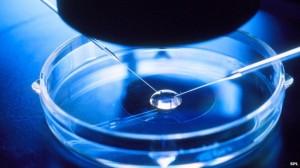
PROCEDURE: During IVF more than one egg is
harvested and fertilised, which can lead to multiple births
The team, led by Peter Bearman, a professor of social sciences at Columbia University in New York City, collected data on 5.9 million California births, including 48,865 infants conceived through assisted reproduction, and 32,922 children with autism.
They compared the incidence of autism in births that involved advanced infertility treatment such as IVF and those that didn’t, reported the Mail Online.
Professor Bearman said this was the largest study looking at the relationship between IVF and autism that has ever been carried out before.
The results are not a condemnation of IVF technology, as the study did not prove a cause-and-effect link, the professor added.
He continued: “There is an association between IVF and autism, but when we control for the characteristics of women who are more likely to use IVF, for example, age and social status, this association is lessened significantly.”
The remaining increased risk is due to factors such as multiple births and complications of pregnancy and delivery associated with IVF, he said.
He added that there was no significant increased risk of the disorder for children of women who gave birth to one child.
Bearman said: “Knowing that one can largely reduce the risk of autism by restricting the procedure to single-egg transfer is important for women who can then make better informed decisions.”
The research was published online in the American Journal of Public Health.
***What is autism?***
Autism is a lifelong developmental disability that affects how a person communicates and relates to other people and how they make sense of the world around them.
Characteristics are generally divided into three main categories: difficulty with social communication, social interaction and social imagination.
Key traits include inability to follow direction, difficulty reading facial expressions and body language, delayed speech, impatience and difficulty understanding jokes, figures of speech or sarcasm.
It is a spectrum disorder, meaning it affects individuals differently. Asperger syndrome is a specific form of autism.- Voice
Comments
About Author