


By DR MASIMBA MAVAZA.
Harare, Zimbabwe. (News of The South) – The Government provides relief to millions of people, who are victims of disasters. It is responsible for mobilizing food and funds for transport for all large-scale refugee-feeding operations.
In the aftermath of a disaster government is often called on to help farmers re-establish production following floods, outbreaks of livestock disease and similar emergencies. When there is a disaster the government has a duty to control the distribution of donated items and any relief products.
Government has to take over from any organisation in the spirit of public health. This is done in order to maintain the health of the nation. Health Protection including management of disasters, outbreaks is the remit of the Government or the state may formally authorise an agency to do that role. It entails establishing command Centres, Distribution Centre’s and collaboratively working with other agencies – the ultimate responsibility in terms of the quality of service provided remains with the state or states in the case of international or regional disasters.
It baffling to hear malcontents within the Zimbabwean community and ridiculous claims that the government is politicising the disaster donations.
It is the duty of the government to take charge. The ministry in charge can delegate to any organisation or persons to distribute the donations Bearing in mind that after a disaster there is anger and people are at the edge usually looking for anyone to blame.
The fury of nature seemed to cause the institutions on which our society is based – those of government, commerce, and civil society – to crumble.
First responders appeared overwhelmed as accounts of widespread looting, vandalism, theft, assault, and murder headlined newspapers and as the images of our fellow citizens literally swimming for their lives appeared on television and computer screens. The slow and seemingly inept responses of government at all levels both in preparation for and recovery from the storm infuriated Zimbabweans.
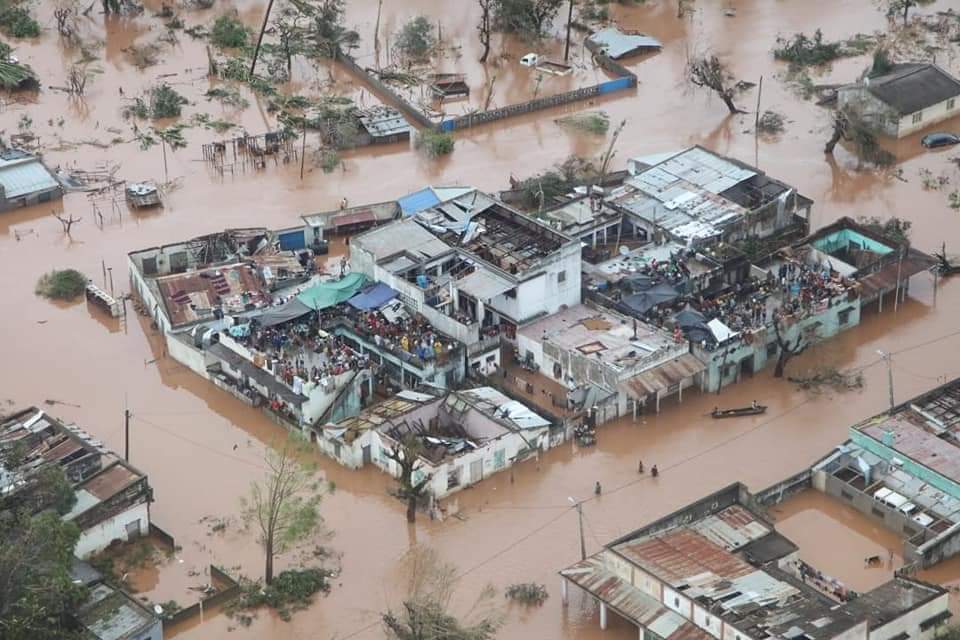
The fury of nature followed by the fury of citizens railing at government ineptitude – in this case, the aftermath of Cyclone Idai– is a disturbingly unfamiliar scenario. The frequency of public dissatisfaction with whoever is in charge and government response to this major disasters raises two important questions for the well-being of our republic: “Is public fury justified?” and, perhaps more importantly, “Is railing at government the best approach to ensuring effective action in the next disaster?” This lesson examines contemporary expectations of government in the wake of disaster and the prevailing assumption that only government is big enough to deal with major disasters by first looking at those tasks that government does well.
The aftermath of the disaster brings some expectations that help must be prompt.
Because human society has shown great resiliency through the ages we can learn from those instances where it has not. Events like Cyclone Idai which spawned the “storm [that] infuriated Zimbabweans provide a body of evidence to see what government can do when its citizens are struck by disaster. Also implied is the assumption that government should do only those things it can do well, and should not do those things for which it is, by nature, ill-suited.
Historically in zimbabwe disaster response and relief has not been considered the responsibility of None governmental organisations but government, and most especially not the opposition parties. People caught in natural calamities turned to family and to community organizations like churches and private charities for support. But this disaster was a very disastrous one and it automatically pushed the government into action.
State and local governments readily engaged in rescue operations and the task of re-establishing and enforcing civil order when necessary. Government had the sole responsibility solicit for help to cover the cost of food, blankets, tents and other relief supplies requisitioned.
The President has the power to designate “disaster areas.” The designation triggers the availability of funds for rebuilding infrastructure and public buildings like schools, courts, libraries, police and fire departments, and other public institutions.
Cyclone Idai may seem unique in our contemporary national experience of major disasters, but in the larger historical perspective, this is true only in the specifics of time and place. The story of inadequate and failed government response has been told and retold, and the anecdotes circulating in the media and on the Internet are disturbingly like those from the last disaster and the one before that. We recognize that the nature and quality of the information to be gleaned from anecdotes varies and that care must be taken when using anecdotes as evidence.
Governments should undertake those activities for which the expected benefits outweigh the expected costs.
It should be understood that the basic role of government is to establish and enforce the “rules of the game” by maintaining civil order and the rule of law.
The immediate benefits of using military and police presence to keep the peace, deter violence, and protect property are quite clear, but it is also important to recognize the long-term benefits of re-establishing civil order.By enforcing the rule of law when disaster strikes, government provides a stable foundation of expectations upon which individuals can make choices among the alternatives they face – even, and especially, when their alternatives are limited or undesirable.When the rule of law is uncertain and when the rules of the game are inconsistent or subject to constant change, people and businesses delay decisions about whether to leave or return to the disaster area, whether to try to re-establish their businesses or give them up, whether to move back or move away.Re-establishing and maintaining the rules of the game stabilizes social institutions like schools and churches that are essential to attracting people and businesses back into disaster-damaged Communities restoration of civil order empowers non-government response, through which other institutions begin to re-establish the normal activities of the community.
It is imperative that the government controls the situation.
It is disheartening that people use the Social Media to peddle lies that government is politicising the distribution of food. It is reasonable and wise to stop people from going around distributing whatever little they have. Donations must be controlled. There must be a centre where all the donations are kept.
The donations have to be checked and government has to be satisfied that the donations are safe for consumption.
You cannot expect every person to go around distributing. No this must be coordinated from a command centre. Whoever is donating must pass through the established command centre.
The distribution must be organised not to be left for whoever.
Can you imagine every person running around with medication to be administered on people during a cholera epidemic?.
Sending messages which are
Wrong will cause panic in the Zimbabwe citizenry.
Vazet 2000@yahoo.co.uk
Comments
About Author


