By HRH Princess Eugene Majuru, Princess of Harare
Chikomba, Zimbabwe (News of The South) – The Chivhu area of Zimbabwe, once known as Enkeldoorn and a key part of the colonial Fort Charter district, holds a dark history of brutality and resistance that deeply impacted local communities, particularly the Mbari clan. This history is etched into the very landscape, with the name Chikomba District itself serving as a permanent memorial to a site of profound tragedy—a large hole, or $gômba$, used as a mass grave.
The Atrocities at ‘Chikomba’
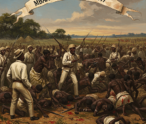
The events described near the mountain now known as Gomo Remadendera (formerly the name of the mountain near the old Enkeldoorn) represent one of the most harrowing episodes of colonial violence in the region. After the atrocities and massacres of the Mbari clan the royal family of Harare the British named it Mountain of Slay.
Colonial forces, identified in this account as having been responsible for a “big hole” (gomba) in the ground, employed extreme intimidation and violence against the local population. The account details a horrific method of execution and terror:
The Fire and the Hole: People were reportedly tied to a log and subjected to a large fire. The threat of being thrown into this “big hole” was used as a tool of coercion and ultimate demise. This hole, or gomba, became the central feature of this atrocity, a “hole where people were killed” (gômba raiurairwa vanhu).
The Mbari Clan’s Demise: Members of the Mbari clan were the principal victims, suffering capture, being bound by their legs, and meeting their tragic end in this area. Their displacement, according to the account, continues to affect the clan members to this day. Descendants have had direct narration of accounts that took place from elders who witnessed the barbaric acts.
A Witness to Brutality: A particularly chilling detail recounts an Mbari member being dragged by a horse toward the gomba the big hole, to be executed.
It is this horrific connection to the mass grave—the gomba or “chikomba” that is believed to have given the modern administrative area its name: Chikomba District. The name serves as a perpetual, painful reminder of the site of colonial-era massacres.
Father Arthur Shearly Cripps, a Beacon of Dissent
Amidst the widespread brutality, the account highlights the extraordinary humanitarian actions of Father Arthur Shearly Cripps (1869–1952), an Anglican missionary whose stance radically diverged from the actions of his colonial compatriots.
Cripps was an educated, prayerful, and deeply principled Englishman who settled in the area. His life and work were characterised by a profound respect for the indigenous people and a fierce condemnation of the injustices perpetrated by the colonial regime.
Eyewitness and Activist: Father Cripps witnessed the dragging of the Mbari clan member toward the death-hole. This specific incident is cited as the turning point that cemented his active opposition to the colonial atrocities.
Turning Against His Own: He became a vocal critic, openly turning against his fellow British people and the brutality they inflicted. His actions were driven by a Christian belief system that prioritized justice and human dignity over colonial expediency and violence. He did not agree to the brutality that was happening in the area.
Legacy of Kindness: Father Cripps is remembered and greatly loved in the Chikomba area in Chivhu precisely because of the kindness and moral courage he displayed. He spent much of his life working to secure land rights and fairer treatment for the Shona people, dedicating himself to living simply among them, which earned him the title “The Poet of Mashonaland.”
The story of the chikomba and the subsequent displacement of the Mbari clan is a powerful example of local history preserved through oral tradition and place names. The memory of the victims, and the moral integrity of Father Cripps, stand in sharp contrast to the horrors of the colonial period, ensuring that the dark history of Fort Charter is neither forgotten nor silenced. King Mbari’s pre colonial territory was a wide area it stretched from Harare, Mazoe, Seke, up to Waddilove in Marondera, Nyabira, Miunt Hampden, Concession, Domboshava and Chikomba where others were settled.
Comments
About Author