With Liberia declared Ebola free and the infection slowly being contained in Sierra Leone and Guinea, The Voice speaks to Dr Olawale Maiyegun, director of social affairs at the African Union in Addis Ababa, Ethiopia, about the work the organisation has done to curb the deadly virus in West Africa which has already claimed more than 10,000 lives.
Q. Can you tell us the first thoughts you had when the Ebola outbreak in West Africa was brought to your attention?
A. I first heard about the Ebola outbreak in late March 2014. The impression then was that it could be managed and was nothing serious as the outbreak was located in rural areas. By mid-April, I was more apprehensive about its spread, bearing in mind that the three affected countries – Guinea, Liberia and Sierra Leone – were fragile post-conflict countries.
Q.When did you realise the sheer scale of the epidemic facing the continent?
A. When Ebola arrived in Lagos, Nigeria, in July 2014, brought by Patrick Sawyer from Monrovia, I realised that wherever you are on the continent you are just one flight away from the epidemic. Lagos State has a population of about 22 million; it is approximately the fourth largest economy in Africa, and Lagos itself is a big commercial centre. Just imagine the potential effect of the Ebola epidemic on the number of European, African and Asian flights into Lagos every day? It dawned on me that the economy of Africa, and indeed, business around the world, could be jeopardised by the epidemic.
Q.There is a perspective that comes across in mainstream British media that the rest of the world had to ‘save’ Africa regarding this epidemic. Do you think that is a fair assessment?
A. In a globalised world, the fight against any epidemic is a shared responsibility. An epidemic does not recognise frontiers and in the age of jet travel, we are all potentially just a flight away – Ebola is a case in point. Every country and organisation that responded to the fight against Ebola in West Africa complemented each other and all contributed in one or the other, helping to bring the epidemic to an end.
The US, the UK, Germany, France, China, Sweden, Norway, and many others contributed financially and provided infrastructure. But the African Union together with Economic Community of West African States (ECOWAS) and Cuba provided the much-needed human resources for health. The African Union mobilised the highest number of African volunteers who went to support their brothers and sisters in Guinea, Liberia and Sierra Leone to work at the Ebola Treatment Units (to help increase survival rates of infected patients).
They were also responsible for leading contact tracing and surveillance (by epidemiologists who are the infantry soldiers in the fight and largely responsible for breaking the chain of transmission), psycho-socio support, community engagement and support among many other activities. When the emergency phase was over, the African volunteers stayed longer to help restoration of healthcare and facilities in an infection-free environment.
Q.What lessons have been learned?
A.The take home lessons are clear: (a) respect the people and do not support with the mindset of going to dictate to them; (b) Africans are more able at community engagement because they have a better understanding of the culture of their own people. For instance, the Nigerians made a difference in Liberia and Sierra Leone because they could communicate relate better (in Creole or Pidgin English) with the people; (c) African health workers understand infectious diseases in their continent better than outsiders.
The volunteers from Uganda, the Democratic Republic of Congo and Nigeria all had experience in dealing with the epidemic before their deployment to the affected countries. The epidemic has provided an opportunity for Africa to increase the assets it has in fighting Ebola and related infectious diseases should there be another outbreak. Now, Ethiopia, Kenya, Rwanda, Burundi, South Africa, Tanzania, Zimbabwe, the Cameroon, Niger, the Central African Republic and many others from different parts of the continent have become an asset. Similarly, health workers in the three affected countries plus Senegal and Mali have now experienced personnel that can respond to future outbreaks; (d) finally, the African Union was able to mobilise the African Private Sector and provided the sector with a continental platform to support Ebola.
Through their SMS campaign, they provided many Africans who could not go to Guinea, Liberia and Sierra Leone, the opportunity to support the fight against Ebola. The African Private Sector also provided the single largest financial support to the African Union Ebola response.
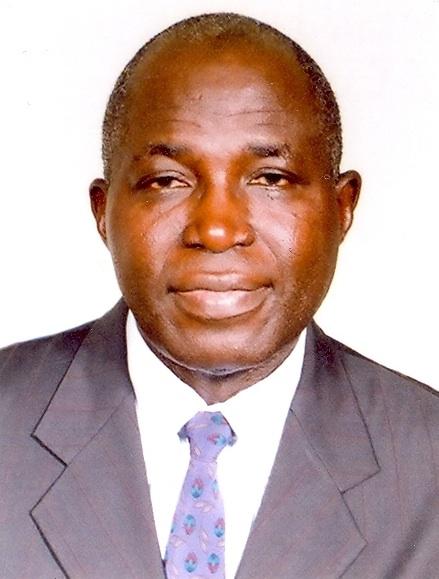
SPEAKING OUT: Dr Olawale Maiyegun
Q.Can you shed light on why there has been greater success in Liberia than in Guinea and Sierra Leone?
A.Firstly, let me say that there has been great success in all three countries. Yes, Liberia reached zero first but it is likely to be followed by Sierra Leone soon. Why has there been a difference in achieving success in Liberia faster than the other countries? Liberia and Sierra Leone recognised the link between the outbreak and security, and brought in military aid to assist, integrating this into their national incidence response faster than Guinea. The Liberian military was a factor in restoring stability (in spite of initial misgivings) on the streets of Monrovia and in removing dead bodies at a very critical time.
Similarly, in Sierra Leone, the military and security forces were helpful in the various lock downs that contributed into breaking the chain of transmission. Secondly, there has been much more community resistance in Guinea than in Sierra Leone and Liberia. Hence the various attacks on health workers. Please note that these are mere speculations on my part. There is a need to have a thorough and comprehensive study as to how and why there has been greater success in Liberia than in Guinea and Sierra Leone.
Q.What are your immediate and long-term plans to eradicate Ebola and ensure that any future diagnoses are dealt with swiftly?
A. By assisting AU member states to improve their capacity for disease surveillance, detection and response. At a continental level, the AU is also putting in place the African CDC with the primary objective of surveillance, detection and response. The AU plans to keep a roster of some of the volunteers who can be called upon in the event of a future health emergency.
Q.Dealing with the medical challenges of Ebola is only one aspect of this crisis. What plans does the African Union have to combat the economic challenges?
A. The AU is convening a conference in Malabo, Equatorial Guinea from 20 to 21 July 2015 that will address the recovery and reconstruction of the affected countries through the mobilisation of resources to assist them. The conference is being convened in the same spirit by which African health volunteers were deployed – Africa helping Africa.
Q.Do you find that even though the outbreak only affected a few countries, the entire continent has been tainted?
A. Ebola generated hysteria and panic due to lack of understanding. It led to border closures, travel restrictions and flight bans among others. It resulted in stigmatisation and isolation of the affected people when we all should have been isolating Ebola and not the people. But we all recovered quickly and did the right thing. We expressed the African solidarity (of Africa helping Africa) by responding to the call for volunteers at a very critical moment. These volunteers made a huge difference.
Q.Do you feel hopeful about the future? And what, if anything, makes you feel that way?
A. Through Ebola, we demonstrated that we can act and work together as Africans. Above all, the resilience of Africans gave me hope. The strong support of the African private sector also gave me hope about the ability of Africans to take control of their own destiny. – Voice
Comments
About Author