

By Princess Eugene Majuru, Princess of Harare
Zimbabwe is once again confronting a deeply troubling question: *what happens to ordinary families when the structures they depend on for shelter and livelihood are demolished, and what plan exists for the people left behind?
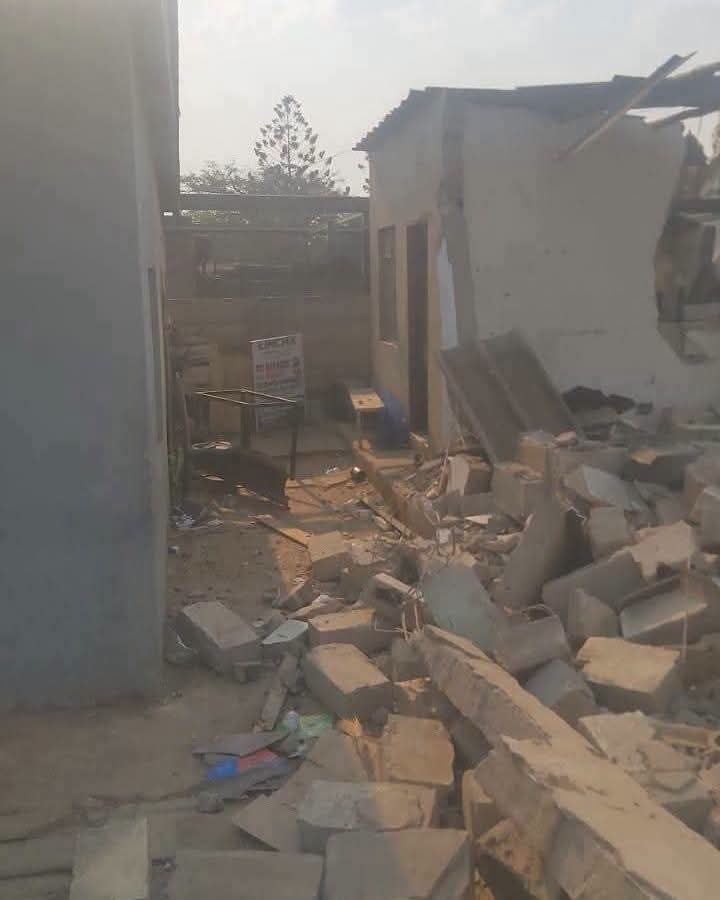
Across different parts of the country, authorities have been carrying out enforcement operations against structures described as illegal or unauthorised. In Harare, recent reports have documented demolitions in areas including Highfield, while the City of Harare has also indicated that thousands of demolition orders remain outstanding. Authorities say the operations are intended to enforce planning regulations, address illegal developments and deal with construction in areas such as wetlands.
Those objectives cannot simply be dismissed. A country needs planning regulations. Local authorities have responsibilities to protect public infrastructure, sewer systems, roads, wetlands and other environmentally sensitive areas. Illegal construction cannot be allowed to become an alternative planning system.
But law enforcement and public administration must never lose sight of the human beings affected by their decisions.
The central question is therefore not whether Zimbabwe should have planning laws. It is whether those laws are being implemented through a properly planned, lawful and humane process.
Where are the displaced families expected to go?
A house may be described by an authority as an illegal structure, but to the people living inside it, it is a home.
It may contain a mother raising children, an elderly person, a family member with disabilities, a worker who has spent years building the structure incrementally, or a household whose income depends on the small business operating from that property.
When that structure is destroyed, the consequences do not end when the bulldozer leaves.
Children can be displaced from their schools. Families can lose their possessions and sources of income. People can be forced into overcrowded accommodation or onto the streets. Others may return to rural areas or move elsewhere without certainty about where they will live or how they will survive.
This is why demolitions must be considered not merely as a planning or enforcement issue, but as a social, economic, educational, public-health and human-rights issue.
The United Nations in Zimbabwe has previously highlighted that demolitions and evictions can affect rights extending beyond housing and property, including dignity, personal security, health and education, and has called for coordinated assistance to vulnerable people affected by such actions, including emergency shelter, medical care and mental-health and psychosocial support.
Zimbabwe’s Constitution already provides an important safeguard
There is an especially important constitutional issue that cannot be ignored.
Section 74 of Zimbabwe’s Constitution states:
“No person may be evicted from their home, or have their home demolished, without an order of court made after considering all the relevant circumstances.”
That provision is not merely symbolic. Zimbabwe’s courts have previously considered its significance. In City of Harare v Makungurutse, the Supreme Court reaffirmed the constitutional protection against arbitrary eviction and demolition.
The implication is clear: enforcement of planning regulations does not exist outside the Constitution.
Where a demolition concerns someone’s home, the legal process and the circumstances of the affected people matter.
This is precisely why government and local authorities need to distinguish between planned enforcement carried out through due process and the sudden destruction of homes without adequate protection for the people who live there.
Notice and preparation matter
If authorities know that an area contains unauthorised structures, the process should not begin with machinery arriving at the door.
Residents should be given clear information about:
* why their structures are considered unlawful;
* the legal basis for the proposed action;
* whether they have an opportunity to challenge the decision;
* the date by which they are expected to leave;
* where they are expected to relocate;
* what happens to vulnerable households;
* what happens to children attending nearby schools;
* what happens to people who have nowhere else to go;
* how personal property will be protected; and
* what assistance will be available during relocation.
Recent reporting illustrates that authorities sometimes say residents had previously been warned. In St Martins, for example, a Harare City Council official said residents had been cautioned the previous year about construction in an area that had not been adequately serviced, while residents accused the local authority of failing to address their concerns before demolitions.
That disagreement itself demonstrates why communication, documentation and transparent procedures are essential.
A government should not expect citizens to understand an enforcement process after the demolition machinery has already arrived.
A demolition is not a housing policy
This is perhaps the most important distinction.
Removing an illegal structure does not, by itself, solve Zimbabwe’s housing crisis.
It may remove the physical structure, but it does not remove the household’s need for shelter.
It does not create a school place for the child who has been displaced.
It does not create employment for the parent whose informal business has disappeared.
It does not replace furniture, household goods or documents destroyed during displacement.
And it does not address the underlying reasons why people constructed homes in unplanned areas in the first place.
Zimbabwe has experienced serious housing shortages and rapid urbanisation for years. A 2026 academic study examining eviction and displacement in Zimbabwe argues that repeated eviction without durable housing solutions can reproduce homelessness and insecure living arrangements rather than resolving the underlying housing problem.
That raises a fundamental planning question:
If the state removes people from one location, where does it expect those people to live next?
The lessons of history should not be ignored
Zimbabwe has painful historical experience of large-scale displacement and destruction.
The 2005 Operation Murambatsvina remains one of the country’s most significant examples. Human Rights Watch documented widespread demolitions and evictions that left large numbers of people without homes or livelihoods and particularly affected vulnerable groups including children, older people and women.
Zimbabwe should therefore be extremely careful about allowing displacement to become a recurring instrument of urban management.
The historical lesson is not that governments should abandon planning laws.
The lesson is that planning without humanity can produce consequences far beyond the original planning problem.
What should a responsible approach look like?
If the government believes that particular structures must be removed, there should be a comprehensive process rather than an enforcement exercise standing alone.
First, authorities should conduct a household-by-household assessment before demolition.
Second, they should identify vulnerable residents, including children, older people, people with disabilities and households with no alternative accommodation.
Third, authorities should establish relocation and temporary accommodation arrangements before demolition**, rather than expecting displaced people to find solutions afterwards.
Fourth, affected residents should receive clear written notices explaining the legal basis for the action and the avenues available to challenge it.
Fifth, local authorities should coordinate with schools, health services, social-welfare departments and community organisations so that displacement does not unnecessarily interrupt children’s education, medical treatment or access to essential services.
Sixth, where informal settlements exist because people have been waiting for legitimate land allocation or housing, authorities should investigate the allocation system itself.
And finally, government should publish a transparent national framework explaining **where people displaced by these operations will go and what assistance they will receive.
Leadership must be measured by consequences
Zimbabwe does not need a choice between planning and compassion.
It needs both.
The government has a legitimate responsibility to regulate land use and protect public infrastructure. But it also has a responsibility to protect citizens from unnecessary hardship and to ensure that enforcement does not create a humanitarian problem greater than the one it was intended to solve.
The existence of an unlawful structure does not make the person living inside it cease to be a human being.
A family does not stop being a family because its house has been classified as unauthorised.
A child does not stop needing education because their parents have been displaced.
And a person does not stop needing dignity because a local authority has issued a demolition order.
As Princess of Harare and as someone who identifies herself as a descendant of the former kings of Harare, I am particularly concerned about the human consequences of decisions affecting communities living on this ancestral land.
The history of Zimbabwe contains enough examples of ordinary people bearing the consequences of decisions made by those in authority.
We should not normalise displacement.
We should not treat homelessness as an administrative inconvenience.
We should not confuse destruction with development.
Zimbabwe needs planning, but it needs humane planning. It needs enforcement, but enforcement within the Constitution. It needs development, but development that does not simply move vulnerable families from one crisis to another.
The question facing those responsible for these operations should therefore be straightforward:
Before you demolish a family’s home, where exactly are you going to put that family?
If there is no credible answer, then the planning process is incomplete.
Zimbabwe is dealing with human lives, not pieces of unwanted infrastructure.
The country can enforce its laws while still protecting dignity, due process and the welfare of its people.
That is not weakness.
That is responsible governance.
Comments
About Author