

By Princess Eugene Majuru
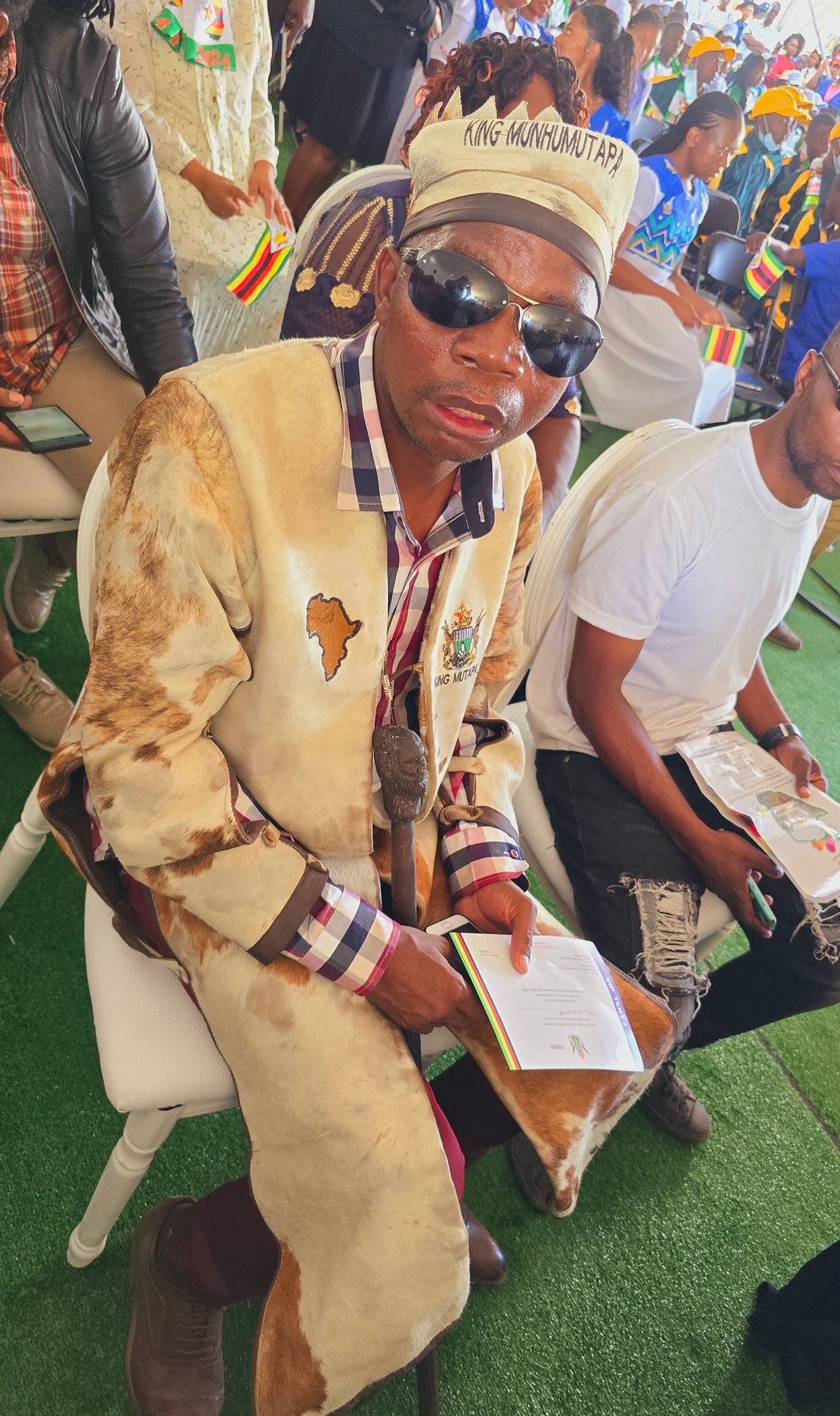
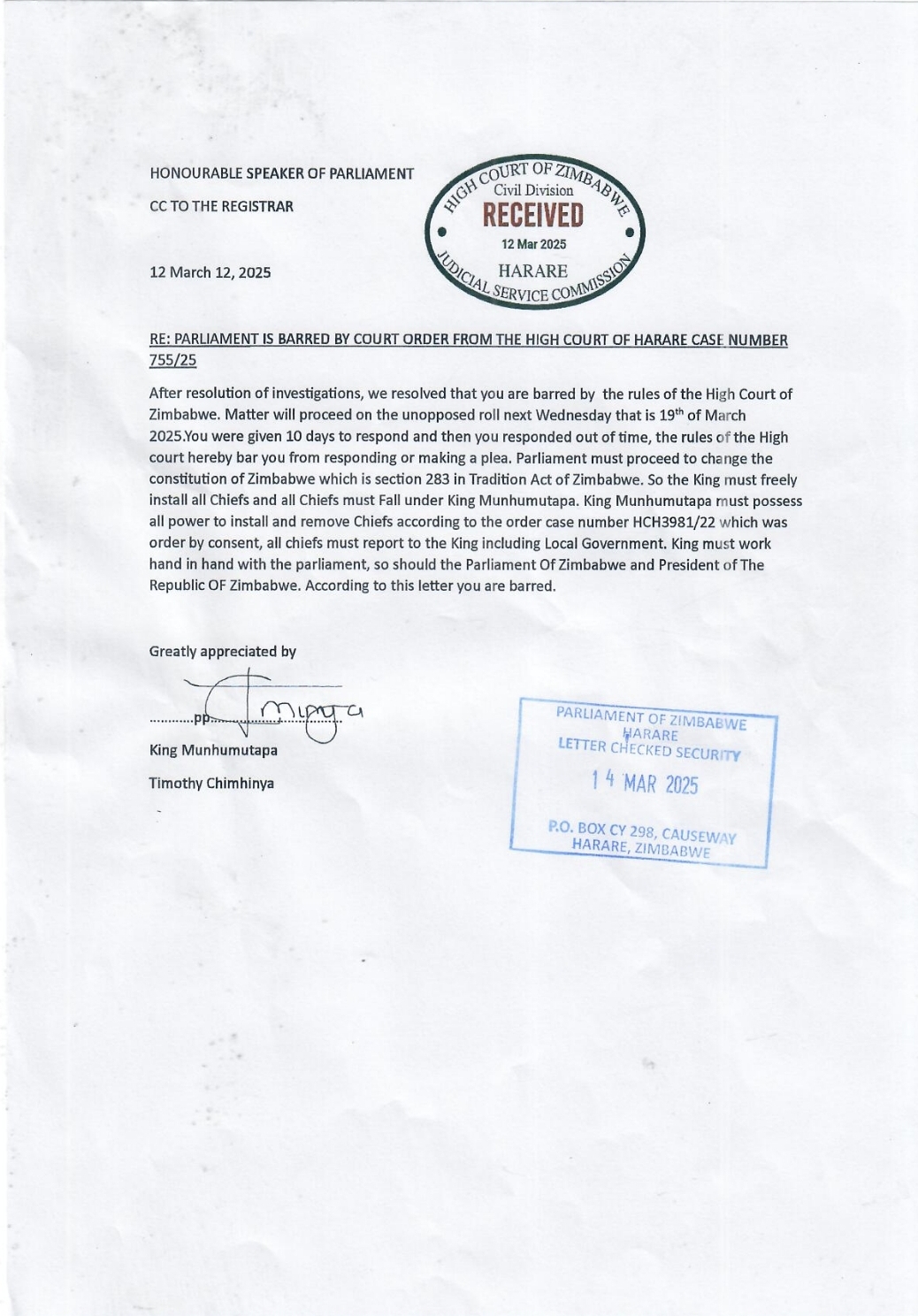
Harare, Zimbabwe – A recently surfaced court document, bearing the reference number 755/25, and dated 12 March 2025 has ignited a complex legal and traditional debate regarding the authority to install Chiefs in Zimbabwe. The document, purportedly issued to the Parliament of Zimbabwe, claims that a court order bars the legislative body from interfering in the installation of Chiefs, asserting that this power rests solely with King Munhumutapa, identified as Timothy Chiminya.
The document states that after investigations, a resolution was reached granting King Chiminya the exclusive right to install and remove Chiefs, citing section 283 of the Zimbabwean constitution. It further alleges that all Chiefs must fall under his jurisdiction and operate in conjunction with the Parliament. Importantly, it claims that the Parliament is now prohibited from responding or making any pleas in this matter.
Key Points from the Document: Court Order 755/25: This order allegedly bars the Parliament from involvement in Chief installations.
* King Munhumutapa’s Authority: The document asserts that Timothy Chiminya, identified as King Munhumutapa, holds the sole power to install and remove Chiefs.
* Constitutional Reference: Section 283 of the Zimbabwean constitution is cited as the basis for this authority.
* Parliament’s Restriction: The document claims the Parliament is barred from responding or challenging the court’s decision.
* Unopposed Roll Date: The matter is set to proceed on the unopposed roll on an unspecified date in 2025.
The document, signed by “Amipya” and bearing the designation “King Munhumutapa” alongside the name Timothy Chiminya, suggests a significant legal challenge to the established processes of Chief installation in Zimbabwe.
The institution of chieftainship in Zimbabwe is a complex blend of traditional authority and modern governance. Chiefs play a vital role in rural administration, land allocation, and customary law. The process of their appointment has traditionally involved collaboration between traditional leaders, communities, and government authorities.
Timothy Chiminya’s claim to the Munhumutapa kingship adds another layer of complexity. The Munhumutapa state was a powerful historical kingdom that existed in the region centuries ago. While the traditional title holds cultural significance, its legal standing in modern Zimbabwe is a subject of debate.
Potential Implications:
This court document, if authentic and legally sound, could have far-reaching implications:
* Constitutional Crisis: It could spark a constitutional crisis by challenging the established roles of the Parliament and the executive in Chief appointments.
* Political Ramifications: The issue could become highly politicized, given the influence of Chiefs in rural constituencies.
Further Investigation:
The authenticity of the document and the validity of the court order need to be thoroughly investigated. Legal experts and historians will likely scrutinize the claims and the cited constitutional provisions.
The emergence of this court document has thrust the issue of chieftainship authority into the spotlight. As the matter unfolds, it will be crucial to monitor the legal proceedings and the reactions from the Zimbabwean government and its citizens. The outcome could significantly reshape the landscape of traditional leadership in the country. Traditional leadership was badly dented by the British who colonised Zimbabwe and destroyed everything that had to do with traditional leadership and administration.
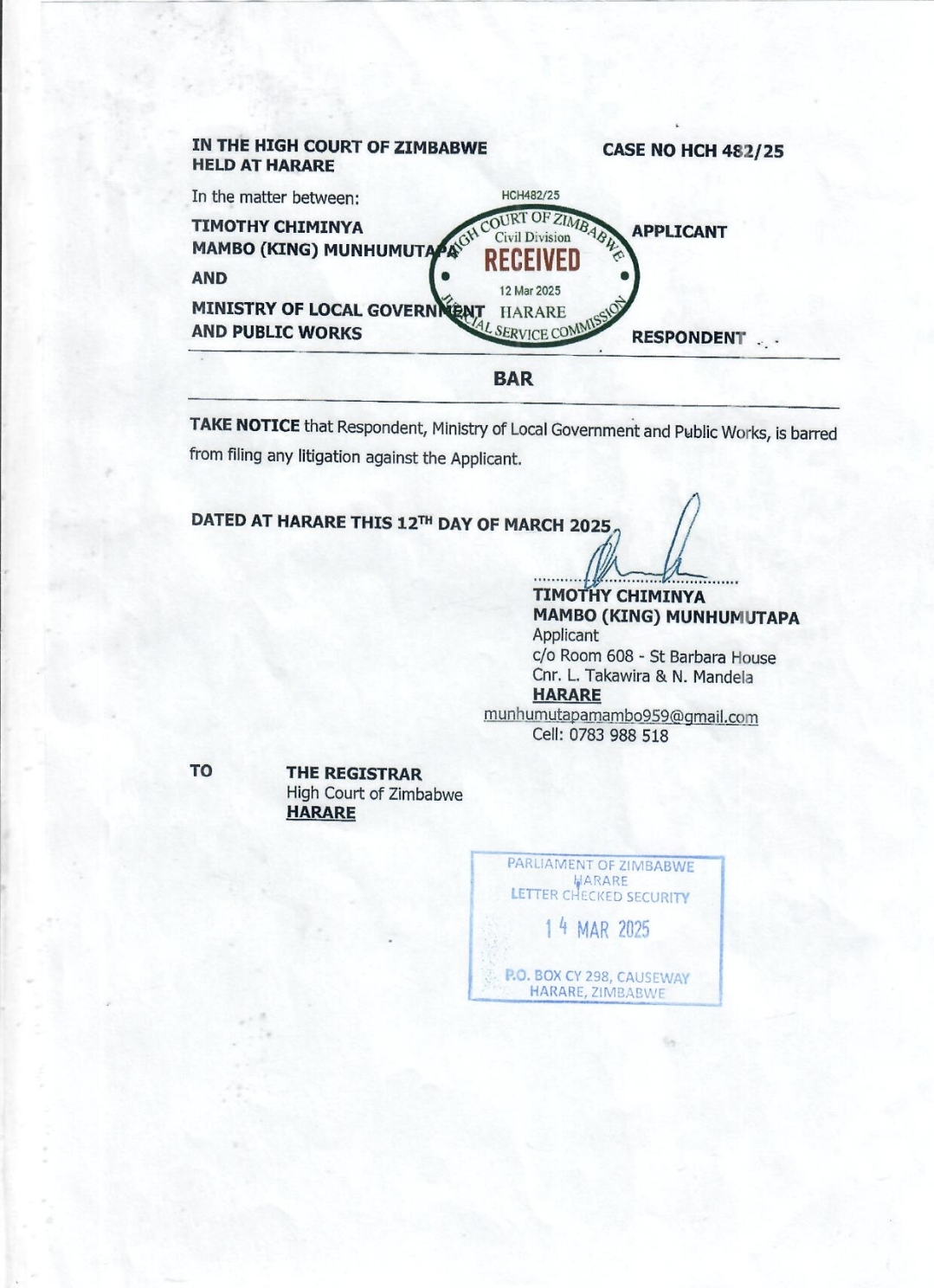
In another surprising turn of events, the Zimbabwean High Court has reportedly barred the Ministry of Local Government and Public Works from pursuing legal action against a man claiming to be King Munhumutapa, Timothy Chiminya. The ruling, handed down on 12 March 2025, has sent ripples of confusion and debate throughout the nation.
The Ministry of Local Government had initiated legal proceedings against Chiminya, alleging that his claims of being the King Munhumutapa were illegitimate and that he was unlawfully interfering with traditional leadership structures. The Ministry argued that the Zimbabwean Constitution does not recognize a kingship and that the actions of Chiminya were causing confusion and undermining established traditional leaders.
However, the High Court, in its ruling, reportedly stated that the Ministry of Local Government lacked the legal standing to bring such a case. The court’s reasoning, according to sources, centered on the argument that the issue of traditional leadership and the recognition of such titles fell outside the direct purview of the Ministry.
This decision has significant implications. It effectively prevents the government, through the Ministry of Local Government, from directly challenging Chiminya’s claims in court. This could potentially embolden Chiminya and his supporters, who have been actively promoting his title.
The ruling has sparked considerable discussion among legal experts and the public. Some argue that the court’s decision is a setback for the government’s efforts to maintain order and clarity within the traditional leadership framework. They express concern that allowing individuals to claim such titles without legal scrutiny could lead to instability and conflict.
Others, however, have welcomed the court’s decision, viewing it as a necessary check on the government’s authority and an affirmation of the importance of due process in matters of traditional leadership. They argue that the issue is complex and requires a more nuanced approach than simply being dismissed by the Ministry of Local Government.
It is important to note that the exact details of the High Court’s ruling and the full reasoning behind it are still emerging. Further clarification from the court and involved parties will be crucial in understanding the full implications of this landmark decision.
The case of Timothy Chiminya, the self-proclaimed King Munhumutapa, has already garnered significant attention, with the Ministry of Local Government previously distancing itself from his claims and condemning his actions. This latest development adds another layer of complexity to the situation, raising questions about the legal framework surrounding traditional leadership in Zimbabwe and the government’s ability to regulate it. Chuminya also contested about payment of his salary as King Munhumutapa and the benefits that cone with it such as vehicles which are given to traditional leaders.
The public and traditional leaders alike are now awaiting further developments and potential responses from the Ministry of Local Government and other relevant authorities regarding this significant court ruling.
News of The South spoke to Chuninya who aslo added that the court gave him permission to commence with his duties while waiting for Parliament of Zimbabwe to ammend the Constitution and that should Parliament take long to ammend the Constitution he can freely continue with his work without interference. Below are the court documents: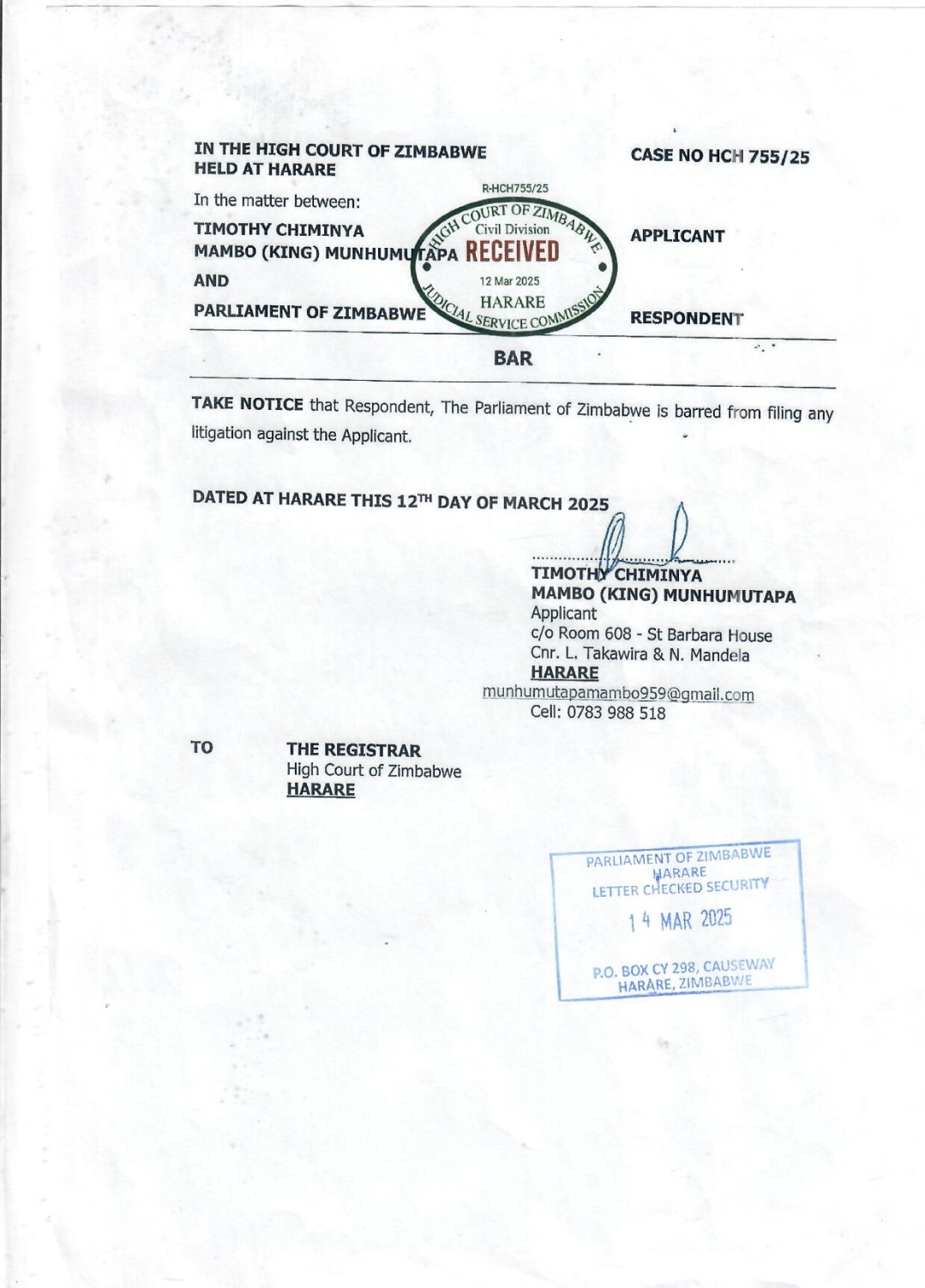
Comments
About Author