


The claims that hydroxychloroquine can cure COVID-19
As I see it By Dr Brighton Chireka
As a people we are expected to make choices about how we respond to what we hear or read. We can just accept other people’s opinion without questioning or asking questions to show our curiosity and the need to know. The purpose of asking is to have a deeper understanding or appreciation of what is being said.
Some choose to be sponges that accept whatever they are told. It is my humble suggestion that we must have a question- asking attitude. One does not need to be an expert to be able to ask questions. We need to put our emotions and feelings aside if we are to have a civilised dialogue. We need to be open to those that offer arguments that threaten or violate our beliefs. Some of us feel threatened when others present a conclusion contrary to our own.
Now bear with me as I share with you information about hydroxychloroquine before commenting on Dr Stella Immanuel’s video.
COVID-19 is causing a lot of havoc and scientists are under pressure to come up with a cure. Even with that pressure researchers must properly analyse their data and make carefully considered decisions. So far no pharmaceutical products have yet been shown to be safe and effective for the treatment of COVID-19. However, a number of medicines have been suggested as potential investigational therapies including hydroxychloroquine.
In the United Kingdom, Hydroxychloroquine is licensed medication for Active rheumatoid arthritis, Systemic and discoid lupus erythematosus and Dermatological conditions caused or aggravated by sunlight. According to the British National formulary it must be administered on expert advice. I currently prescribe it under the guidance of specialists for the three conditions named above.
Medicine can be prescribed outside it’s license and we call it off-label use. There are rules and regulations that govern such prescribing and it should be done on a case-by-case basis. According to WHO, It is ethically appropriate to offer individual patients experimental interventions on an emergency basis outside clinical trials, provided that no proven effective treatment exists; it is not possible to initiate clinical studies immediately; the patient or his or her legal representative has given informed consent; and the emergency use of the intervention is monitored, and the results are documented and shared in a timely manner with the wider medical and scientific community.
The decision to offer a patient an unproven or experimental treatment is between the doctor and the patient but must comply with national law. If early results from an unproven or experimental treatment are promising, the treatment should be studied in the context of a formal clinical trial to establish its safety, efficacy, risks, and benefits. This means that if as a doctor I use a drug off label for my patients and the results are promising, I must present my findings so that clinical trials can take place.
Hydroxychloroquine and its sister drug chloroquine have been used against malaria and other diseases for decades. The first evidence that they might work against SARS-CoV-2 came from test tube data. Since then, hundreds of trials have been launched around the globe. Scientists are trying the drugs in low doses and high doses; alone or combined with the antibiotic azithromycin, the antiviral compound favipiravir, or other drugs; and in patients with mild or severe disease, health care workers, pregnant women, and people living with HIV. It is not correct that no studies have been done about these drugs. It is nothing new that there has been interest about hydroxychloroquine.
In Brazil there was a lot of political support for hydroxychloroquine which led to clinical trials by researchers there. In April, a team led by Marcus Lacerda, a clinical researcher at the Heitor Vieira Dourado Tropical Medicine Foundation in Manaus, Brazil, published a study showing chloroquine can increase mortality in COVID-19 patients. 16 patients out of 81 died in this trial. Since then, Marcus Lacerda is now being accused of poisoning patients with a high dose of chloroquine just to give the drug a bad name. He has been receiving death threats as well and is now facing legal inquiry.
On the 22nd May, a study was published in The Lancet claiming , supposedly based on data from 96,000 patients around the world, that hydroxychloroquine and chloroquine, whether given alone or in combination with another drug, caused a steep increase in deaths.
That led many regulatory agencies to ask scientists to halt their trials and make sure they were not harming their patients. Recovery study and Solidarity study were temporarily halted but resumed after a safety committee took a look at the data ( More details on these two studies below).
On the 27th May 2020, Hernandez and his team published a systematic review on Hydroxychloroquine or Chloroquine in the Annals of Internal Medicine journal. They looked at four randomized controlled trials, 10 cohort studies, and 9 case series and concluded that evidence on the benefits and harms of using hydroxychloroquine or chloroquine to treat COVID-19 is very weak and conflicting. They admitted that they did not have enough controlled studies. This conclusion was based on the studies that had been carried out before the 27th May 2020.
On the 3rd June 2020 , David Boulware of the University of Minnesota and his colleagues published in The New England Journal of Medicine the results of the largest study to date looking at post exposure prophylaxis using hydroxychloroquine.
They studied 821 people and concluded that after high-risk or moderate-risk exposure to Covid-19, hydroxychloroquine did not prevent illness compatible with Covid-19 or confirmed infection when used as postexposure prophylaxis within 4 days after exposure. The conclusion was that hydroxychloroquine does not prevent you from developing symptoms of COVID-19 after getting infected with coronavirus.
Another post exposure trial in Barcelona, Spain involving 2300 people exposed to coronavirus concluded that that hydroxychloroquine does not prevent you from developing symptoms of COVID-19 after getting infected with coronavirus.
On the 5th June 2020, Professor Peter Horby and Professor Martin Landray, chief investigators of the RECOVERY announced the findings of part of the study that started in March this year. They concluded that there is no beneficial effect of hydroxychloroquine in patients hospitalised with COVID-19 and they stopped enrolling participants to the hydroxychloroquine arm of the RECOVERY trial with immediate effect.
The RECOVERY trial involves 11,000 patients and many thousands of doctors, nurses, pharmacists, and research administrators at 175 NHS Trusts across the whole of the UK, supported by staff at the NIHR Clinical Research Network, Public Health England, Department of Health & Social Care, and the NHS in England, Scotland, Wales and Northern Ireland. The RECOVERY trial has shown that hydroxychloroquine is not an effective treatment in patients hospitalised with COVID- 19.
On 17 June 2020, WHO announced that the hydroxychloroquine (HCQ) arm of the Solidarity Trial to find an effective COVID-19 treatment was being stopped.
The trial’s Executive Group and principal investigators made the decision based on evidence from the Solidarity trial, UK’s Recovery trial and a Cochrane review of other evidence on hydroxychloroquine. Data from Solidarity (including the French Discovery trial data) showed that hydroxychloroquine does not result in the reduction of mortality of hospitalised COVID-19 patients, when compared with standard of care.
Why would a drug get all the attention when all the studies are showing that it does not make any difference? The answer lies in the U.S. President Donald Trump’s promotion of hydroxychloroquine. If it was not for him we would not be having this discussion. Overwhelming evidence is there showing that the drug is ineffective when it comes to COVID-19.
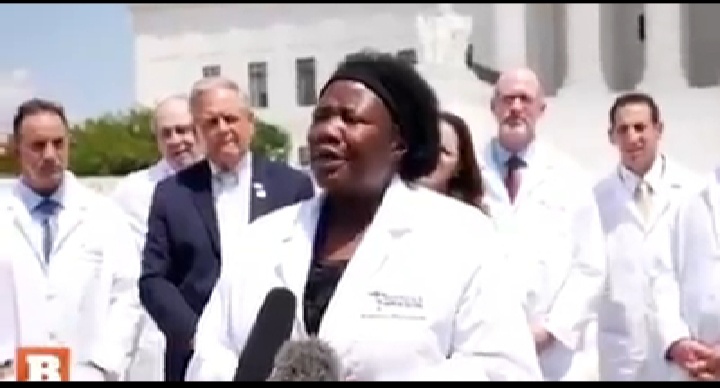
Now coming to Dr Stella Immanuel’s claim that hydroxychloroquine can cure COVID-19. Her claim is that she has cured 350 patients. I have looked at her Facebook page. On the 8th July she claimed to have cured 200 people. What is now surprising me is that she did another video where she is asking “all the patients she cured” to do videos saying how good hydroxychloroquine is.
Why would she do that instead of writing to those patients as she must have them on her books. The good doctor is discouraging people from wearing masks but she is seen wearing mask on some pictures. We have cure for a few illnesses but I have never heard any doctor who encourages people to go out and get infected just because we have a cure.
Dr Stella Immanuel knows how research or clinical trials are done. Your findings have to be critiqued by your colleagues. We know from studies that 80 % of people with COVID-19 will recover without needing treatment so if you give these people even tomatoes they will get better because they were going to get better anyway. If you give them water they will get better because they were going to get better without taking anything. Dr Stella does not work in a hospital so the patients she is likely to see are those with mild symptoms and are likely to recover without needing any treatment. If for sure she had found a cure she would be rushing to publish her findings.
The moment you go to the streets to publish your findings instead of using a journal it shows you have lost the plot. Any claim for a cure must be critiqued to make sure that the treatment works as per your claim. There is no need for soliciting public support as your data should speak for itself. You do not shy away from proper clinical trials. The good doctor is best advised to publish her findings and stop wasting her time getting likes on social media.
It is my conclusion that majority of people with COVID-19 do recover without needing any treatment and that the overwhelming evidence available shows that hydroxychloroquine does not cure COVID-19. It was withdrawn from the clinical trials so we should forget about it and focus on finding a cure from other drugs. No amount on noise can make an ineffective drug effective.
Comments
About Author


