

By HRH Princess Eugene Majuru
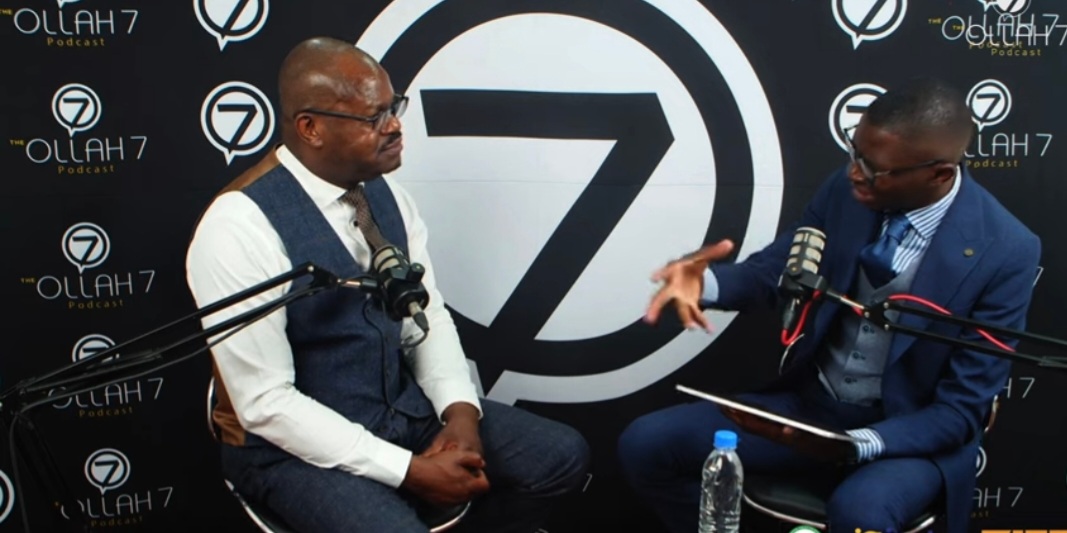
Harare, Zimbabwe (News of The South) – A recent interview between prominent Zimbabwean media personality and former Star FM DJ Ollah and Permanent Secretary for Information, Publicity and Broadcasting Services, Nick Mangwana, has sparked considerable discussion online. The encounter, keenly anticipated by many, offered a glimpse into the contrasting styles of the two figures and touched upon critical issues facing Zimbabwe’s media landscape.
For DJ Ollah, known for his direct and often probing interview style, the exchange proved to be a challenge. Observers noted that Mangwana, a seasoned communicator with his own history in the media, frequently employed tactics to deflect difficult questions. These strategies, as highlighted by one keen observer, included waffling, raising his voice, and attempting to turn the tables by posing questions to the interviewer – a familiar approach for those who have previously interviewed the Permanent Secretary. I interviews Nock Mangwana seversl tines when he was still in the UK and got to learn about his tactics.
One particularly revealing exchange revolved around the perception of traditional media as a tool for propaganda. DJ Ollah pressed Mangwana on the level of public trust in traditional media. In response, Mangwana argued that reporting positive developments under the “Second Republic” and praising President Mnangagwa should be seen as standard reporting, seemingly suggesting that such coverage should be readily accepted by Zimbabweans.
The conversation also took a personal turn when Mangwana alluded to an incident where DJ Ollah reportedly offered alcohol to interviewees on set, specifically mentioning musician Holy Ten. Mangwana conceded that current media laws in Zimbabwe did not explicitly prohibit such actions. DJ Ollah countered by referencing a past incident involving another media personality allegedly being intoxicated on a podcast. Mangwana acknowledged only recalling instances of alcohol consumption during wine-tasting podcasts.
The issue of hate speech on social media was also addressed. Mangwana described social media as a “double-edged sword,” capable of both good and bad, and potentially weaponized. He then offered the somewhat philosophical statement, “Power without character is satanic.”
When questioned about integrating the media with the economic landscape, Mangwana emphasized the need for Zimbabweans to take ownership of projects and urged the media to mobilize the nation towards initiatives like Vision 2030. He outlined ambitious goals under this vision, including the replacement of Blair toilets with flushable toilets, access to running water, and the construction of schools within a 5km radius for all students by 2030.
A significant point of contention arose when DJ Ollah inquired about the responsibilities of the government in the face of the rise of new media. Mangwana responded with a question of his own, asking DJ Ollah if he was truly qualified to ask such a question – a tactic perceived by some as an attempt to unsettle the interviewer and avoid a direct answer. Mangwana later spoke vaguely about regulation, morals, and ethics, referencing government publications on media ethics but failing to provide a concrete response to DJ Ollah’s query.
The interview highlighted the contrasting approaches of the two media figures. While DJ Ollah aimed for direct answers and accountability, Mangwana often navigated questions with a blend of deflection and rhetorical maneuvering.
For observers, including those studying media ethics and the evolving media landscape, the interview offered valuable insights. The discussion touched upon the crucial role of citizen journalism in reporting stories often overlooked by traditional media. The increasing reliance on mobile phone footage and citizen reports underscores the shifting dynamics of news dissemination in the digital age. Traditional media’s selective reporting and the rise of citizen journalism, fueled by social media platforms, are reshaping how news is captured and shared, sometimes even finding their way into mainstream outlets after originating from on-the-ground eyewitness accounts.
Ultimately, the interview between DJ Ollah and Nick Mangwana provided a fascinating, albeit at times frustrating, exploration of key issues facing Zimbabwe’s media. It undoubtedly offered Zimbabwean media practitioners and the wider public much to consider about the role, responsibilities, and challenges within the evolving information ecosystem.
See the interview below:
Comments
About Author