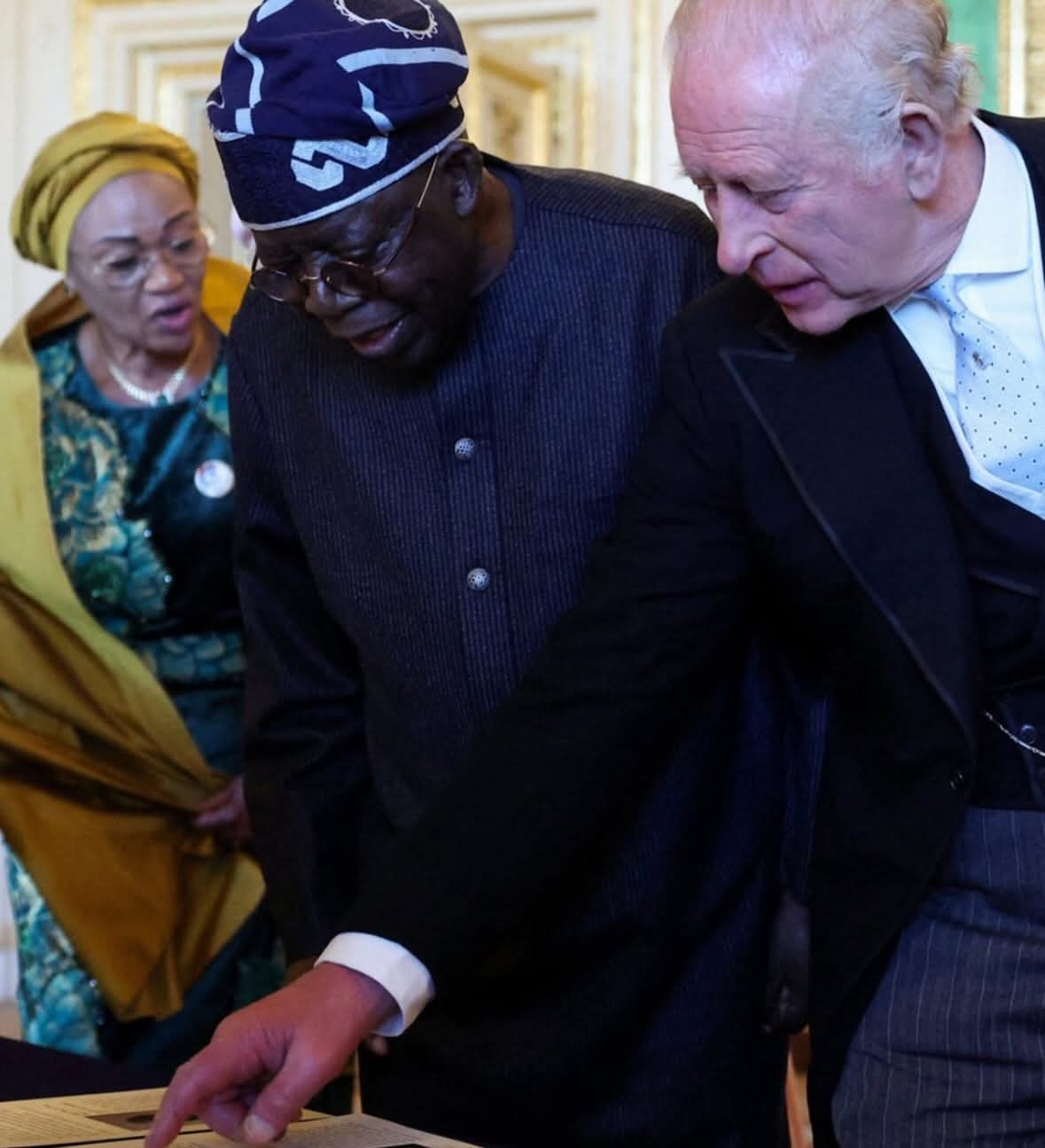


Yesterday, London’s royal halls played host to Nigerian President Bola Tinubu, welcomed by King Charles III at a lavish state banquet. The meeting, framed as a gesture of friendship between Nigeria and its former colonial ruler, quickly ignited debate online, where Nigerians expressed frustration and suspicion about what really happens behind closed doors.
King Charles III addressed the long shadow of colonialism, acknowledging that Nigeria’s past as a British colony has left “painful marks” and that “no words” could erase the scars. But for many Nigerians, this acknowledgment rings hollow. Social media was awash with criticism, with citizens warning that words are meaningless without action.
“Britain is still a major shareholder in our oil. They’ll say sorry, but Nigerians won’t see the deals being signed behind the scenes,” wrote one Facebook user. Others echoed similar fears: secret agreements, economic control, and the continued extraction of Nigeria’s resources—all cloaked under the veneer of diplomacy. “Africa needs to wake up,” another commenter urged, reflecting a growing impatience with the slow pace of change and the persistence of Neo-colonial influence.
Analysts say the visit likely includes discussions on oil, trade, and investment, but the secrecy surrounding such talks fuels suspicion. Many Nigerians see these high-profile gestures as symbolic rather than substantive, questioning whether the state visit will translate into tangible benefits for the country.
The controversy highlights the tension between ceremonial diplomacy and economic reality. While King Charles III’s words acknowledge historical wrongdoing, critics argue that true reconciliation requires concrete steps: fair access to natural resources, transparency in agreements, and reparative policies that go beyond speeches.
For President Tinubu, the challenge is to navigate this delicate terrain—balancing the demands of international diplomacy with the expectations of a watchful Nigerian public. The question now is whether these state visits will bring real change or simply reinforce the same old patterns of imbalance and mistrust. In a world where history still shapes the present, Nigerians are making it clear: they want more than words. They want action.
Comments
About Author