
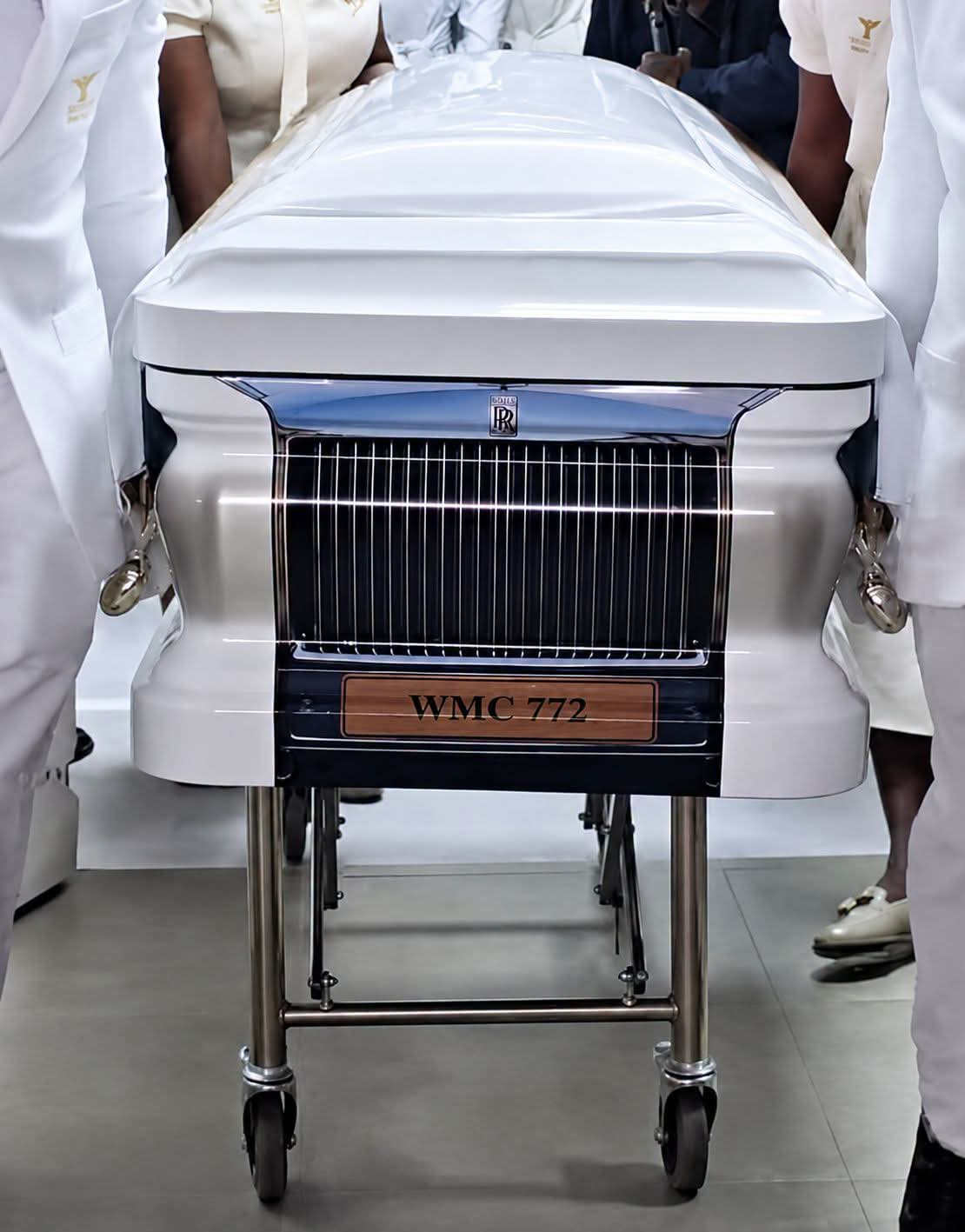


Wicknell Chivayo’s Death: What Kind of Security Flies Away When the Person They Are Protecting Goes Missing?
By Princess Eugene Majuru | News of The South
The tragic death of Zimbabwean businessman Wicknell Chivayo, his wife Lucy Muteke and three others in a helicopter crash near Marondera on 30 September 2026 has raised serious questions about aviation safety. But there is another aspect of this tragedy that deserves equally serious examination: the security arrangements surrounding Chivayo’s final journey.
According to accounts provided by Chivayo’s senior security aide, Froster Chisi, the businessman and his wife were travelling in one helicopter while their security personnel travelled in another.
The two aircraft encountered difficult weather conditions. Communication between them eventually ceased. The helicopter carrying Chivayo never reached its intended destination.
Chisi has explained that the security team’s helicopter landed in Marondera, where they waited for Chivayo’s aircraft. When it failed to arrive, they proceeded to Harare to collect vehicles, believing that the missing helicopter might have landed elsewhere because of the weather. They reportedly continued attempting to contact its occupants before learning of the crash.
This account raises a fundamental question about the purpose, effectiveness and limitations of the security operation.
What protection was being provided to Wicknell Chivayo while his security personnel were travelling in an entirely different aircraft?
Security is not simply about having bodyguards, expensive vehicles, communication equipment or a visible entourage. It is about anticipating danger, preventing avoidable risks, maintaining contact and having effective emergency procedures when something goes wrong.
The circumstances of Chivayo’s final journey demand an examination of whether those principles were adequately applied.
Why Was the Security Team in Another Helicopter?
There are legitimate reasons why a prominent individual might travel separately from some members of their security detail.
An advance security team may travel ahead to inspect a destination, arrange transport, coordinate with local authorities and secure arrival and departure points.
Other security personnel may provide logistical support, maintain communications or establish contingency arrangements.
Therefore, the mere fact that Chivayo’s security team was travelling in another helicopter does not automatically establish negligence.
However, it raises questions about the precise nature of the assignment.
Were these officers acting as an advance team, a close-protection team or both?
If they were providing close protection, why was there apparently no dedicated bodyguard travelling with Chivayo and his wife?
If they were an advance team, who was responsible for their principal’s immediate personal security during the flight?
Who designed and approved the arrangements?
A security team travelling in a separate aircraft may still provide useful coordination, but it cannot physically intervene inside the principal’s aircraft during an emergency.
The reported passenger list identifies Chivayo, his wife, her aide and two pilots. No separate close-protection officer has been identified among the five occupants.
That does not prove the arrangement was inappropriate. It does, however, justify asking whether the security plan provided the level of protection Chivayo required.
The Moment Communication Was Lost Should Have Changed Everything
Perhaps the most troubling aspect of the account concerns what happened when communication between the helicopters ceased.
According to Chisi, the pilot carrying Chivayo had been reporting difficulty navigating through cloud.
His last reported communications suggested that he was struggling with weather conditions and was uncertain about the intended destination.
Then communication stopped.
At that point, the situation was no longer an ordinary journey involving two helicopters travelling towards the same destination.
It had become a potential aviation emergency.
The question is whether the security team recognised that possibility quickly enough.
Chisi’s account indicates that the second helicopter landed in Marondera and waited before continuing to Harare. This means it would be inaccurate to claim that the team simply turned away immediately without waiting.
Nevertheless, the decision to leave Marondera without establishing the whereabouts of the aircraft carrying their principal requires further explanation.
Did anyone notify air traffic control that a helicopter was missing?
Was an emergency declared?
Were police, aviation authorities or emergency rescue services contacted?
Was the last known position communicated to search teams?
How long did the security team wait before leaving?
What information led them to believe that Chivayo’s helicopter had landed safely somewhere else?
These questions are particularly important because the last reported radio messages already indicated that the pilot was experiencing difficulties.
A missing aircraft following reports of dangerous flying conditions should be treated as a potential emergency, not merely an inconvenience or an unexplained delay.
At the same time, the second helicopter’s pilot had a responsibility to protect the lives of everyone aboard. Returning into dangerous weather to search visually could have placed more people at risk. The appropriate response would depend on the aircraft’s position, communications, weather, fuel reserves and available emergency services.
Why Was There Apparently No Immediate Search and Rescue Operation?
The most important question is not whether the security personnel should have flown back into the clouds.
It is whether they activated an effective emergency response.
A properly organised security operation should have a plan for the disappearance of an aircraft carrying the person under protection.
That plan should establish who contacts aviation authorities, who coordinates rescue services, who informs the family and who maintains responsibility for locating the missing aircraft.
It should also provide for rapid transmission of the aircraft’s last known position and any available tracking information.
If such arrangements existed, they should be explained.
If they did not exist, that would represent a significant weakness in emergency preparedness.
Chisi’s account describes attempts to reach the missing occupants by telephone and a decision to collect vehicles. What remains unclear from the public reporting is whether formal emergency notifications were made during this period and, if so, by whom.
That distinction is essential. An absence of detail in a media interview is not proof that no emergency action was taken.
But the public deserves a clearer account of the response.
Did the Security Team Have a Proper Emergency Protocol?
The death of a high-profile businessman in these circumstances raises wider questions about private security operations in Zimbabwe.
Was there a written security plan covering the journey?
Was a risk assessment conducted before departure?
Were weather forecasts considered as part of the travel arrangements?
Did the security team have authority to recommend postponing the flight?
Were alternative transport arrangements available?
Was there a designated person responsible for coordinating both helicopters?
Were emergency communication procedures agreed before take-off?
Security planning should not begin when danger appears. It should begin before the principal leaves home.
In high-risk travel, a security operation should have clear arrangements for what happens if the principal becomes separated from the protection team.
The failure to anticipate separation, communication loss or an emergency can leave even a wealthy and heavily protected individual dangerously exposed.
Wealth Cannot Replace Professional Security Planning
Wicknell Chivayo was a wealthy and influential businessman who travelled in expensive vehicles and aircraft and maintained a visible security presence. But financial resources alone cannot guarantee effective protection. A security team may appear impressive in public while still lacking the training, coordination or emergency preparedness required for a serious incident.
Professional security involves more than guarding someone against criminals or unwanted visitors.
It also involves understanding travel risks, medical emergencies, transport safety, evacuation arrangements and crisis management. A close-protection officer is not expected to fly a helicopter or override the decisions of qualified pilots.
However, a properly structured protection operation should ensure that travel risks are assessed, emergency responsibilities are understood and appropriate authorities can be alerted without unnecessary delay.
The real measure of security is not how many bodyguards accompany a wealthy person.
It is whether the arrangements remain effective when an unexpected crisis occurs.
The Security Team Cannot Tell Us Exactly What Happened Inside the Helicopter
Another important issue concerns the absence of surviving witnesses from the helicopter carrying Chivayo.
The five people aboard died.
The security personnel travelling in the second helicopter were therefore not eyewitnesses to events inside the doomed aircraft.
They could describe the weather they experienced, the communications they heard and the decisions taken aboard their own helicopter. They could not personally establish everything that happened inside Chivayo’s aircraft during its final moments.
Did the pilots lose visibility?
Did they experience mechanical difficulties?
Was there a sudden emergency?
Did the aircraft strike an obstacle?
What happened immediately before impact?
Those questions cannot be answered conclusively by the security team’s account alone.
The aviation investigation must rely on physical evidence, available flight records, communications, weather information and other technical findings. The Civil Aviation Authority of Zimbabwe has been investigating the crash, including evidence recovered from the aircraft.
The absence of surviving occupants makes that investigation particularly important.
Could a Bodyguard on Board Have Made Any Difference?
This is another question that deserves a realistic answer.
Having a bodyguard aboard Chivayo’s helicopter would not necessarily have prevented the crash. A bodyguard cannot stop mechanical failure, control severe weather or replace a qualified pilot.
In certain emergencies, an additional person might be able to assist with passenger safety, communication or evacuation, depending on their training and the circumstances. But no one can reasonably claim that Chivayo would have survived simply because a security officer was seated beside him.
The issue is therefore not merely the absence of a bodyguard.
It is whether the entire security operation had sufficient planning, oversight, communication and emergency-response capability.
What Lessons Should Zimbabwe’s Wealthy and Influential People Learn?
Chivayo’s death should encourage business leaders, politicians, entertainers and other high-profile individuals to review their personal security arrangements.
The first lesson is that close protection and advance security are not the same thing. A team stationed at a destination cannot automatically provide immediate protection to someone travelling elsewhere.
The second lesson is that security personnel must understand the limits of their responsibilities. Where aviation safety is concerned, pilots and aviation authorities have specialist roles, but security teams should still be prepared to coordinate an emergency response.
The third lesson is that every journey involving a high-profile individual should have an appropriate contingency plan. This is especially important when travelling in separate aircraft or through areas where communications and rescue resources may be limited.
The fourth lesson is that warning signs must be taken seriously. An aircraft experiencing difficulty in cloud and subsequently losing communication presents a situation requiring urgent assessment and potentially immediate notification to aviation authorities.
The fifth lesson is that security arrangements must be regularly reviewed by competent professionals. Loyalty, familiarity and personal trust cannot substitute for training and operational competence.
Finally, no security arrangement should create the illusion of protection without providing a practical means of responding when danger arises.
The Security Team Must Be Given an Opportunity to Explain
It would be unfair to conclude, without a full investigation, that Chivayo’s security personnel abandoned him or caused his death.
The available account establishes that they were in a separate helicopter, experienced difficult weather, lost communication, waited in Marondera and subsequently travelled to Harare.
It does not establish every action they took, every instruction they received or every communication they made with aviation authorities. Those details matter.
The security team should therefore be given an opportunity to explain its operational plan, the decisions taken after communication was lost and the emergency procedures followed.
The aviation investigators should also establish the timeline between the final radio communication, the second helicopter’s landing, the discovery that Chivayo’s aircraft was missing and the notification of emergency services.
Such scrutiny is not an accusation of criminal wrongdoing.
It is a necessary examination of how a security operation functioned during a fatal emergency.
The Biggest Question Remains: Who Was Responsible for Wicknell’s Safety?
Ultimately, the death of Wicknell Chivayo raises a question that extends beyond the crash itself.
Who had overall responsibility for coordinating his security during that journey?
Was it the senior security aide?
Was there a separate security manager?
Was the aviation operator responsible for certain aspects of emergency coordination?
Were responsibilities clearly divided, or did everyone assume that someone else would act if something went wrong?
Those questions must be answered before any definitive judgement can be made about the adequacy of the security arrangements.
There is a significant difference between a tragic aviation accident that no security team could reasonably have prevented and an emergency in which poor planning delayed the response.
The investigation must establish which circumstances apply.
Zimbabwe should not rush to accuse the surviving security personnel without evidence. Equally, the fact that they survived must not place their decisions beyond reasonable professional scrutiny.
Five lives were lost. Families are mourning. And an important public conversation about aviation safety and personal protection has emerged.
Wicknell Chivayo had security personnel. But the question now is whether the security arrangements provided meaningful protection throughout his journey, and whether the response when his helicopter disappeared was adequate.
The presence of bodyguards is not, by itself, proof of effective security.
The true test comes when the unexpected happens.
And in this tragedy, that is precisely the part of the security operation that deserves the closest examination.
Princess Eugene Majuru
Editorial note: This analysis is based on publicly reported statements, including those attributed to senior security aide Froster Chisi. It raises questions about operational planning and emergency response but does not establish negligence, abandonment, misconduct or responsibility for the crash. The official aviation investigation remains essential to determining what happened.
Comments
About Author


