

By Princess Eugene Majuru
As debate intensifies over Constitutional Amendment Bill No. 3 (CAB 3) and Zimbabwe’s Constitutional Court (ConCourt) weighs crucial legal questions, a deeper issue quietly emerges beneath the political noise:
Who really owns Zimbabwe’s Constitution?
Is it the citizens who voted for it?
The politicians who amend it?
Or the courts that interpret and protect it?
The answer may determine not only the future of CAB 3 — but the future of Zimbabwean democracy itself.
Because constitutions are not ordinary legal documents.
They are national agreements about power, rights and accountability.
And whenever constitutional amendments spark controversy, ownership becomes a constitutional battlefield.
The Constitution Was Born from Citizens
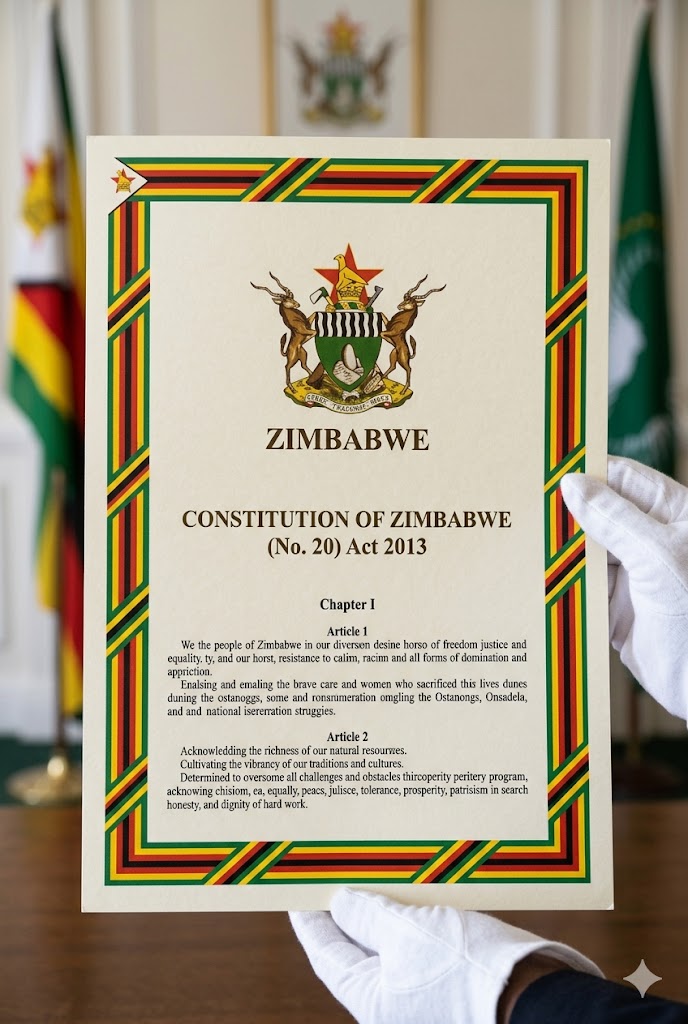
Zimbabwe’s 2013 Constitution was not created overnight.
It emerged after years of consultation, negotiation and public participation.
Citizens debated.
Communities contributed.
Political parties negotiated.
Eventually, Zimbabweans endorsed the Constitution through a referendum.
That matters.
Because in democratic theory, a constitution belongs first to the people.
Politicians govern temporarily.
Judges interpret laws.
But sovereignty — at least constitutionally — rests with citizens.
This raises a difficult question:
If citizens are the owners, how much say should they have when the Constitution changes?
For critics of CAB 3, this question lies at the centre of the current debate.
Do Politicians Own the Constitution?
In practice, politicians wield enormous influence over constitutional change.
Parliament possesses legal authority to amend constitutional provisions through defined procedures.
Supporters of this system argue:
Politicians are elected representatives.
Citizens vote for Members of Parliament to make national decisions.
Therefore, Parliament has constitutional legitimacy to amend the Constitution.
This argument carries legal weight.
No constitution can remain frozen forever.
Societies evolve.
Institutions change.
Governments adapt.
But critics warn of a dangerous constitutional risk:
What happens when politicians amend rules from which they directly benefit?
This concern has repeatedly surfaced across Africa.
When constitutional amendments are perceived as protecting political interests, public trust often weakens.
Citizens begin asking:
“Is this constitutional reform — or political convenience?”
That question now shadows CAB 3.
Do Courts Own the Constitution?
Then comes the judiciary.
Zimbabwe’s Constitutional Court exists partly to protect constitutional order.
Its role is to interpret constitutional meaning and determine whether laws or actions violate constitutional principles.
But courts face their own dilemma.
Judges are not elected politicians.
Yet constitutional democracies often empower courts to limit political power.
This creates tension.
Critics sometimes accuse courts of becoming too powerful.
Supporters argue:
Without independent courts, constitutional protections become meaningless.
The recent CAB 3 legal challenge reflects this tension.
A legal team linked to constitutional lawyer and politician Lovemore Madhuku approached the Constitutional Court seeking intervention before Parliament completed the amendment process.
Yet the judges reportedly questioned whether the challenge had been filed too early.
Their concern appeared constitutional as much as procedural:
Should judges interrupt Parliament while lawmakers are still legislating?
Or should they wait until the process concludes?
The answer could shape the future relationship between courts and Parliament in Zimbabwe.
The Real Danger: Citizens Becoming Spectators
Perhaps the greatest constitutional danger is not politicians gaining influence.
Or courts becoming powerful.
It is citizens becoming passive observers.
Too often constitutional debates remain trapped among:
lawyers,
politicians,
judges,
academics.
Meanwhile, ordinary Zimbabweans feel disconnected.
Many hear phrases like:
“constitutional amendment,”
“judicial review,”
or
“parliamentary procedure”
without fully understanding how these affect everyday life.
But constitutions influence:
leadership succession,
elections,
accountability,
rights,
governance stability.
The Constitution affects everyone.
A market vendor.
A student.
A civil servant.
A church leader.
A business owner.
A young voter.
When citizens disengage, constitutional ownership quietly shifts elsewhere.
So Who Really Owns the Constitution?
The honest answer may be:
All three — but unequally.
Citizens are the moral owners.
Politicians are temporary custodians.
Courts are constitutional referees.
None should dominate alone.
Politicians cannot rewrite constitutional rules without legitimacy.
Courts cannot govern through judicial activism.
Citizens cannot disengage and expect accountability to survive.
A healthy constitutional democracy requires balance.
And balance requires participation.
The CAB 3 Test
Perhaps CAB 3 is testing something bigger than legal interpretation.
Perhaps Zimbabwe is confronting a national constitutional question:
Is the Constitution truly a people’s document — or a political instrument controlled by institutions?
How Zimbabwe answers that question may shape the nation long after CAB 3 disappears from headlines.
Becaus constitutions only remain alive when citizens insist:
“This document belongs to us.”
Comments
About Author