By Princess Eugene Majuru | Feature Article for News of The South
In a quiet corner of Europe, where maps blur and borders remain unsettled, a bold idea has taken root—a country called Verdis. It is a nation without recognition, a republic without embassies, yet a place with citizens, laws, a president, and a dream of sovereignty.
Welcome to the future imagined.
A Country Born From an Idea
Verdis—formally known as the Free Republic of Verdis—was proclaimed in 2019 after its founders identified a small patch of land left unclaimed due to a historic border dispute between Croatia and Serbia.
The initiative was led by Daniel Jackson, a British-Australian citizen who envisioned building a humanitarian and environmentally conscious micro-state. He was still a teenager when the idea first took shape, sparked by curiosity about unclaimed territory and the dream of creating a society built on new principles.
Today, Jackson serves as Verdis’s president—running a country largely in exile while pursuing recognition and legitimacy.
Where Is Verdis?
Verdis is located along the Danube River in a disputed forested zone between Croatia and Serbia—sometimes referred to as “Pocket 3,” a strip of land both countries historically overlooked during border demarcations.
This territory is tiny—about the size of a small village—but symbolically enormous. It represents the possibility that new nations may still be born in the modern world.
Though the land itself remains difficult to access due to border tensions, the idea of Verdis has already travelled across continents.
A Nation Before Recognition
Verdis is not officially recognised by any major international body. Yet it already operates like a state.
It has:
A constitution
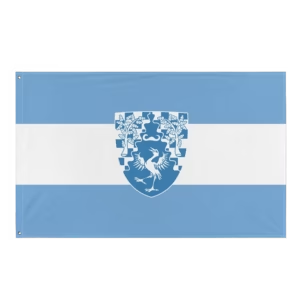
A flag and cabinet
Symbolic passports
Hundreds of citizens worldwide
More than 15,000 people have applied for citizenship, though only a few hundred have been accepted so far.
There is even an e-Residency program and pathways toward citizenship—designed to attract people who believe in Verdis’s vision of innovation, sustainability, and peaceful cooperation.
It is, in essence, a digital nation preparing for a physical future.
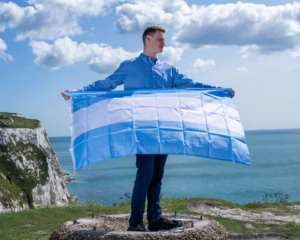
Daniel Jackson President of Verdis
What Verdis Offers
Verdis positions itself as more than a curiosity. Its leaders describe it as a humanitarian hub and a laboratory for new ideas.
Among its ambitions:
Environmental sustainability and eco-living
A tech-friendly digital economy
A neutral state supporting humanitarian causes
Opportunities for remote citizens to participate in governance
In a world searching for solutions to climate change, migration, and economic inequality, Verdis wants to become a testing ground for new models of society.
Life in Verdis: Imagining Tomorrow
Since permanent settlement remains difficult, life in Verdis is currently more conceptual than physical.
Citizens today meet online, debate policies digitally, and shape their future constitution together.
But the vision of life in Verdis looks like this:
Small eco-villages by the Danube
Solar-powered homes and communal farming
A multicultural community united by choice rather than birthplace
Citizens who hold dual nationality but share a common dream
In this imagined society, citizenship is not inherited—it is chosen.
The President and the Dream
President Daniel Jackson governs from abroad, advocating for recognition while navigating legal challenges with neighbouring countries.
He has said he intends to step down once the state is fully established, seeing himself as a founder rather than a permanent ruler.
His story is unusual—a young British-Australian who tried to build a country—but it speaks to a deeper truth: nations begin as ideas before they become realities.
The Big Question: Can Verdis Survive?
Micronations are not new. From Sealand to Liberland, history is full of attempts to create new states.
What makes Verdis different is its global community and structured governance.
But recognition depends on international law, diplomacy, and acceptance by neighbouring states—barriers that remain formidable.
Until then, Verdis exists in a rare category:
A country of belief.
Why Verdis Matters
Whether Verdis becomes a recognised nation or fades into history, it represents something profound.
It challenges the assumption that all nations are fixed.
It reminds us that borders are human creations.
And it proves that even in the 21st century, someone can still look at an empty piece of land and imagine a new world.
In the end, Verdis is not just a place—it is a question.
What kind of country would we build if we could start again?