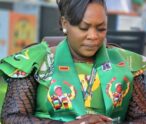
By HRH Princess Eugene Majuru, Princess of Harare
HARARE ( News of The South) – The heart of Zimbabwe’s capital, Harare, is at the center of a complex and increasingly public debate, one that intertwines history, spirituality, and national identity. The protracted non-resuscitation of the Mbari Chieftainship, the traditional royal family of Harare, is now being linked to a range of national problems, from unresolved spiritual issues to stalled economic progress. At the core of this discussion is the National Heroes’ Acre, a sacred burial site that, according to the Mbari clan, lies on their ancestral land. According the Mbari forefathers heroes acre formed part of the Kings muzinda. In the last few days the forefathers have questioned why the heroes are buried at their muzinda.

Heroes acre
The Mbari clan, through its representatives, asserts that the Heroes’ Acre is located within their historical and spiritual “muzinda,” or capital. According to Shona tradition, the burial of strangers on a royal burial ground is a deeply problematic act, believed to have spiritual consequences. The Shona cultural belief system holds that land is not just a physical resource but is spiritually connected to the ancestors of the clan that owns it. The phrase “chisi hachiere musi wacharimwa” (a sacred place does not become holy the day it is cultivated) speaks to the deep-seated, long-standing spiritual significance of a given piece of land.
The Heroes’ Acre, a monument built to commemorate the country’s liberation war heroes, is a symbol of national unity and sacrifice for many Zimbabweans. However, for the Mbari clan, the burial site represents a profound cultural violation and an outstanding spiritual matter. The clan’s narrative suggests that the presence of non-clan members, even national heroes, on their sacred ground is a spiritual imbalance that requires correction. This issue is not just a matter of historical grievance but is, in the clan’s view, a root cause of ongoing national challenges. The Harare Kopje and other areas in Mazoe and Mount Hampden form part of Paramount Chief Mbaris Muzinda.
Shona traditional culture and beliefs emphasize the role of a traditional chief as the spiritual and administrative head of a “dunhu” (kingdom). This leader is seen as a custodian of the land and a conduit to the ancestral spirits. In the absence of a Chief Mbari, traditional cleansing ceremonies and rituals, particularly after tragic events, cannot be properly conducted. The Mbari clan’s spokesperson claims that the numerous accidents and deaths in Harare are a result of this spiritual void, as the spirits of the deceased cannot be properly appeased and laid to rest. This is a powerful belief in Shona culture, where rituals are seen as essential for maintaining social and spiritual harmony and preventing a cycle of tragedy.
In Shona, the word “muzinda” generally refers to the justice is administered. It is often described as a large, walled village that serves as the chief’s residence and the center of governance.
The term can also be used in a broader sense, similar to “city” or “capital,” especially in other related Bantu languages like Chewa or Nyanja, but its core meaning in Shona is tied to the seat of a chief’s power.
The collapse of the Mbari Kingdom and the destruction of its chieftainship with the arrival of c British olonialists in 1890 is at the heart of the current crisis. While many other, smaller chieftainships have been restored, the one for Harare, arguably the most significant in the country, remains in a state of limbo. Traditional leaders in Zimbabwe play a crucial role in local governance, land allocation, dispute resolution, and cultural preservation. The lack of a functioning traditional administration in Harare, the country’s economic and political hub, has created a vacuum that, according to the Mbari clan, has contributed to a breakdown of social order, with criminals fleeing other jurisdictions to hide in the capital where there is no traditional authority to hold them accountable.
The issue of the Mbari chieftainship and its connection to the Heroes’ Acre is not a fringe concern. It touches on fundamental questions about Zimbabwe’s post-colonial identity and its relationship with its own cultural heritage. The government has acknowledged the importance of traditional leaders and has, in some cases, moved to resuscitate chieftainships that were abolished by colonial powers. However, the case of the Mbari chieftainship remains unresolved.
For many, the restoration of the Mbari chieftainship is not just a matter of historical justice but is a practical step toward resolving what are seen as deep-seated spiritual and cultural problems that are holding the country back. The assertion that the restoration of this particular chieftainship is the key to unlocking economic stability and improving the quality of life for millions of Zimbabweans is a bold one, but it reflects the profound belief in the power of tradition and the spiritual connection to the land that underpins Shona culture. The “Heroes’ Acre issue” is, therefore, more than a land dispute; it is a spiritual and cultural reckoning that, if left unaddressed, could continue to cast a long shadow over Zimbabwe’s future.
Comments
About Author

Latest News

Yahoo Mail Down: Global Outage Leaves Thousands Facing ‘Temporarily Unavailable’ Errors
Please follow and like us: