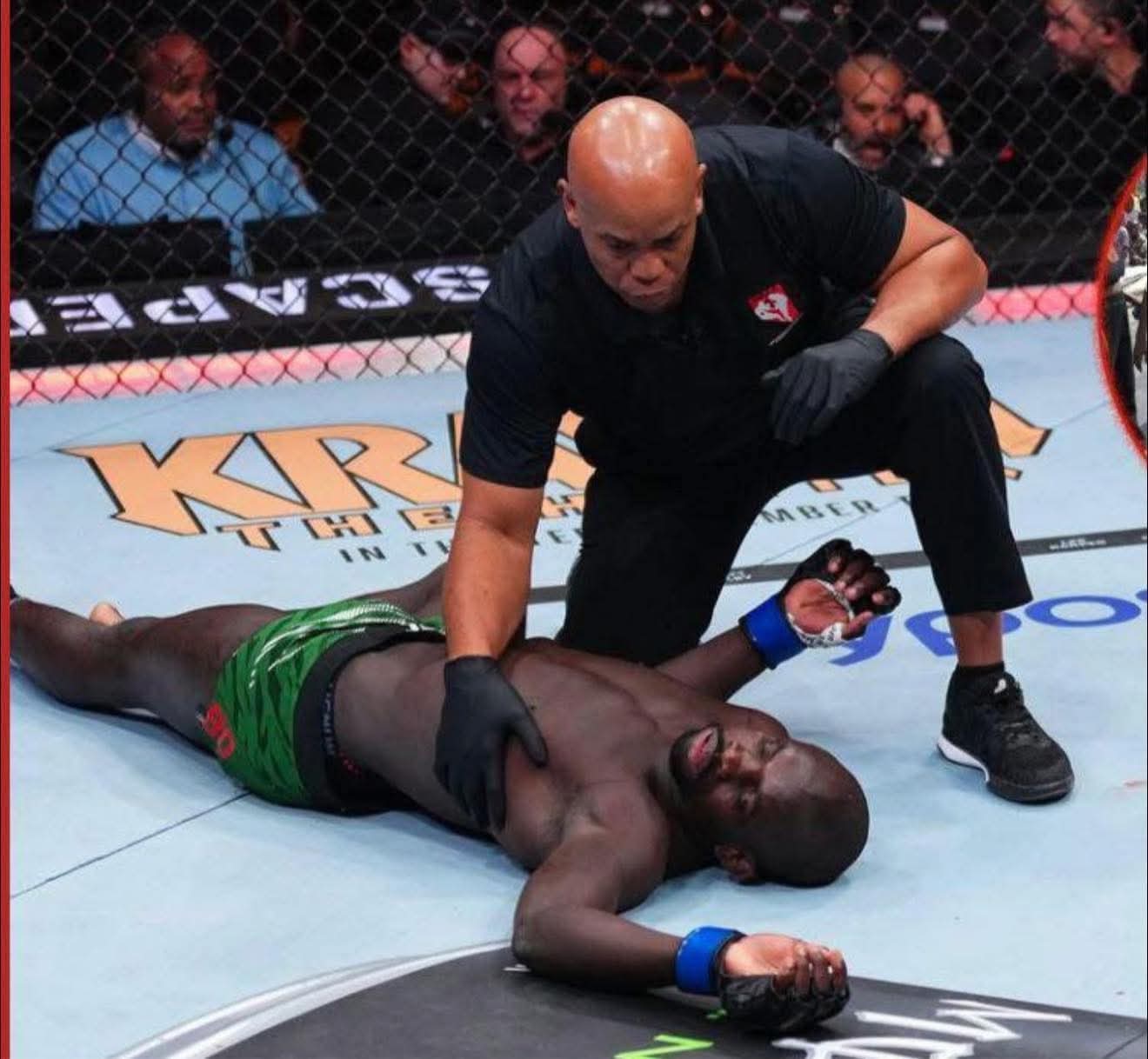


By Princess Eugene Majuru, Princess of Harare
When Themba Gorimbo sat down with CNN’s Larry Madowo, what emerged was not just the story of a rising mixed martial arts fighter, but the testimony of a man shaped by abandonment, resilience, and deep emotional scars. His words shocked many, unsettled others, and sparked debate across Zimbabwe and beyond. Yet beneath the headlines lies a far more complex human story—one that demands understanding rather than judgment.
Gorimbo openly expressed that he feels let down by his own people. He spoke of a life where, at his lowest point, support was nowhere to be found. The image he shared is haunting: sleeping in a gym, with only seven US dollars to his name, invisible to those who should have cared the most. That moment, more than any other, symbolises the depth of his pain. It was not simply poverty he endured, but neglect.
His rescue came not from home, but from abroad. American superstar Dwayne “The Rock” Johnson stepped in, offering him not only encouragement but a house—a tangible act of compassion that changed Gorimbo’s life. For Gorimbo, this intervention became proof that help sometimes comes from unexpected places, and that humanity can exist beyond bloodlines, borders, and nationality. It is from this place that his statement, “I don’t belong to Zimbabwe, I belong to the universe,” must be understood. It is not a rejection of identity as much as it is a cry born out of emotional exile.
Perhaps the most painful revelation was his admission that he has blocked all his family members and wants little to do with them. He even went as far as stating that, when he dies, he would prefer to be cremated and have his ashes scattered in Kruger National Park. These are not casual remarks. They are the words of someone who has severed emotional ties after enduring what he perceives as betrayal and prolonged hurt.
In the past, there were reports of friction between Gorimbo and his family. With time, those tensions appear to have deepened into permanent fractures. One does not arrive at such decisions lightly. They are often the result of years of disappointment, unresolved trauma, and feeling unseen. While many are shocked by his stance, it is important to recognise that trauma reshapes how people relate to family, community, and even nationality.
Gorimbo is clear on one thing: his success came through his own hard work. That assertion is not arrogance; it is survival. When a person has had to fight alone for so long, self-reliance becomes both shield and identity. Yet this fierce independence is often accompanied by emotional wounds that remain untreated.
His story resonates far beyond his personal journey. Worldwide, there are countless people who, due to painful past experiences, choose to cut ties with their families. In African communities especially, this reality is often misunderstood or dismissed, as family unity is culturally idealised. But there is another, less spoken-about truth. In some cases, families are sources of deep harm—through neglect, jealousy, manipulation, or even beliefs in witchcraft, black magic, and deliberate sabotage. For those who feel constantly attacked or unsupported, walking away becomes a form of self-preservation.
Equally painful is a pattern many recognise: when someone is struggling, they are ignored. But when their life turns around—through their own effort or through the intervention of a “saviour”—those same people reappear, eager to claim proximity to success. This dynamic leaves lasting emotional damage and reinforces the belief that love was conditional all along.
Themba Gorimbo is, in many ways, a man carrying post-traumatic scars. His words should be read through that lens. Understanding his pain does not require agreement with every decision he has made. It requires empathy. He has chosen a path that gives him peace, but that does not mean the journey is complete. Healing is not linear, and even the strongest individuals need counselling, emotional support, and safe spaces to process what they have endured.
As a society, the question should not be whether Gorimbo is right or wrong to feel the way he does. The question should be: what can we learn from his pain? His story reminds us of the cost of neglect, the power of compassion, and the fact that success does not erase trauma. There may indeed be light at the end of the tunnel, as Gorimbo’s life now demonstrates—but the darkness that came before should never be ignored.
In listening to Themba Gorimbo, we are being asked to do something simple yet difficult: to understand before we judge, to support before we celebrate, and to remember that behind every success story is often a long, silent struggle.

Themba Gorimbo
#Zimbabwe #africanstorytelling #viral #highlight #showcase #thembagorimbo
Comments
About Author