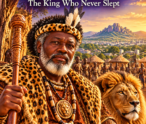
Harare Zimbabwe ( News of The South) – The story of the Mbari clan in Zimbabwe is a painful testament to the long-lasting wounds of British colonialism, a trauma that extends far beyond the moment of independence. Their current struggle is a powerful, yet often unheard, demand for justice, sovereignty, and the basic right to mourn their dead on ancestral land. Displaced, scattered, and denied the collective space for their cultural life, the Mbari people embody a protracted human rights crisis one that the former colonial power has shown a deeply concerning reluctance to address.
The Scar of Displacement and Genocide
The narrative provided highlights a genocide and the wholesale displacement of the Mbari people from the vast territory that once comprised the jurisdiction of King Mbari and King Makombe. While historical records concerning a colonial-era genocide specifically against the Mbari clan are less widely documented than post-independence atrocities like the Gukurahundi massacres, the essence of the claim—that the British colonial project resulted in mass killings and the dispossession of a people’s entire kingdom—is consistent with the violent history of land seizure in Southern Rhodesia.
The consequence of this colonial action is the clan’s current state: living as destitute and scattered across other chiefs’ lands. This displacement is not merely a matter of economic hardship; it is a cultural and spiritual violation. Clan identity in Zimbabwe is deeply tied to territory (nyika) and the ability to conduct traditional cultural ceremonies, funerals, and family events collectively in an ancestral homeland. The loss of this physical and spiritual centre prevents the Mbari clan from maintaining the communal bonds and practices that define their heritage, making any collective action from administration to commemoration nearly impossible.
The Core Human Rights Violations
The Mbari clan’s current plight is a clear violation of several fundamental human rights principles that demand global attention and remedy:
1. The Right to Self-Determination and Land
The permanent dispossession of the Mbari Kingdom’s territory violates the right to self-determination as enshrined in Article 1 of the International Covenant on Civil and Political Rights (ICCPR) and the African Charter on Human and Peoples’ Rights (Banjul Charter). This right includes the freedom of a people to freely pursue their cultural and economic development. The forced scattering of the clan destroys its ability to govern itself and sustain its traditional way of life.
Furthermore, the displacement constitutes a violation of the right to property (including communal property and land rights) and the right to an adequate standard of living, as stipulated in Article 14 of the Banjul Charter and Article 11 of the International Covenant on Economic, Social and Cultural Rights (ICESCR).
2. The Right to Culture and Identity
The inability to gather, coordinate, and perform traditional ceremonies is a direct assault on the right to culture, guaranteed by Article 27 of the Universal Declaration of Human Rights (UDHR) and Article 22 of the Banjul Charter. For the Mbari clan, whose totem is the magnificent Shumba Gurundoro (the Majestic Lion), the inability to practice their traditions on their sacred, ancestral ground is a spiritual wound. The spirit of the ‘majestic lions’—who “hunt, they run they work and never give up”—is currently shackled by the lack of a communal homeland.
3. The Right to Dignity and Commemoration (Burial Rights)
Perhaps the most visceral trauma is the claim that human remains and bones are scattered at the genocide crime scenes on their former land. The refusal of the party responsible (the former colonial power) to engage in discussions for a proper and decent burial is a profound human rights failure. This violates the right to dignity, which extends beyond life and includes the right of the deceased to a proper burial and the right of the family and community to mourn and commemorate their dead according to their customs.
The denial of a proper resting place is a continuous atrocity, hindering reconciliation and inflicting perpetual psychological suffering on the descendants, in violation of principles related to the treatment of human remains in mass graves and crime scenes, which necessitates professional, transparent, and respectful exhumation and reburial processes.
The Demand for Restorative Justice
The reluctance of the former colonial power—who “preach human rights but can’t practice are simply hypocrites”—to even engage with the Mbari clan’s representatives represents a failure of restorative justice. The international community, and specifically the government responsible for the colonial administration, has a moral and legal obligation to address historical wrongs that continue to impact the living descendants.
Justice for the Mbari clan requires a process that encompasses:
Truth and Acknowledgment: A formal and unequivocal admission of the harm—the genocide, displacement, and dispossession—caused by colonial actions in the Mbari/Makombe jurisdiction.
Repatriation of Remains: Immediate, professional, and culturally sensitive efforts to secure, exhume, identify, and provide a decent reburial for the human remains scattered across the ancestral land.
Land Restitution or Compensation: Transparent and good-faith negotiations to either restore a viable portion of the ancestral land or provide equitable and collective compensation that enables the clan to purchase or reclaim a territory suitable for the resuscitation of the Mbari chieftaincy and the re-establishment of a central cultural home.
The Mbari ancestors’ spirits live on, and their descendants the spiritual majestic lions will not allow this discussion to die. Their fight is a crucial, ongoing reminder that decolonisation remains incomplete until the dispossessed regain their land, dignity, and collective cultural life.
Comments
About Author