Stephen T Chifamba
KAROI – Poverty is a problem that the country and the continent at large has been fighting for years. Statistics show that one in every five household’s lives in dire poverty in Zimbabwe and the nation has been trying to save its people from poverty in different ways such as social transfers and the likes.
Some children in the parts of the country do get amused by seeing a plate full of rice and like that is not shocking enough, the sight of roasted chicken is a scene to the children of such communities.
This is a case of children in rural Karoi in a place known as Chitenje, where children spend hours on weekends and holidays, sun-scorched and drained, helping in the fields as they try to improve their lives.
However, the 29th of February 2020 was far from being an ordinary day for these children. A wave of laughter and singing filled the air, as their small hands and feet clapped and danced their way to merriment.
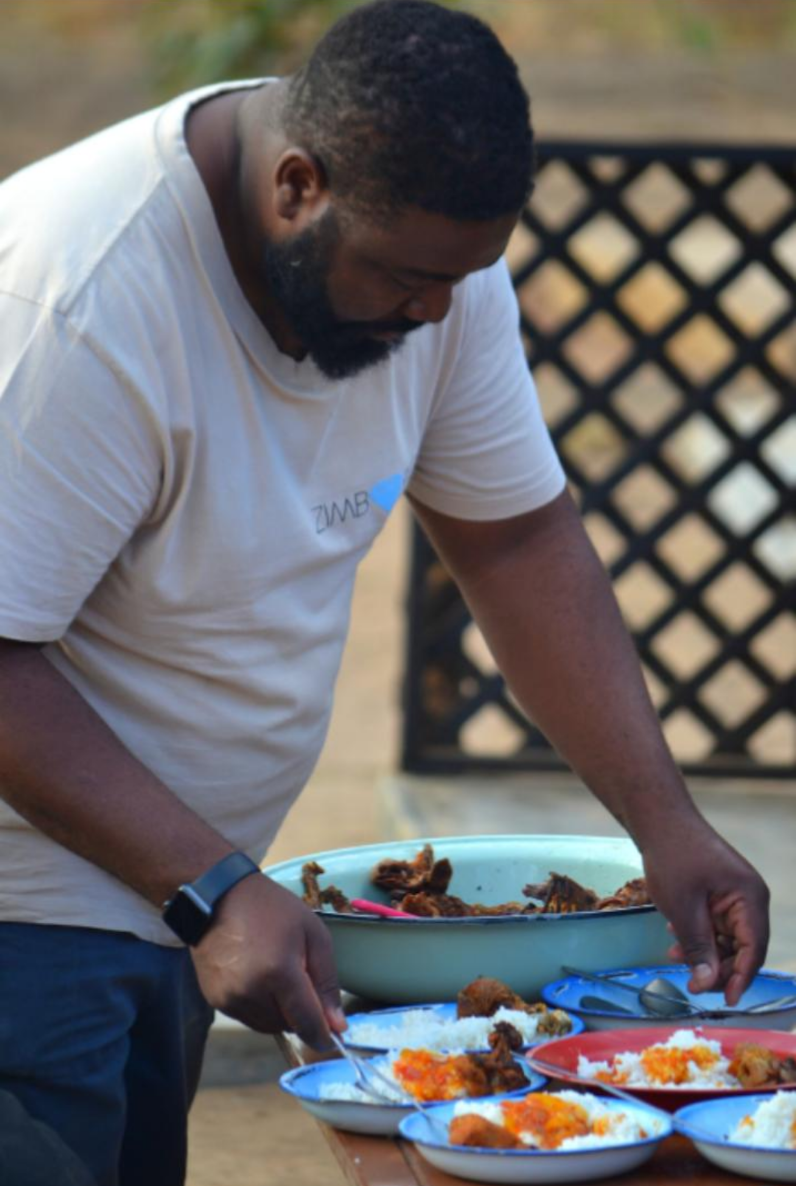
Mr Tendai Patrick Zindoga, a big hearted businessman from Harare, founder of TPZ foundation, a charity organization dedicated to improving lives in marginalised and impoverished communities, put in place a gathering for children of Chitenje community to bless them with a standard meal of rice and chicken as well as a cup of Mazoe Orange Crush.
A chuckle, a grin and crinkle eyes, were all in order at this gathering, as Mr Zindoga not only dished out inviting food but also, a deserving smile. Each plate was received by small grateful stomachs, since, the previous year’s tobacco income had been spent and most families were struggling to provide a decent meal.

Taking into consideration how communication is important for every child, Mr Zindoga, in partnership with Strokes of Hope, an NGO that promotes art in rural communities, also provided a platform to encourage the children to communicate and express themselves openly, not only verbally but also through art.
Mercy Nhauranwa, founder of the NGO, encouraged children to ‘let their voice be heard’ and use art as a communication tool in situations difficult to express in conversation, a healing tool for the abused child, a celebratory tool for success and a motivation for a brighter future.
The gathering was well attended, with children showing bright faces all around to signify that indeed the day was different from all others in the community.
Time was spent with a paint brush at hand, a rhythm at heart and a pleasant spirit. Games were played, a song was sung and lives were changed. Sometimes all it takes is a generous hand and a child at heart to imprint hope that transforms communities.
Comments
About Author