By Princess Eugene Majuru | News of The South
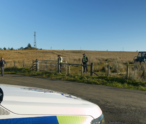
Scotland, 17 October 2026 — A 16-year-old boy and an 80-year-old man have tragically lost their lives after a light aircraft crashed near Loch Lomond in Scotland, prompting an investigation into the circumstances surrounding the fatal accident. The aircraft came down north-east of Drymen, in the Stirling area, on Friday afternoon, 16 October 2026, shortly after departing Glasgow Airport.
Emergency services were alerted to the crash at approximately 4.45pm and rushed to the scene. However, both occupants were pronounced dead at the location. Police Scotland confirmed that the families of the deceased had been informed. The identities of the two victims have not yet been officially released, and authorities have not confirmed their relationship or their respective roles aboard the aircraft.
Aircraft lost contact minutes after take-off
The aircraft involved has been identified as a Piper Tomahawk II, a small, two-seat aeroplane commonly used for pilot training and recreational flying. Flight-tracking information indicates that the aircraft departed Glasgow Airport at approximately 4.17pm on Friday. Just 20 minutes later, at around 4.37pm, its tracking signal stopped transmitting. The aircraft subsequently crashed near Drymen, a village close to Loch Lomond, one of Scotland’s most recognisable tourist destinations. According to available flight-tracking records, the aeroplane had undertaken several journeys earlier in the day. It reportedly departed Cumbernauld Airport shortly before midday and travelled to Glasgow Airport. It later completed a flight towards Newport-on-Tay before returning to Glasgow. Following a period on the ground, the aircraft departed again on what would become its final journey. Investigators will now seek to establish what happened during those final minutes and whether any technical, operational, environmental or other factors contributed to the tragedy.
Aviation investigators launch inquiry
The UK’s Air Accidents Investigation Branch (AAIB) has launched a formal investigation into the crash. A team of specialist investigators has travelled to the accident site to gather evidence and examine the wreckage. The investigation is expected to consider the aircraft’s condition, maintenance records, flight history, weather conditions and any available communications. The AAIB’s responsibility is to establish the circumstances and causes of aviation accidents and identify lessons that could help prevent similar tragedies. At this stage, there has been no official determination of what caused the aircraft to crash. Although the aircraft stopped transmitting shortly before the accident, the loss of a tracking signal alone does not establish whether the plane experienced mechanical failure, communication problems or another emergency. Investigators will need to examine the available evidence before drawing conclusions.
Airspace restrictions imposed around crash site
Police Scotland has introduced temporary airspace restrictions over the Drymen area to protect the investigation and prevent interference with emergency operations. The restrictions also apply to drones. Authorities have warned that operating aircraft or drones within restricted airspace without authorisation constitutes a criminal offence. The restrictions are expected to remain in place while investigators continue their work. The public has been urged to respect the controlled area and avoid activities that could interfere with the examination of the crash site.
Glasgow Airport expresses condolences
Glasgow Airport has acknowledged that the aircraft involved in the fatal accident departed from its facilities. The airport’s managing director, Gavin Birch-Williams, expressed sadness over the tragedy and extended condolences to the victims’ families and friends. The incident has brought renewed attention to the safety of light aircraft operations, particularly flights involving smaller aeroplanes used for training and private aviation. Unlike large commercial passenger aircraft, light aeroplanes generally operate with fewer occupants and may fly from smaller airports and airfields. However, the circumstances surrounding this particular accident remain unknown, and it would be premature to associate the tragedy with any specific safety failure.
Questions surrounding the final flight
As investigators begin reconstructing the aircraft’s final movements, several important questions remain unanswered. What happened between the aircraft’s departure from Glasgow Airport and the moment its tracking signal disappeared? Was the aircraft experiencing any difficulty before it came down? Did the pilot attempt an emergency landing? Were weather conditions or mechanical problems involved? And what was the purpose of the final flight? These questions will form part of the wider public interest surrounding the accident, although investigators have not yet established whether any of these possible circumstances played a role. The age difference between the two victims has also attracted attention, but police have not confirmed whether the flight involved an instructor and student, relatives or individuals travelling together for another purpose. Their relationship should not be assumed before further information is released.
A devastating loss of two lives
Beyond the technical investigation lies the human tragedy of two lives lost in a matter of minutes. One victim was just 16 years old, at the beginning of adulthood, while the other was 80, having lived through eight decades. The circumstances that brought them together aboard the aircraft remain unclear. For their families, what began as an ordinary Friday afternoon has ended in devastating loss. The accident is also a reminder that aviation investigations are not simply about identifying mechanical faults or reconstructing flight paths. They are about understanding events that have taken lives and determining whether lessons can be learned to protect others. As Scotland mourns the deaths of the teenager and the elderly man, attention will remain focused on the investigation and the findings that emerge. For now, the cause of the crash remains unknown.
News of The South will continue following developments as investigators work to establish what caused the aircraft to fall from the skies near Loch Lomond.
Reporting verified against Police Scotland’s official statement of 16 October, the Air Accidents Investigation Branch’s announcement of 17 October, and contemporaneous reporting on the aircraft’s movements
Comments
About Author