

By Beaven Dhliwayo
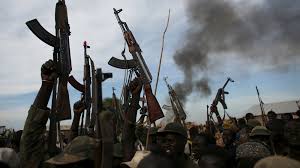
Harare, Zimbabwe (News of the South) – Following the recent upsurge in fighting in Melut, Upper Nile, South Sudan has been left heavily inflicted by crisis giving unnecessary burden to the United Nations member states especially neighbouring Uganda.
The clashes between the state and opposition actors which analysts termed as “outrageous abuses, reprehensible and unacceptable” against aid workers, as well as reports of horrific attacks against civilians in Eastern Equatoria left host communities and aid agencies in Uganda struggling to feed and shelter new refugees, according to reports by the United Nations refugee agency.
According to estimates, some 6,000 newly displaced have arrived in Lamwo district (northern Uganda), after an attack on the town of Pajok, some 15 kilometres (about 9.5 miles) across the border, and there are fears that number could rise as fighting is reported in the bordering towns of Magwi and Oboo.
The revised requirements now amount to $781.8 million, including support costs (seven per cent), some $297.9 million (61 per cent) higher than the earlier budget of $483.9 million.
This points to a worrying situation as it stretches nations of unnecessary budgets which could have been directed for other developmental projects in infrastructure and human development.
According to the Supplementary Appeal for the South Sudan Situation, launched by the Office of the UN High Commissioner for Refugees (UNHCR), over three million people are estimated to benefit from the agency’s interventions by 31 December 2017.
These numbers do not include local populations in host communities who – themselves suffering from food insecurity and limited access to basic social services and infrastructure – would also benefit from humanitarian interventions under the agency’s inclusive support strategy.
The situation has added a burden to the UN which is already struggling to give humanitarian aid to other refugees scattered across the region.
Not forgetting that the prevailing conflict could have been avoided by peaceful means through dialogue between the state and the opposition.
UNHCR interventions focus on increasing the integration of refugee response programmes with comprehensive national and regional protection and development frameworks; enhancing productive and coping mechanisms of refugee and host communities; and strengthening resilience through partnerships and innovative approaches such as cash-based interventions and other self-reliance initiatives in close cooperation with governments, humanitarian and development actors, civil society and the private sector.
The “planned assisted population” by the end of 2017 is about 3,026,300, 70 per cent higher than the “population of concern” identified by UNHCR as of 31 October last year (1,770,688).
The “population of concern” included more than 1.2 million South Sudanese refugees in the Central African Republic, the Democratic Republic of the Congo, Ethiopia, Kenya, Sudan and Uganda.
Of the nearly 1.8 million internally displaced within South Sudan (as of November 2016), UNHCR interventions focused on protection and assistance of approximately 240,000 most vulnerable internally displaced persons (as of end-October 2016).
During 2017, UNHCR estimates to assist up to 830,000 displaced assessed as the most vulnerable among the total population displaced.
In terms of overall figures, some 6.1 million South Sudanese are estimated to be in need of urgent humanitarian assistance.
The statistics are worrying and show the extent of cruelty of the African leaders who always cling to power for their selfish gains at the expense of the populace.
There should be checks and balances in African governance in terms of executive powers, which are absolute because absolute power corrupts absolutely.
Instead of concentrating in fighting each other squandering millions on weapons of mass destruction they should use the money to fight diseases, protracted instability, escalation of violence and wide-spread destruction which have triggered unprecedented levels of food insecurity.
According to latest UN report more that 4.8 million South Sudanese people – half the population – are severely food insecure due to simply being unable to bring in the harvest.
The economic situation, too, continues to worsen with hyper-inflation at record levels of more than 800 per cent.
On top of these challenges, lack of in-country infrastructure such as roads or viable airfields, as well as the long rainy season of up to eight months per year have rendered South Sudan one of the most logistically challenging countries in the world in which to operate, and thus in which to bring assistance to those in need.
The breakdown of the revised requirements for the South Sudan Situation by country operations include: Uganda ($283.8 million), South Sudan ($171.7 million), Ethiopia ($157.7 million), Sudan ($68 million), Kenya ($40.5 million), Democratic Republic of the Congo ($30.3 million) and Central African Republic ($9.8 million).
Headquarters and Regional Coordination amount to $476,251.
The situation should not be left unattended but should be nipped in the bud by relevant authorities by ways of investigations and bring the perpetrators to justice.
It is beyond reckoning and unforgivable that humanitarians in the country meant to save lives continue to be killed, harassed and abused despite repeated calls for action.
Leadership in South Sudan should rapidly investigate these allegations and end all attacks against civilians r face the wrath of the law for failing to protect citizens.
Comments
About Author