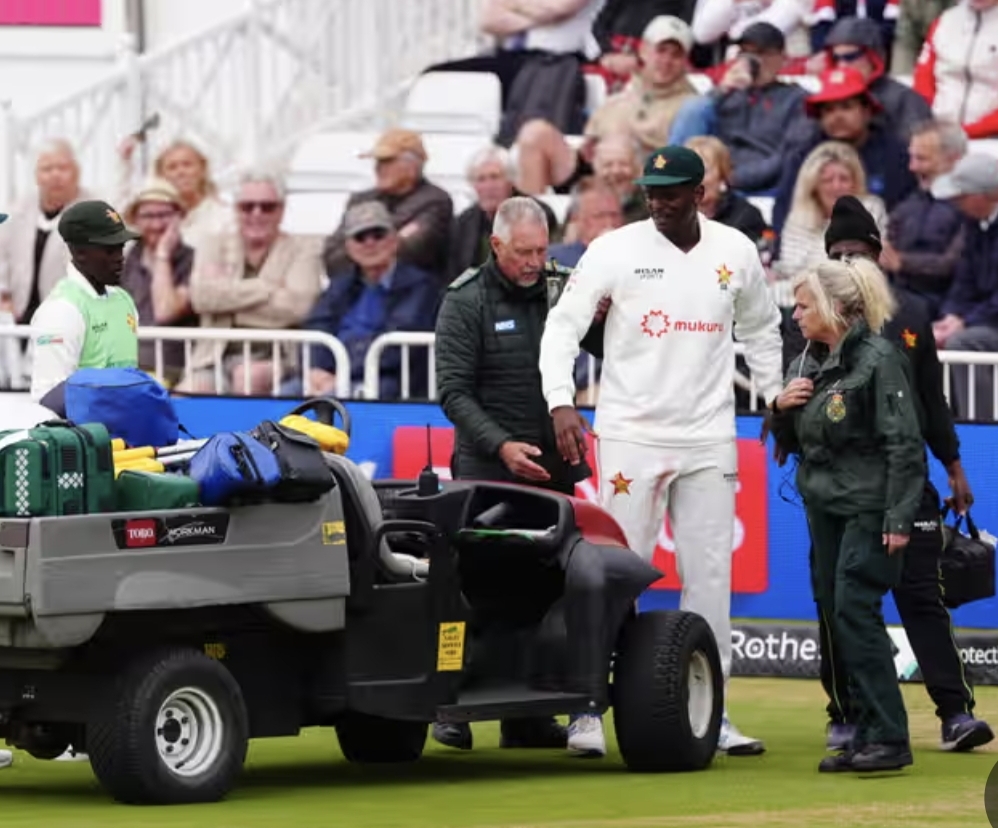


HARARE, ZIMBABWE (News of The South) – The recent Test match between Zimbabwe and England has sparked a fervent debate within the cricketing world, as the sight of an injured Richard Ngavara being led off the pitch with no direct replacement has highlighted a fundamental difference in sporting rules compared to football or basketball. The incident has left many questioning whether cricket’s traditional stance on substitutes is fair, particularly when one team is significantly disadvantaged.
Zimbabwe’s Ngavara, a key player, was forced to leave the field due to injury, leaving his team with a numerical disadvantage against a formidable English side. While the exact nature of Ngavara’s injury and his current condition are yet to be fully disclosed, his absence undeniably tilted the scales further in England’s favour, leading to what many are calling a “one-sided affair.”
The stark contrast to sports like football and basketball, where injured players are routinely replaced to maintain team equilibrium, has become a central point of contention. In those sports, the immediate substitution ensures that the flow of the game is minimally disrupted and that one team is not unduly penalized by an unfortunate injury. Cricket, however, operates under a different philosophy, often citing the unique strategic nuances of the game and the individual skills required for each position.
Cricket does have “concussion substitutes” and “COVID-19 substitutes,” introduced in recent years to address specific health and safety concerns. However, a general injury replacement rule, akin to other major team sports, remains absent.
Pundits and fans alike are now weighing in on the implications of this rule. Proponents of change argue that it fosters a more level playing field, ensuring that the outcome of a match is determined by skill and strategy, rather than by the misfortune of injury. They contend that a general injury replacement would prevent situations where a team is effectively crippled and the competitive integrity of the game is compromised.
Conversely, those who advocate for the status quo emphasise the historical traditions of cricket and the potential for abuse of a replacement rule. They suggest that allowing substitutes for any injury could lead to tactical withdrawals and undermine the endurance and resilience that are hallmarks of Test cricket. Questions also arise regarding the type of player that could be brought on as a replacement – would it be a like-for-like replacement, or could it open the door for tactical changes that alter the balance of the team?
The Ngavara incident has undoubtedly put the spotlight firmly on this long-standing debate. As the series progresses and the impact of his absence continues to be felt, the calls for a re-evaluation of cricket’s substitution rules are likely to grow louder. Whether this will lead to a fundamental shift in the game’s regulations remains to be seen, but the discussion highlights a growing desire for fairness and competitive balance in the modern era of cricket.
Comments
About Author