

By Michelle Chifamba
Harare. – Increasing poverty levels continue to push Zimbabweans to seek jobs and better life in neighbouring South Africa, but for most people the reality is often as harsh and that pastures are not always greener on the other side.
Among those drawn by the prospect of easy jobs, are girls as young as twelve years, who constantly fall prey to child traffickers promising them better opportunities in life.
Most of the teenagers are from poor townships and rural settlements of Chiredzi, Masvingo, Chipinge and Chivhu.
In South Africa, many find themselves being forced into prostitution and drugs, according to non-governmental organizations.
The International Organization for Migration (IOM) in Beitbridge said it used to handle more than 30 cases of smuggled children being deported from South Africa every week, although that figure has somewhat decreased.
IOM has a camp that houses at least 40 boys and girls. It was set up in 2006 at a time when there was an influx of people illegally crossing into South Africa.
“So far we have dealt with more than 10 000 children who have been housed at this transit camp as we trace their relatives. The children would have been deported for failure to produce relevant travelling documents,” said IOM district social service officer, Energy Mlambo.
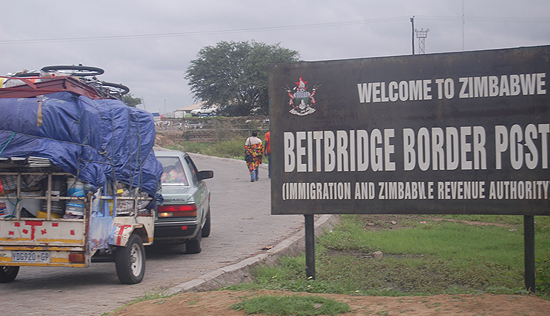
Security at Beitbridge border post, Africa’s busiest inland port, is loose and the infrastructure is buckling under the pressure of increasing number of travellers.
Beitbridge port was built to cater for the white minority in colonial Rhodesia and blacks were only expected to travel by train as labour to South Africa’s gold mines.
But the ever rising number of travellers using the port has meant Beitbridge “is becoming smaller by the day and the issue of infrastructure and human resources constraints is affecting the security at the border post.”
“We are unable to adequately trace the cases of human trafficking and smuggling due to infrastructure constraints, especially those border jumpers who use undesignated ports are difficult to trace,” assistant regional immigration officer, Notious Tarisai said.
According to the Immigration Department, at least 100 people are deported from South Africa each day and these are mostly under age children without passports and who eventually disappear without a trace.
However, an IOM official in Harare said due to the failure to define human trafficking and smuggling coupled with the absence of a proper human trafficking bill, many cases of human trafficking have remained unsolved while perpetrators go unpunished.
The Beitbridge Immigration Department said the absence of a proper legislation on human trafficking had caused delays in finding ways of catching child traffickers, while a border is a transit point which could not establish whether people will be used for labour exploitation.
“A border is a transit point, it is up to the country of port to establish how people are used for labour exploitation. Now that there has been a bill gazette we are now smarting in to see how we can work with issues of human trafficking. We need to come up with plans on how best to deal with human traffickers,” said Tarisai.
A South African-produced documentary on child trafficking titled, “Killing the Innocent”, said many children were trafficked during the 2010 World Cup under after being promised work.
The Beitbridge Social Services Department said between 2006 and 2010, there was an increase in the number of child deportations, which had led to the setting up of a camp to house the children.
“The camp houses children who would have been deported as they wait for their relatives in Zimbabwe to be traced. While they are here for a minimum of three days, we would provide counselling to the children allowing them to tell their stories of how they ended at the border with the aid of diagrams. The ages of the children is between 8- 16 years and the cases were prevalent from 2007-2010,” Mlambo said.
The immigration department has fingered cross-border drivers who transport goods between South Africa and Zimbabwe, who are known locally as “malaichas”, as major culprits in the trafficking and smuggling business.
At Chingwizi transit, where thousands of people displaced by flooding of Tokwe Mukosi dam are staying, grinding hunger and poverty is pushing young children into the arms of traffickers who promise them better prospects.
“Many teenagers in the parts of the hunger stricken Chingwizi are being forced to look for alternatives in South Africa as they see little future in Zimbabwe as a result of their distorted lives,” said Director for Vision HIV/AIDS, Justice Mbiva.
As the transit camps hum with poverty, many seek to come to terms with their lives, which were destroyed and the hopes that were washed away. Desperate to bring the pieces of their lives together, young people at Chingwizi are looking to escape from this despair.
“We just hear of stories of South Africa. It is the only answer to our prayers. South Africa is perceived as the heaven on earth; prospering and flourishing. I am ready to go there even without a passport only to escape these dire conditions,” said a teenage boy who spends his days out of school basking in the sun in the transit camp.
While in the transit camp of Chingwizi there are allegations by the people in the transit camp that the relevant officials responsible for the people’s welfare are linked to child traffickers cartels, the Immigration Department said it has trained personnel and the border has stringent rules to protect people from being trafficked and smuggled.
“We have heard of reports of corruption within the immigration officers with regard to smuggling and child trafficking but those found on the wrong side of the law would be prosecuted,” Tarisai, the Beitbridge assistant immigration officer, said.
According to findings by the IOM, child trafficking is a social disease that affects the African society as everyday children are sold to be sex slaves, for harsh manual labour and as child soldiers- as such Zimbabwe should be hailed for stringent laws to protect victims of child trafficking.
Comments
About Author