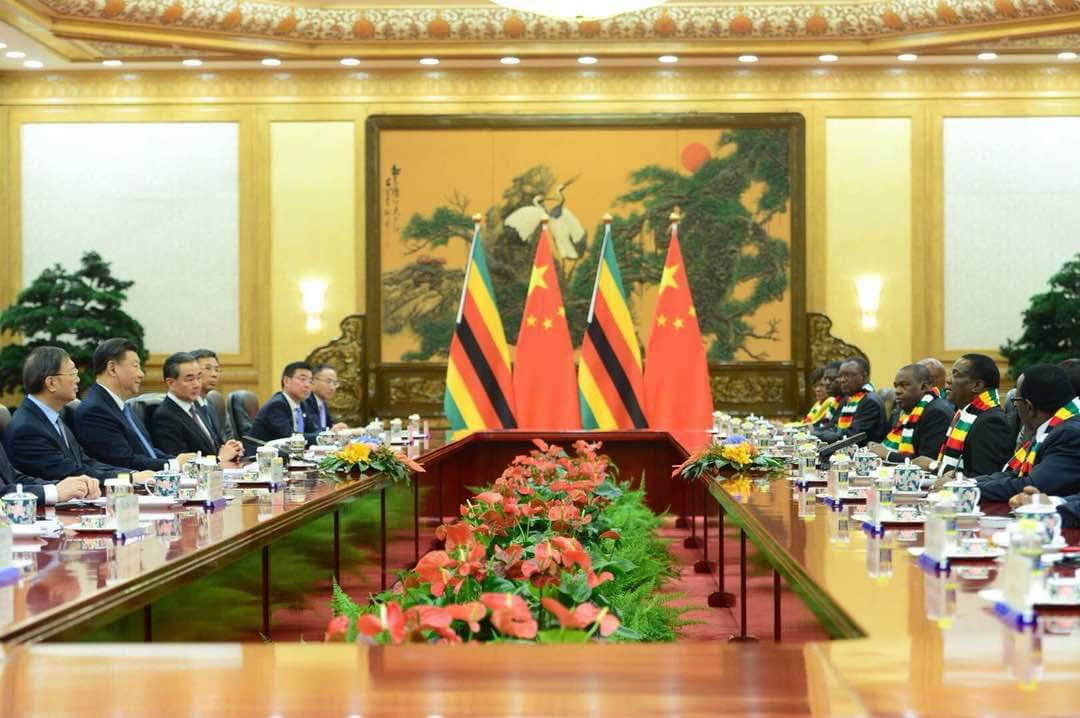


London. (News of The South) – The 21st of November 2017 became a historical date in Zimbabwe’s post-independence history. A generation which had experienced Mugabe’s rule for 37 years saw this coming to an abrupt and unexpected end when Mugabe resigned.
Celebrations across the country followed, with Zimbabweans living in the diaspora joining in jubilant celebrations at the ending of Mugabe’s controversial leadership of this beautiful Southern Africa state.
Heading for a new relationship, China’s President leads as Zimbabwe’s follows
Mugabe’s exit was quickly followed by the inauguration of the man he had sacked earlier on in the month, his former Vice President Emmerson Mnangagwa on the 24th of November 2017. The inauguration ceremony was attended by various state representatives including Botswana which had been the most vocal critic of Mugabe within the regional Southern Africa Development Community (SADC). The inauguration speech was heralded as signifying a new dispensation as it emphasised a thawing of hostilities and a willingness to engage with the international community including Mugabe’s declared enemy, Britain and the United States.
However for many observers, all thoughts and eyes were on China, a country that had been described by Samuel Ramani writing for The Diplomat in January 2016 as Mugabe’s, “all weather friends.” Analysts and political commentators have been eager to understand if the demise of Mugabe meant the cessation of strong diplomatic ties with Zimbabwe. Would China stop bankrolling the government of Zimbabwe, many wondered? How would it respond to the change of guard within this historical ally of China in Africa?
The ruling party ZANU PF which Mugabe had led since 1977 hosted an Extraordinary Congress, and invited foreign guests often serve to inform what form of relationship the country had with different states. The Extraordinary Congress was called by ZANU PF (the ruling party) to ratify and endorse the appointment of Emmerson Mnangagwa (now President of Zimbabwe) as its new leader giving him legal mandate to be its presidential candidate for general elections expected not later than August 2018. However as is often the case in diplomatic practice, the nature and level of delegates can give indications as to how relations are with other countries. To that regard, China seemed to make a statement of intent or acceptance if not welcoming of the new post Mugabe era by sending a strong Chinese delegation. Many invited states were represented by embassy staff within their diplomatic ranks. But not so with China which as Wang Xinsong (2018) observed, was represented by its Vice Minister of the powerful and influential International Department of the Chinese Communist Party Central Committee in addition to the presence of its Chinese Ambassador to Harare, Huang Ping. What would be the meaning of this, diplomatic commentators seemed to ask one another?
To many observers such actions and behaviour by the Chinese is an expression of confidence in the new leadership of the country. With others describing it as an anxious moment for the Chinese as the new President has declared Zimbabwe is open for business, not only to the Chinese but to the rest of the world. Yet the reality is however way analysts choose to interpret this, there is no sign yet that the Chinese are losing an important African ally, neither does it look like Zimbabwe is about to abandon its historical all weather friend. To the contrary, the ties seem to be getting stronger as both President Emmerson Mnangagwa and his Vice President former army general commander Constantino Chiwenga have their military training and ideological roots in China dating back decades.
The relationship between China and Zimbabwe is not just of state to state but the Chinese Communist Party invests in developmental training of Zimbabwe’s ruling party ZANU PF officials, supporting it to consolidate power and creating a stable political environment. This, to many analysts signify that China’s relationship with Zimbabwe is strengthening rather than being in decline or in doubt even as the Zimbabwe President is on a state visit to China.
Comments
About Author