

By Martin Muleya
MUTARE, Zimbabwe ( News Of The South) Legal experts in Mutare have urged Government to consider hiring high court judges if they are serious about ring-fencing corruption.
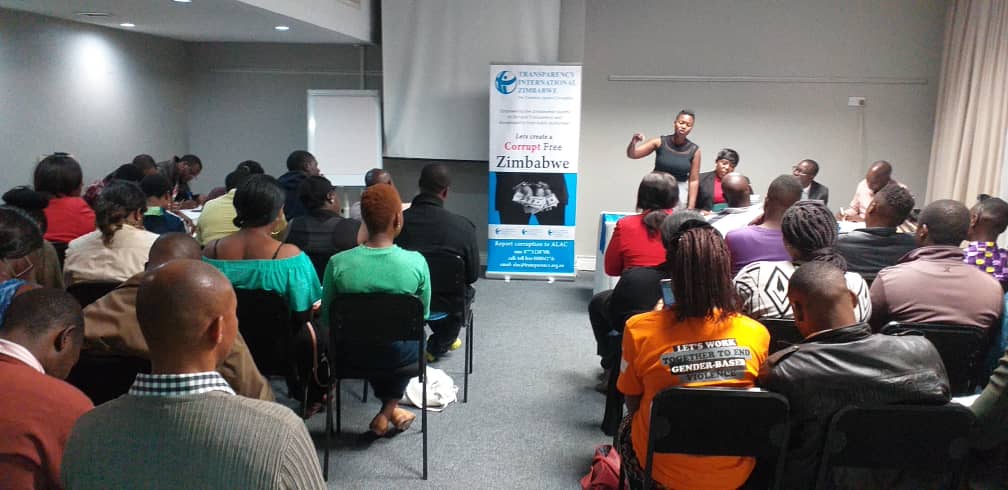
Speaking during a one day workshop that involved legal experts and trial observers, organised by Transparency International Zimbabwe (TIZ) last week, a senior lawyer who spoke on condition of anonymity said Government needed to consider giving better remuneration as well as changing personnel at the newly opened special Anti-Corruption courts. She highlighted that in the absence of better remuneration Government can also consider hiring high court judges to preside over these special courts.
“Magistrates like all other actors in the justice system should be well remunerated if they are to single mindedly focus on the task at hand.
“This thing (corruption) covers the justice sector. The magistrates sitting in that court (Anti-Corruption) is he/she capacitated enough in terms of finance to be ultimately relied upon that they won’t be corrupt?
“The moment you take the same magistrate who at the moment is poorly remunerated, who has no capacity to sustain a living, fighting corruption will be a futile exercise.
“There is need for a new framework that would assist in terms of personnel that provides for a magistrate who is well remunerated so that he/she won’t be tempted to be corrupt for a start. There is need for different people especially in Anti-Corruption courts. We do not need people who are already on the ground (magistrate courts) because they already know the channel and know how to cover their backs.
“In the absence of these conditions we will continue getting the same results unless there is change in terms of personnel who will preside over the corruption cases in these Anti-Corruption courts,” said the legal expert.
Her words were corroborated by Tendai Chinjekure (not real name) a private lawyer in town who noted that there is need to let corruption cases in lower courts (Anti-Corruption) be handled by high court judges as they are not easily manipulated to be corrupt.
“The Anti-Corruption court needs to be presided over by a high court judge because it is difficult to bribe a judge. Judges are not bribed easily. It is not possible because they already have power and thus they do not need our cheap monies.
“But if we continue having magistrates presiding in these courts then we will be continuing to fuel corruption because they are earning peanuts.
“The same people are still presiding the same court at the moment. The same are there even when this court (Anti-Corruption) was not yet established and they are still getting the same salary they have been getting before the court was constructed,” weighed in Chinjekure.
Last month during the official of the third special Anti-Corruption court in Mutare, Prosecutor General of Zimbabwe Kumbirai Hodzi reiterated that fighting corruption was a robust process that must involve engaging the citizens at all levels.
“We need to educate the citizens about the evils of corruption and the power they have to put to end to corruption. Zimbabwe will be corruption free, the day our citizens refuse to pay bribes for services that should be free from government officers,” said Hodzi then.
Transparency International Zimbabwe (TIZ) research and advocacy officer Samuel Matikiti highlighted that the aim of the workshop was to ensure that the trial observers they engaged to help them detect corruption in the courts, interface with legal experts within the justice sector.
The rationale behind that initiative being for the legal experts to clarify irregularities notes by trial observers during court proceedings.
“We organised for this policy dialogue workshop between our trial observers and legal experts as TIZ. The idea being that the legal experts have profound understanding of the justice system procedures and processes which might be a missing element to an ordinary person tasked with observing a trial in court. So our legal experts have been suggesting recommendations and solutions on some of the structural or policy gaps within our judicial system that need urgent attention to curb and eradicate corruption that has marred the sector,” remarked Matikiti.
Comments
About Author