By Staff Reporter
A horticultural farming supporting scheme technically supported by the Japan International Cooperation Agency (JICA) was launched in Harare on Tuesday with great expectations for the creation of a value chain system in farming.
The project, called Project for Zimbabwe Smallholder Horticulture Empowerment and Promotion (ZIM-SHEP) is an approach which emphasises market oriented agriculture.
It is aimed at assisting farmers who produce horticultural products by connecting them with the entire value chain so that they ‘grow to sell”.
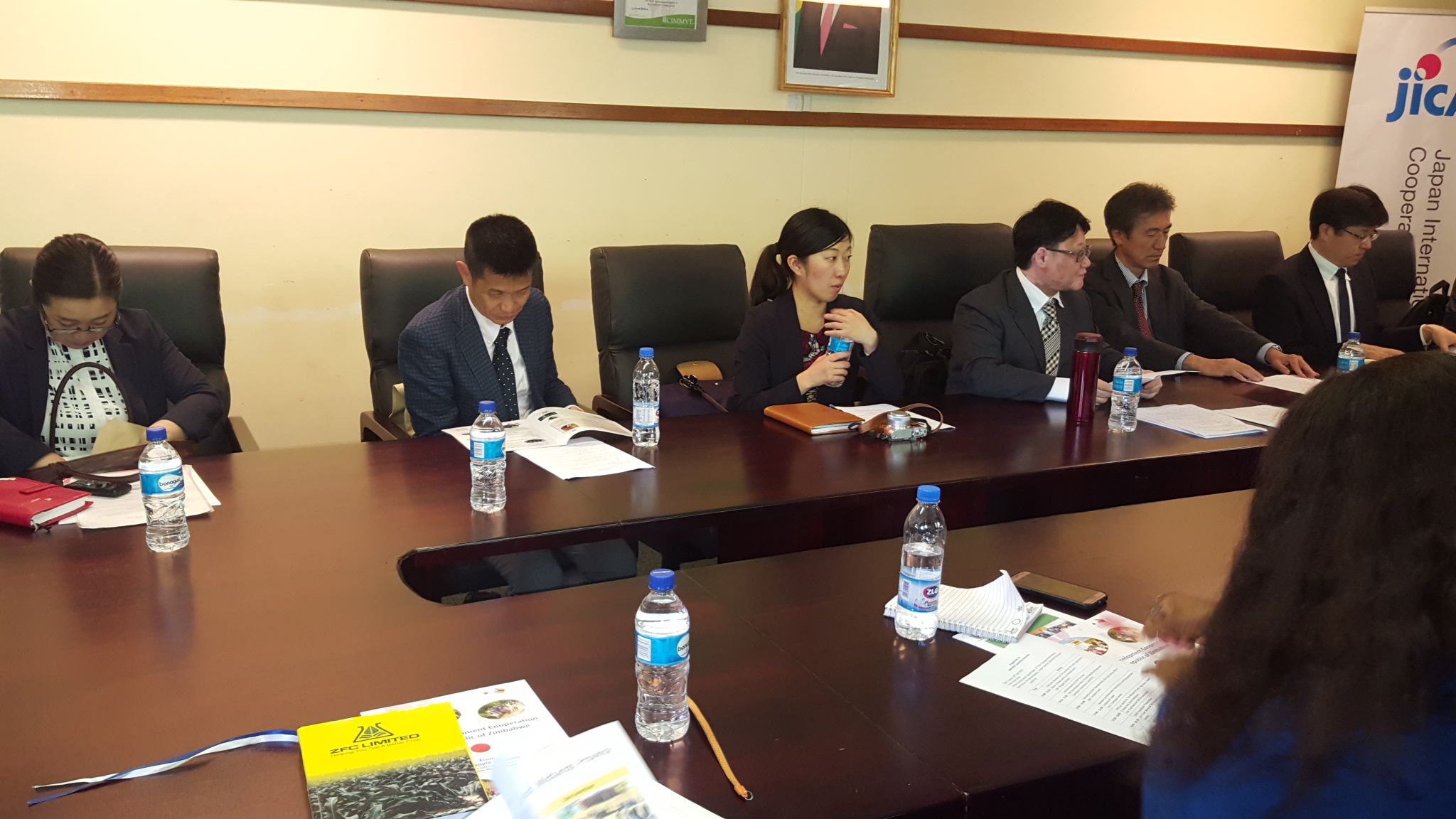
Speaking at the event Japanese Ambassador to Zimbabwe Mr Toshiyuki Iwado reiterated Japan’s commitment to assisting the country.
“I believe that the producers and other stakeholders taking part in this agricultural project will not only be contributing to farming, but also to Zimbabwe’s economy as a whole”
“I’m also glad that this project will also contribute towards the decentralization policy of the government of Zimbabwe with the project being implemented in eight different provinces outside Harare and Bulawayo”, he said.
Currently SHEP has already been implemented in Mashonaland Central, Midlands and Matabeleland South and has irrigation schemes in Mash East, Mash Central and Midlands making a combined total of 620.
In a speech read on his behalf by his Deputy Douglas Karoro, the Minister of Lands, Agriculture, Water, Climate and Rural Resettlement Perence Shiri said the initiative had come at an opportune time for the country.
“This project has come at the most appropriate time as the government endevours on a decisive path to steer horticulture growth for both import substitution and enhancing exports.”
“By targeting the smallholder farming sector which dominate horticulture production in Zimbabwe, the ZIM-SHEP project speaks to the needs of the Zimbabwean farming community”, he said.
Agriculture contributes 15% to Gross Domestic Product (GDP), 16% to total export revenue, 25% to formal employment and livelihoods to over 70% of rural population.
Lately the sector has taken a battering as a mixture of drought and financial difficulties have resulted in poor yields.
Zimbabwe is the latest country to partake in the program which has already been successfully implemented in 23 other African countries with phenomenal results experienced in Kenya.
The East African country achieved a doubling of its income of 2500 smallholders within two years.
Comments
About Author