By Princess Eugene Majuru | News of The South
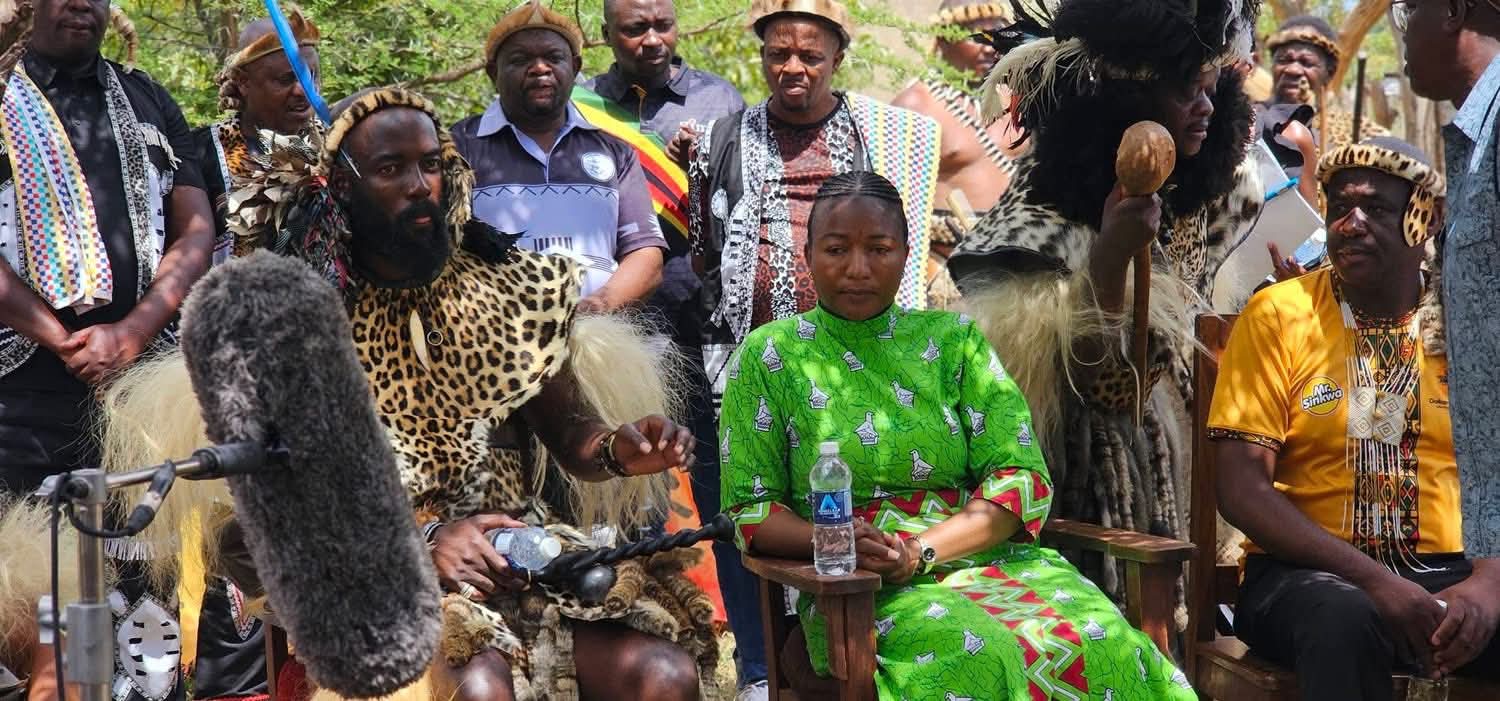
Nkayi, long regarded as a quiet custodian of Zimbabwe’s deep cultural memory, has in recent days emerged as the epicentre of a significant cultural renaissance. Since the 3rd of April, the district has hosted the fourth edition of Imiklomelo kaDakamela, a ceremony that has grown from a local recognition platform into a multi-layered cultural institution with regional influence.
Under the stewardship of Chief Mbusi Bekithemba Dakamela, the event is no longer simply about awards. It has become a carefully curated convergence of heritage, leadership, diplomacy, and identity—bringing into focus not only what African culture is, but how it is evolving in the present moment.
From Ceremony to Movement: What Has Unfolded Since April 3
The opening of the festival on April 3 set a deliberate tone—rooted in tradition yet outward-looking. Delegations arrived from across Zimbabwe and neighbouring South Africa, including representatives connected to Nguni royal houses. Their presence was not incidental; it signalled a revival of historical networks that once defined pre-colonial Southern Africa.
The first evening’s programme—anchored by a communal braai and musical performances—was more than entertainment. It functioned as a cultural reintroduction, where attendees were invited into a shared space of memory and identity. Music, particularly traditional Nguni forms such as amahubo, was used as both performance and pedagogy, transmitting history in a form that remains deeply African.
By April 4, the festival had shifted into its formal core. A royal procession, rich in symbolism, underscored the continued relevance of traditional leadership structures. Chiefs, cultural practitioners, and invited dignitaries moved in a display that was less about spectacle and more about continuity—an assertion that African governance systems remain intact, even if transformed.
The Achievers Awards ceremony followed, recognising individuals and institutions contributing meaningfully to society. The categories extended beyond the arts to include community development, cultural preservation, and youth empowerment. This broad scope reflects a deliberate repositioning of culture—not as an isolated domain, but as a foundation for social and economic development.
Parallel to the formal proceedings were workshops and knowledge-sharing sessions. Cultural figures facilitated discussions on indigenous music, oral traditions, and identity formation, particularly among young people. These engagements highlight one of the festival’s most important functions: intergenerational transmission.
Sport also played a role, with a rural tournament linked to Highlanders Football Club bridging the gap between urban and rural cultural expressions. This integration of sport, culture, and community speaks to a broader vision—one where identity is not compartmentalised but lived holistically.
As the festival moves toward its conclusion on April 6, its focus has increasingly turned toward youth. Innovation challenges, school showcases, and emerging talent platforms have positioned young people not merely as spectators, but as active participants in shaping the future of culture.
The Question of the “Gifted Wife”: Tradition Under Scrutiny
Alongside the celebrations, a parallel narrative has captured public attention: reports that Chief Dakamela was “given a wife” from Mpumalanga, South Africa.
At face value, the phrase has provoked confusion and, in some quarters, criticism. Within modern frameworks—particularly those influenced by Western individualism—the idea of a woman being “given” to a man raises immediate concerns about agency and autonomy.
However, such interpretations risk oversimplifying a complex cultural practice.
Royal Marriage as Diplomacy and Continuity
Historically, marriage within African royal systems has never been purely personal. It has functioned as a mechanism of diplomacy, alliance-building, and cultural continuity.
Across Southern Africa, particularly among Nguni societies, marriages between royal houses were used to:
Strengthen political alliances
Establish kinship ties across territories
Ensure the continuity of lineage and legitimacy
In this context, the reported union between Chief Dakamela and a woman from the Manala royal lineage in Mpumalanga can be understood as part of a broader tradition of inter-royal connection. It is less about the individual act of marriage and more about what that marriage represents—a living bridge between communities.
Understanding “Ukuphiwa”: Language and Meaning
Central to the controversy is the phrase often translated as “being given a wife.” In isiNdebele and related Nguni languages, such phrasing carries meanings that do not translate neatly into English.
“Ukuphiwa” in this context does not imply ownership or lack of consent. Rather, it reflects:
The formal endorsement of a union by families or royal structures
The ceremonial presentation of a bride as part of a culturally recognised process
The communal nature of marriage, where unions are not solely individual decisions but collective agreements
This distinction is critical. While modern discourse prioritises individual choice, traditional systems often situate marriage within a network of relationships and responsibilities.
Is There a Link to the Reed Dance?
Another layer of speculation has connected this development to the Reed Dance (Umkhosi woMhlanga) in South Africa.
The Reed Dance is a cultural ceremony that celebrates young women, emphasising values such as discipline, identity, and community belonging. While it has historically been associated with royal visibility, it is not, in its essence, a mechanism for selecting wives.
There is no verified evidence linking Chief Dakamela’s reported marriage directly to the Reed Dance. The association appears to stem more from public imagination than from established fact.
Choice, Authority, and the Role of Tradition
In contemporary society, marriage is widely understood as a private matter. In contrast, within traditional leadership structures:
Marriage carries political and cultural significance
Families, elders, and royal councils often play a role in decision-making
The personal and the communal are intertwined
This does not necessarily negate individual agency. Rather, it reframes it within a broader context where leadership is inseparable from responsibility.
For a chief, marriage is not merely about companionship. It is about lineage, legitimacy, and the maintenance of cultural order.
Imiklomelo kaDakamela as a Cultural Statement
The convergence of celebration and controversy at Imiklomelo kaDakamela is not coincidental. It reflects the very nature of the festival itself—a space where tradition is both preserved and interrogated.
What is emerging in Nkayi is not a static display of culture, but a dynamic process of negotiation:
Between past and present
Between local practice and global perception
Between communal values and individual rights
In this sense, the festival is performing a dual function. It is both a celebration of heritage and a site of dialogue about what that heritage means today.
A Growing Pan-African Platform
Perhaps the most significant development is the festival’s expanding reach. By attracting participants from across borders—particularly from South Africa—it is reactivating historical connections.

Comments
About Author