


By Princess Eugene Majuru
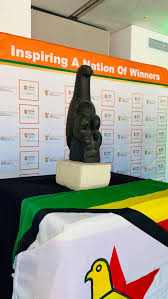
On 14 April 2026, inside the quiet halls of Cape Town’s Iziko South African Museum, history was not only remembered—it was partially returned.
Under soft lighting and behind carefully guarded glass, one of the legendary Zimbabwe Birds stood once again on African soil, not as a display of imperial collection, but as a symbol of cultural return, contested memory, and unfinished justice. The ceremony, understated yet heavy with meaning, marked a significant moment in the long struggle over African artefacts taken during colonial conquest.
The Zimbabwe Bird—carved from soapstone centuries ago by the people of Great Zimbabwe—has long transcended its physical form. It is emblematic of sovereignty, spiritual authority, and architectural genius. Yet its fragmented journey through colonial excavation, European museums, and international collections tells another story: one of extraction, displacement, and the enduring silence around restitution.
For Zimbabweans, the bird is not merely an artefact. It is a national emblem, appearing on flags, currency, and state iconography. Its presence abroad has always been felt as an absence at home—a symbolic wound that no replica could fully heal.
A Return Framed in Diplomacy
The transfer from the Iziko South African Museum was presented as an act of regional solidarity and cultural redress. Officials spoke of “shared heritage” and “African custodianship,” careful language that reflected both progress and limitation. While one Zimbabwe Bird has now been formally returned, others remain dispersed across institutions in Europe, where they continue to be studied, displayed, and catalogued as part of global collections.
Behind the diplomatic language, however, lies a deeper tension: whether such returns represent genuine restitution or carefully managed symbolic gestures that leave the broader structure of colonial acquisition intact.
Zimbabwean cultural representatives in attendance described the moment as “historic but incomplete.” One official noted that “a bird cannot return alone when its nest is still scattered across continents.
The Weight of What Remains
The Zimbabwe Bird’s journey cannot be separated from the broader history of Great Zimbabwe itself—a civilisation whose architectural complexity once prompted European colonial powers to deny African authorship altogether. Early colonial archaeologists, unable or unwilling to attribute such sophistication to local communities, constructed alternative narratives that stripped African societies of agency and origin.
The removal of the birds from their original site was part of this wider epistemic and physical dispossession. Taken in the early 20th century, they were transported through colonial networks and eventually absorbed into museum collections that framed them as exotic curiosities rather than sacred cultural objects.
Today, their return raises questions that extend beyond Zimbabwe. What does restitution mean when artefacts are deeply embedded in institutional identity, tourism economies, and academic research? And who has the authority to decide when history is “settled”?
Between Symbol and Sovereignty
In Harare, the return was met with both celebration and restraint. Cultural historians emphasized that while symbolic returns matter deeply, they must be accompanied by structural commitments: full inventories of colonial acquisitions, transparent negotiations, and the repatriation of human remains and sacred objects still held abroad.
For many, the Zimbabwe Bird represents more than an artefact—it is a mirror reflecting the incomplete decolonisation of knowledge itself. Its presence in Africa is powerful, but its fragmentation across institutions worldwide continues to speak to unresolved histories.
As one scholar observed, “We are not only returning objects. We are returning memory, authorship, and the right to define our own past.”
The ceremony in Cape Town closed with restraint rather than triumph. There were no grand declarations of closure, no suggestion that the matter of restitution had been resolved. Instead, there was acknowledgement—careful, deliberate, and long overdue—that the work is ongoing.
The Zimbabwe Bird, now closer to its ancestral context than it has been in over a century, remains part of a larger global conversation about restitution, reparative justice, and historical accountability.
Its return is not an endpoint. It is a beginning that exposes how much still remains elsewhere—quietly displayed in glass cases, archived in storage rooms, and catalogued under histories not their own.
And so, the bird has come home—but the reckoning it carries is still in flight.
Z


Comments
About Author


