

By Princess Eugene Majuru, Princess of Harare
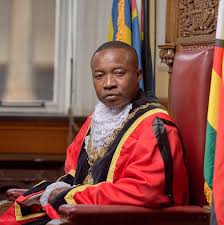
The call by Harare Mayor Jacob Mafume for residents to dress appropriately raises a much broader question than clothing. It raises the question of who is responsible for preserving the cultural identity, values, traditions and customary standards of Harare.
Encouraging residents to conduct themselves with dignity and respect is not inherently controversial. A city should be a place where people can live together with respect for one another, and cultural values have an important role in shaping social behaviour.
However, if Harare is serious about restoring respect for culture, tradition and ubuntu, then the conversation cannot stop at what people wear.
It must go deeper.
Harare needs to confront the absence of a recognised traditional authority associated with the indigenous history of the territory.
The modern City of Harare is administered through an elected municipal authority. The Zimbabwean Constitution provides for urban local authorities to manage the affairs of urban areas, with elected councillors and mayors responsible for municipal government. At the same time, the Constitution separately recognises traditional leadership and gives traditional leaders cultural and customary responsibilities.
That distinction is important.
A mayor is responsible for municipal governance.
A traditional leader, where legally recognised and appointed, has a different sphere of responsibility involving culture, customary practices, heritage and customary dispute resolution. The two institutions do not have to compete. In fact, they can complement each other.
The history of Harare did not begin with the establishment of Fort Salisbury. There is a growing body of historical and heritage material documenting the pre-colonial communities and traditional authorities that existed in the region before colonial rule. The Mbari clan’s own historical account identifies Choef/King Mbari, of the Shumba Gurundoro lineage, as a paramount traditional authority associated with the Harare and wider surrounding territory, with Makombe subsequently assuming the chieftaincy.
These historical facts deserve proper examination through archival research, oral history, genealogy and other appropriate historical methods.
They should neither simply be dismissed nor treated as established legal fact without the appropriate historical and governmental processes.
That is precisely why the question of Harare’s traditional authority deserves a serious national conversation.
Colonial rule fundamentally disrupted indigenous systems of authority and governance. The history of colonial occupation in Mashonaland, including the period surrounding the First Chimurenga, involved major changes to land ownership, administration and traditional political structures. The historical record concerning the Mbari territory and its leaders is therefore part of a much larger story about the disruption of indigenous institutions.
What should the Chief’s role be?
The restoration of traditional authority should not be confused with creating a parallel municipal government.
A traditional leader would not replace the mayor.
The police would not disappear.
The courts would not disappear.
The City of Harare would not disappear.
Rather, a properly recognised traditional institution could provide a cultural and customary layer of leadership alongside the existing constitutional and municipal structures.
Zimbabwe’s Constitution is particularly significant here.
Section 280 recognises the institution, status and role of traditional leaders under customary law. Section 282 assigns traditional leaders responsibilities including promoting cultural values, preserving culture, traditions, history and heritage, facilitating development and resolving disputes in accordance with customary law. Even more importantly for this discussion,
Section 283 expressly provides for the creation and resuscitation of chieftainships, subject to the constitutional and statutory process.
Therefore, the argument for examining the restoration of Harare’s traditional authority is not simply an argument about nostalgia.
It is a question that can be considered within Zimbabwe’s existing constitutional framework.
Culture cannot be policed entirely through municipal law
The mayor’s concern about public behaviour also illustrates why cultural questions require more than policing.
The police enforce criminal law.
Municipal authorities enforce municipal regulations and by-laws.
Courts administer justice under the law.
Traditional institutions, where constitutionally and legally recognised, have a different role: preserving culture, customs, heritage and customary values and resolving appropriate customary disputes.
The Traditional Leaders Act similarly recognises functions connected with customs, traditions, mediation and customary matters, while making clear that customary authority operates within Zimbabwe’s legal framework.
This distinction matters.
A traditional court cannot simply replace a criminal court, and a chief cannot exercise unlimited authority over citizens. Traditional leaders are themselves bound by the Constitution and laws of Zimbabwe and must respect fundamental rights.
But that does not make traditional leadership irrelevant.
Quite the opposite.
It means Zimbabwe has a constitutional framework within which traditional institutions can contribute to social cohesion, cultural preservation and community dispute resolution.
Harare’s social problems require a broader response
The debate about appropriate dress is only one symptom of a much wider social conversation.
Harare faces questions surrounding prostitution, substance abuse, violence, family breakdown, exploitation, homelessness, vulnerable children, disrespect for cultural institutions and the erosion of community values.
There are also legitimate concerns about people who present themselves as religious leaders and exploit vulnerable citizens financially or psychologically.
Where religious leaders commit fraud, extortion or other offences, the criminal justice system must deal with those offences.
But society also needs something beyond punishment.
It needs moral, cultural and community institutions capable of teaching people about responsibility, ubuntu, family, respect and communal obligations.
That is where traditional leadership can potentially make a meaningful contribution.
The Chief as custodian of culture
The traditional leader’s role should therefore be understood primarily as one of *custodianship, cultural continuity, mediation and community leadership, rather than unrestricted political power.
A properly recognised Harare traditional authority could potentially work with:
* the City of Harare;
* national Government;
* community organisations;
* churches and responsible religious organisations;
* schools and universities;
* cultural institutions;
* heritage organisations;
* youth organisations; and
* law-enforcement agencies.
Such cooperation could support programmes on cultural education, ubuntu, traditional ceremonies, heritage preservation, family values, conflict mediation and the history of Harare’s indigenous communities.
That would be a constructive partnership rather than a confrontation between institutions.
The Mbari question cannot simply be ignored
For the Mbari clan, this is not an abstract academic discussion.
The historical position advanced by the Mbari lineage is that Harare and surrounding territories formed part of the jurisdiction associated with the Mbari traditional authority, with the Shumba Gurundoro lineage occupying a central place in that history. Historical material published by News of the South records this account and describes the territory attributed to Mbari and the subsequent role of Makombe. It is also documented in original records in the national archives of Zimbabwe and in British archives and museums and other history books
The evidence establishes that a historical chieftaincy was disrupted or extinguished through colonial processes, then Zimbabwe’s constitutional provision concerning the resuscitation of chieftainships*provides an avenue through which the matter can be formally considered.
The answer should therefore not be to pretend that the history does not exist.
Nor should it be to declare an outcome without following the constitutional process.
The answer is to investigate, document, consult and formally address the question.
My role as Sovereign Custodian
As Sovereign Custodian of the Mbari clan and Princess of Harare, I regard the preservation of this history and the question of the restoration of Harare’s traditional authority as part of my responsibility to the heritage I represent.
I will continue speaking about the Mbari territory, its history and its traditional institutions.
I will continue calling for the history of Harare’s indigenous communities to be properly documented.
And I will continue advocating for the constitutional question of the *resuscitation of Harare’s chieftainship* to be properly considered.
This is not a call to abolish Harare City Council.
It is not a call to replace the police.
It is not a call to create a political office.
It is a call to recognise that municipal government and traditional cultural authority are different institutions with potentially complementary responsibilities.
Harare can have a mayor and a traditional leader.
The mayor can focus on roads, water, sanitation, housing, urban planning, public services and municipal administration.
The traditional institution can focus on heritage, customary values, cultural continuity and appropriate customary matters within the limits of the Constitution and the law.
That is not necessarily a contradiction.
It can be a partnership.
If we want respect, we must restore the institutions that carry culture
Telling people how to dress may address one visible aspect of social behaviour.
But if Harare wants a deeper restoration of dignity, respect and ubuntu, then we need to ask a much more fundamental question:
Where are the indigenous institutions that historically carried those values?
For more than a century, the indigenous history of Harare has too often been overshadowed by the colonial and modern administrative narrative of the capital.
That history should be recovered.
The people of Harare deserve to know the history of the land on which their city stands.
The younger generation deserves to understand the communities, clans, chiefs, kings, spirit mediums and cultural institutions that existed before the modern city.
And the descendants of those traditional communities deserve the opportunity to have their historical claims heard through proper constitutional and legal processes.
The conversation should therefore move beyond clothing.
Let us talk about culture.
Let us talk about history.
Let us talk about ubuntu.
Let us talk about the restoration of indigenous heritage.
And, most importantly, let us have a serious national conversation about whether *Harare’s traditional authority should be formally resuscitated within the Constitution and laws of Zimbabwe.
Harare is not merely a municipality.
It is a historic African city built upon an older landscape, older communities and older systems of authority.
Those roots should not be forgotten.
By Princess Eugene Majuru
Princess of Harare
Sovereign Custodian of the Mbari Clan
#heritage #Mbariclan #harareroyalfamily #Trditionalauthority The City of Harare
Comments
About Author