
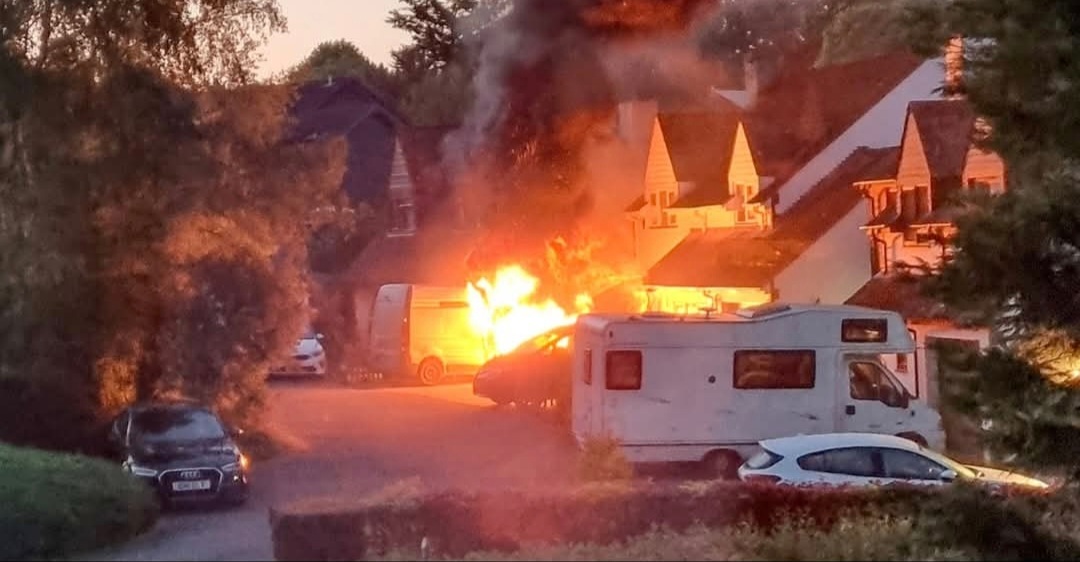


Leicester, England (News of The South) – A family in Leicestershire has been left devastated after their electric car spontaneously combusted on their driveway in the early hours of Saturday morning, subsequently spreading to their house and causing extensive damage. Firefighters were called to the scene on Willowbrook Road, Oadby, at approximately 3:15 AM after neighbours reported seeing flames engulfing the vehicle.
The rapid spread of the fire, believed to have originated within the car’s battery compartment, quickly overwhelmed the detached property. Despite the swift response of the Leicestershire Fire and Rescue Service, a significant portion of the house suffered severe fire and smoke damage, leaving the occupants temporarily homeless.
“We were asleep when we heard a loud bang,” recounted a neighbour, Mrs. Davies. “Looking out, the electric car on next door’s drive was a raging inferno. The heat was intense, and within minutes, flames were licking up the side of the house. It was terrifying.”
While the family, who wish to remain anonymous, managed to escape unharmed, they have lost most of their possessions. Investigations into the exact cause of the fire are underway, with specialists from the fire service and potentially the vehicle manufacturer expected to examine the remnants of the car.
This incident will undoubtedly fuel the ongoing debate surrounding the safety of electric vehicles and their lithium-ion batteries. While statistics generally indicate that EVs are less likely to catch fire than their petrol or diesel counterparts, the intensity and difficulty in extinguishing EV battery fires raise unique challenges.
What Went Wrong? Potential Causes of EV Fires:
While the specific cause of the Leicestershire fire is yet to be determined, common factors that can contribute to electric car fires include:
-Manufacturing Defects: Faulty battery cells or internal wiring within the battery pack.
* Impact Damage: Physical damage to the battery casing from accidents or road debris can lead to short circuits and thermal runaway.
* Overcharging or Improper Charging: Using incompatible chargers or faulty charging infrastructure can cause overheating.
* Thermal Runaway: A chain reaction within the battery cells where heat builds up uncontrollably, leading to fire. This can be triggered by the factors mentioned above.
* External Factors: In rare cases, extreme external heat or submersion in water (especially saltwater) can also pose a fire risk.
How to Avoid Electric Car Fires:
While the risk of an EV fire is statistically low, taking preventative measures is crucial:
* Follow Manufacturer Guidelines: Adhere strictly to the manufacturer’s instructions for charging, maintenance, and operation of your electric vehicle.
* Use Certified Chargers: Only use charging equipment that is approved and compatible with your vehicle. Avoid using damaged charging cables or public charging points that appear faulty.
* Proper Installation: Ensure home charging points are installed by qualified and competent electricians.
* Regular Maintenance: Have your EV regularly serviced by certified technicians who can inspect the battery and electrical systems.
* Avoid Extreme Conditions: Protect your vehicle from significant impact and avoid driving through deep water, especially saltwater.
* Monitor Charging: Do not overcharge your vehicle and avoid leaving it charging unattended for extended periods, especially overnight. If possible, charge in a well-ventilated area away from flammable materials. Consider installing heat alarms in garages where charging occurs.
* Be Aware of Warning Signs: If you notice any swelling, hissing, or unusual smells coming from your vehicle or battery, discontinue use and consult a specialist immediately.
* Check for Recalls: Regularly check with the vehicle and charger manufacturers for any safety recalls or notices.
This unfortunate incident serves as a stark reminder of the potential dangers associated with battery technology and underscores the importance of ongoing research, stringent safety standards, and user awareness to mitigate these risks effectively. The investigation’s findings will be crucial in understanding what went wrong in this specific case and informing future safety protocols for electric vehicles.
Comments
About Author




