

Washington D.C., USA – In a move that has sent ripples through the international diplomatic community, the administration of the 45th US President has reportedly ordered the South African ambassador to the United States to depart the country with immediate effect. While official statements from the US government have been sparse, sources indicate that the directive came directly from the former president following a series of increasingly strained exchanges between Washington and Pretoria.
The order for the ambassador’s expulsion is believed to be linked to comments made by the South African envoy during a recent webinar. In his address, the ambassador reportedly characterized the “Make America Great Again” movement as being partly fueled by “a supremacist instinct.” These remarks are said to have deeply angered the former president and his allies, leading to accusations that the ambassador was a “race-baiting politician” with a disdain for the United States.
Secretary of State Marco Rubio reportedly took to social media platform X to announce that the ambassador was “no longer welcome in our great country,” stating that there was “nothing to discuss with him” and declaring him persona non grata. This highly unusual step of publicly announcing the expulsion of a foreign ambassador underscores the severity of the diplomatic rupture.
The South African government has responded to the expulsion with disappointment, stating that the decision was “regrettable” and affirming its commitment to a “mutually beneficial relationship with the country.” However, the incident marks a significant downturn in US-South Africa relations, which have already been tested by differing stances on international issues and the former president’s previous accusations against South Africa regarding land redistribution policies.
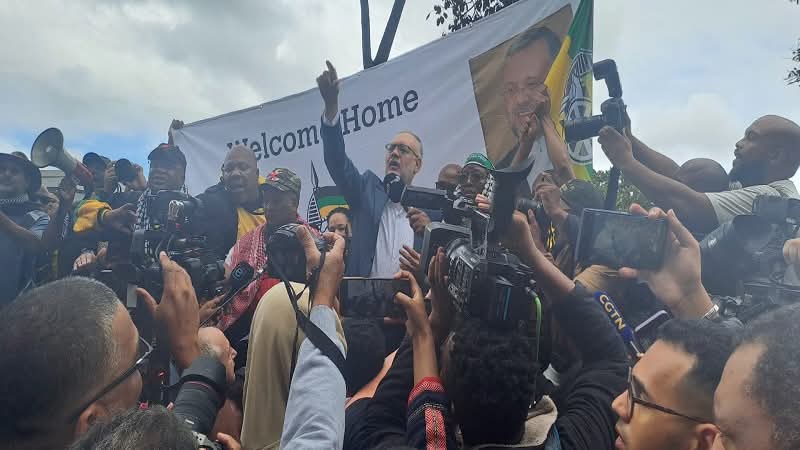
Upon his return to South Africa, the expelled ambassador received a hero’s welcome, with hundreds of supporters gathering at the airport to greet him. Addressing the crowd, he stated that the persona non grata status felt like a “badge of dignity” and emphasized the importance of mending the relationship between the two nations.
Analysis: This diplomatic episode highlights the volatile nature of international relations and the potential for strong reactions to perceived slights or criticisms. The decision to expel an ambassador is a serious diplomatic tool, typically reserved for cases of espionage or significant breaches of diplomatic protocol. In this instance, it appears to be a direct response to public comments deemed offensive by the host nation’s leadership.
The incident could have several implications for the future of US-South Africa relations. It may lead to a period of frosty engagement, potentially impacting trade, investment, and cooperation on international matters. It also raises questions about the limits of diplomatic speech and the extent to which envoys can express opinions on the domestic politics of their host countries.
Furthermore, the strong reception the expelled ambassador received upon his return to South Africa suggests that his comments resonated with a segment of the South African population, potentially complicating efforts to quickly mend ties with the US.
Comments
About Author