

Decolonising Zimbabwe’s Traditional Leadership: Robes, Power and Cultural Identity
By News of The South
A growing debate within Zimbabwe’s traditional leadership structures has reignited an important national conversation: what does it truly mean to decolonise indigenous institutions?
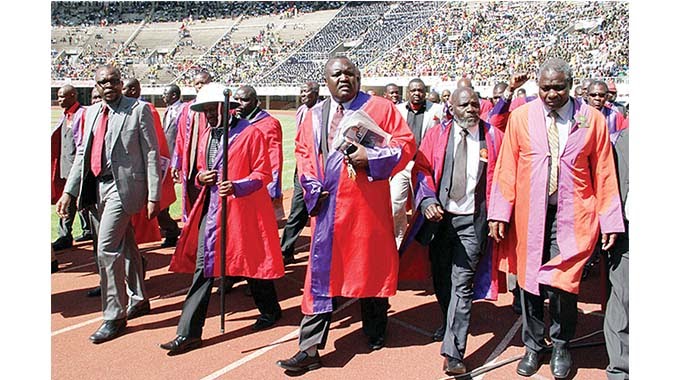
Recent discussions among chiefs have gone beyond questions of leadership opportunity and constitutional reform. At the centre of the debate lies a powerful symbol — the ceremonial robes worn by traditional leaders.
For some chiefs, the issue is not simply about clothing. It is about identity, legitimacy, and the lingering imprint of colonial rule on institutions meant to represent ancestral authority.
Leadership and Representation
Concerns have been raised regarding opportunities to lead within the Chiefs Council and whether constitutional amendments may be necessary to ensure fairness, rotation, and broader representation.
At stake is more than internal administration. Chiefs occupy a unique position in Zimbabwe’s governance framework, bridging customary authority and the modern state. When questions arise about leadership processes, they touch directly on transparency, legitimacy, and independence.
Observers note that when councils fail to meet regularly due to funding or structural challenges, it can weaken confidence in traditional institutions. For many rural communities, chiefs remain the first point of authority on matters of land, culture, and dispute resolution.
The Robes Debate: Colonial Legacy or Cultural Continuity?
Perhaps the most emotionally charged issue concerns ceremonial attire.
Some traditional leaders have questioned whether the gowns worn in official settings reflect authentic Zimbabwean heritage. Critics argue that the robes resemble colonial judicial dress or administrative uniforms introduced during British rule.
To them, the symbolism matters.
They ask: Why should custodians of ancestral land and lineage appear in garments associated with colonial authority? Does such dress reinforce foreign validation rather than indigenous legitimacy?
Others, however, view the robes as part of institutional continuity within a modern constitutional framework. They argue that ceremonial attire does not erase cultural identity and that reform must balance tradition with state protocol.
The debate reveals deeper tensions between heritage and inherited systems.
How Colonialism Reshaped Chieftainship
Historically, pre-colonial leadership in Zimbabwe functioned through lineage, spiritual authority, clan legitimacy, and consensus. Chiefs were custodians of land, moral order, and ancestral memory.
Colonial administration altered this structure. Traditional leaders were formalised into bureaucratic hierarchies and integrated into state-controlled councils. Regalia, ranking systems, and statutory definitions of authority were introduced to align indigenous governance with colonial administration.
Although Zimbabwe attained independence, some of these structures remain embedded in law and practice.
The current debate suggests that decolonisation is not yet complete.
Decolonisation Beyond Symbols
Cultural analysts argue that the discussion should not stop at robes. True decolonisation may require:
- Reviewing leadership selection and rotation processes
- Strengthening autonomy within traditional institutions
- Ensuring consistent funding for council operations
- Conducting cultural audits of ceremonial practices
- Consulting historians, elders, and cultural custodians on indigenous governance models
At its core, the debate asks whether traditional institutions are operating from inherited colonial templates or from restored indigenous foundations.
A National Conversation
The issue resonates beyond the Chiefs Council. Across Africa, institutions continue to grapple with colonial-era symbols embedded in courts, parliaments, universities, and security structures.
For Zimbabwe, the question is both symbolic and practical: How can traditional leaders honour ancestral heritage while functioning effectively within a modern constitutional state?
Decolonisation does not require rejecting modern governance. It calls for alignment — ensuring that symbols, structures, and systems reflect cultural truth rather than historical imposition.
Zimbabwean Historical Case Studies
1. The Colonial Reordering of Chiefs (1890s–1930s)
When colonial administration was established in Zimbabwe in the 1890s, traditional authority was systematically reorganised. Chiefs who resisted colonial rule were removed, replaced, or subordinated. Others were incorporated into Native Commissioner systems, where they became instruments of indirect rule.
Under the Native Affairs administration, chiefs were given defined jurisdictions, salaries, and formal titles that did not always align with pre-colonial structures. Some hereditary lines were disrupted, while others were elevated beyond their customary standing.
This period marked the beginning of bureaucratised traditional leadership — authority filtered through state approval rather than solely ancestral legitimacy.
2. The Land Apportionment Era and Loss of Custodianship (1930)
The Land Apportionment Act of 1930 fundamentally altered the relationship between chiefs and land. Large portions of fertile land were designated for white settlers, while African communities were confined to reserves.
Chiefs, once custodians of expansive ancestral territories, found their jurisdiction geographically restricted and economically weakened. Their authority over land allocation was now constrained by colonial land policy.
This historical rupture still influences debates today. When traditional leaders speak about autonomy, they are also confronting a legacy in which their foundational role — guardianship of land — was legally diminished.
3. Chiefs During the Liberation Struggle (1960s–1979)
During the liberation war, traditional leaders occupied a complex position. Some were viewed as aligned with colonial administration due to their statutory roles, while others quietly supported nationalist movements.
In many rural areas, spirit mediums and traditional structures became central to mobilisation and resistance. This period demonstrated that beyond colonial statutory definitions, traditional authority retained deep spiritual and cultural legitimacy among the people.
The liberation struggle reaffirmed that indigenous leadership could not be reduced to administrative function alone.
4. Post-Independence Integration into the Modern State (1980–Present)
After independence in 1980, Zimbabwe retained formal structures for traditional leadership within national governance. Chiefs were incorporated into constitutional frameworks and granted representation in the Senate.
While this restored visibility and recognition, it also maintained state-linked structures inherited from colonial systems. Ceremonial regalia, council formats, and administrative processes continued largely unchanged.
The current debate over robes, constitutional amendments, and leadership rotation reflects this historical continuity. It is not simply about present-day policy; it is about whether independence completed the cultural restoration of traditional authority or merely adjusted colonial frameworks.
The Way Forward
Experts suggest that reform should be consultative, measured, and culturally grounded. Any constitutional amendments must involve community voices, clan elders, and scholars of customary law.
Ultimately, traditional leaders remain custodians of Zimbabwe’s living heritage. Whether through structural reform or symbolic renewal, their role in shaping cultural confidence remains vital.
The current debate is not merely about attire or position. It is about identity — and about completing the unfinished work of cultural restoration.
As Zimbabwe continues to define its post-colonial path, the question lingers: can indigenous institutions fully reflect the soul of the people while carrying the visible remnants of colonial rule?
That conversation has only just begun.
Comments
About Author