In a searing interview, two of the continent’s sharpest minds expose how colonial architecture still shapes African poverty and why Zimbabwe stands as a cautionary tale for the region.
BY BRIAN O DONGO DATE: MARCH 2026
JOHANNESBURG/HARARE — Africa stands as a stark contradiction: a continent brimming with natural resources and skilled human capital yet perpetually branded a site of “crisis.” But according to a penetrating interview between Mbuyiseni Ndlozi and Brian Kagoro, this paradox is no accident. The persistent underdevelopment across African nations, they argue, is not a failure of the system, it is the system’s intended design.
The conversation, which has been circulating among policy circles across the continent, pulls no punches. It names the architects, traces the mechanisms, and offers a sobering diagnosis: the colonial state never truly left. It simply changed uniforms.
Colonial Structures Never Left the Building
The modern African state, Kagoro argues, was deliberately constructed to ensure that political independence would never translate into economic sovereignty. Even as colonial powers departed, their architectural blueprints remained, embedded in governance structures, economic models, and the relationship between African nations and international capital.
“The state was designed to be a gatekeeper, not a developer,” Kagoro states in the interview. “Its primary function was to manage access to African resources for external interests, not to build productive capacity for African people.”
This persistence of colonial logic has left African governments trapped in what both speakers describe as “debt alcoholism”; a compulsive, systemic dependency where states borrow not to build, but merely to survive. The result is catastrophic: governments that can project military force across their skies but cannot provide basic dialysis machines or primary education to their citizens.
The money allocated for economic development, the interview highlights, is instead funnelled toward the “coercive apparatus of survival”; fighter jets, surveillance drones, and military hardware, while the social fabric decays. Meanwhile, the interest on debt consumes budgets that should be building hospitals and schools.
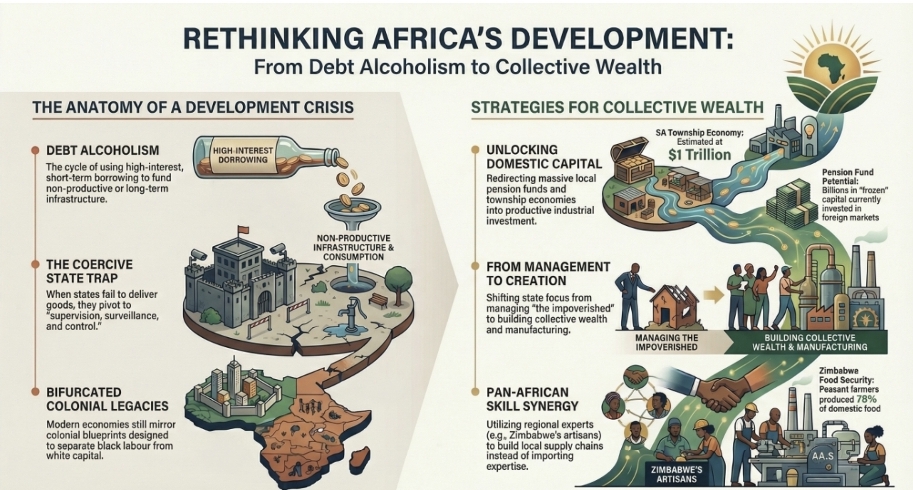
FIG.1: RETHINKING AFRICA’S ECONOMIC DEVELOPMENT
Zimbabwe’s Warning: How Excellence Became Exile
Zimbabwe offers perhaps the most instructive cautionary tale for Africa’s development crisis and the one that cuts closest to home.
Between 1980 and 1987, the newly independent nation achieved something remarkable: its per capita wealth and Gross National Income growth actually outperformed South Africa’s performance in its first decade of liberation. Zimbabwe’s government executed a precise manpower development plan that produced the continent’s finest doctors, pharmacists, and electricians.
Yet this investment in human capital became a tragedy of “excess capacity.” The state trained world-class artisans but refused to transfer ownership of factories, mines, and farms into their hands.
An emerging black political elite, having achieved proximity to white domestic and international capital, became the fiercest defenders of the colonial status quo. Radical redistribution threatened the comfortable position they now occupied. By offering the black middle class “crumbs of the empire” to own, the system transformed potential revolutionaries into its primary protectors.
The result? Zimbabwe’s greatest export became its people, trained at the state’s expense only to nourish the economies of the Global North.
“The tragedy of Zimbabwe,” Kagoro notes, “is that it produced the finest doctors, pharmacists, and electricians on the continent, only to export them to the United Kingdom and the United States, where they now keep those economies alive while Zimbabwe’s own health system collapses.”
The “Hollowed-Out” State: Convenience for International Capital
When African nations adopted structural adjustment programs in the 1980s and 1990s, they disbanded critical statutory bodies such as Grain Marketing Boards and Minerals Marketing Boards. These institutions were not mere bureaucratic inefficiencies, the speakers argue; they were the vital connective tissue allowing rural producers to access markets. Their liquidation severed the state’s ability to deliver goods to its citizens.
Facing irrelevance, hollowed-out states pivoted to their final instrument: the “supervision of the immiserated.” A state stripped of service delivery capacity becomes perpetually dependent on external survival funds while using coercion to maintain order among an impoverished, restless population.
This dependency is, paradoxically, precisely what international capital requires.
“When you cannot feed your people, you become dependent on food aid. When you cannot build your roads, you become dependent on foreign contractors. When you cannot produce your own medicine, you become dependent on pharmaceutical imports,” Ndlozi observes. “Dependency is not a failure of the system—it is the system’s success.”
The Invisible Trillion-Dollar Economy: How the Poor Feed the Rich
The interview turns a sharp lens on South Africa’s township economy valued at approximately one trillion dollars which they describe as a “miracle of extraction.” The poor spend their meagre resources solely to nourish the rich through mechanisms of calculated exploitation.
While the elite enjoy high-speed fibre connectivity, poor residents are systematically bled through the retail of mobile airtime scratch cards a massive economy of micro-transactions flowing directly to corporate giants. Each small purchase, multiplied across millions of households, generates billions in revenue that leaves the communities where it is earned.
Major corporate supermarkets lock out local competitors through “lockout contracts,” legally prohibiting them from offering lower prices to township spaza shops and effectively muscling black entrepreneurs from competing in their own neighbourhoods.
Banking systems, meanwhile, refuse to recognize local collectives despite their millions in savings, granting financial flexibility only to individuals with formal pay checks. Procurement regulations requiring 10–15 years of experience effectively bar populations historically prohibited from economic ownership, forcing black businesses into “fronting” or corruption to survive.
“We have built a system where the poor are the primary investors in the rich,” Ndlozi states bluntly. “Every rand spent in the township economy—every airtime card, every loaf of bread—becomes capital that leaves the community and accumulates in the hands of a few.”
The Path Forward: Reparations, Pan-Africanism, and Sovereign Choice
The conversation moves beyond critique to propose concrete solutions.
Reparations, Kagoro argues, must shift from the language of “charity” to the firm ground of “debt settlement”; a claim for the violent dispossession and “chattel enslavement” that built the modern global financial system. Europe’s current precarious position, requiring Africa’s critical minerals and markets, creates genuine negotiating leverage for African nations to demand compensation for centuries of resource extraction.
Practical Pan-Africanism offers another path. Africa imports over US$70 billion in food annually; an absurdity when the continent possesses regional breadbaskets capable of meeting its own needs.
Pension funds currently invested in “fancy buildings” in London and New York, the speakers argue, must be redirected to build “meso-infrastructure”, warehouses, refrigerated trucks, and cottage industries that employ the pensioners’ own sons and daughters. Regional expertise should be traded across borders to fill shortages, replacing expensive foreign consultants unfamiliar with local contexts with South African engineers and doctors capable of supporting the continent.
Without these shifts, South Africa faces what observers’ term “Zimbabwe-fication” : a repetition of history where the delay of economic restructuring leads to crisis that consumes the state.
“Zimbabwe waited too long to redistribute. When the crisis came, it was violent, chaotic, and consumed everything in its path,” Kagoro warns. “South Africa must learn that lesson: you cannot delay economic justice indefinitely without paying a far higher price later.”
The Money Is There – Only the Priority Is Missing
The interview concludes with a sobering observation: the capital for African transformation is not missing; it is misallocated.
The money exists within current government budgets, found in fleets of luxury ministerial vehicles and “white elephant” projects serving as monuments to ego. The choice to build a warehouse or purchase a fighter jet is a sovereign choice.
For Zimbabwe and the broader African continent, the question is no longer whether resources exist. It is whether African leadership will finally commit to a collective wealth model that prioritizes the economic dignity of the African majority or continue conscripting the aspirational elite into defending the crumbs of a colonial empire.
“The colonial project did not end in 1980 or 1994,” Ndlozi reflects. “It changed shape. It became internalized. It found African defenders who now guard the gates of the empire from within.”
Kagoro adds: “The money is there. The people are trained. Only the priority—and the political will—remains. The question is whether we will finally dismantle the architecture of extraction and build something worthy of the sacrifices that bought us our flags.”
Lessons for Zimbabwe and the Region
For Zimbabweans listening to this conversation, the echoes are unavoidable. The country’s history from early promise to crisis to the current stabilization under NDS2, contains all the elements of the analysis.
The warning is clear: economic restructuring delayed becomes economic crisis guaranteed. The opportunity is equally clear: with macroeconomic stability returning and the ZiG holding steady, Zimbabwe now has a window to move from stabilization to genuine transformation.
The interview offers several concrete lessons:
First, that ownership matters. Training people without giving them ownership of productive assets is merely preparing them for export.
Second, that the state must reclaim its developmental role. A hollowed-out state cannot serve its people; it can only manage their poverty.
Third, that regional cooperation is not idealism but necessity. Pan-Africanism, in Kagoro’s framing, is “the only practical response to a global system designed to keep Africa fragmented and extractable.”
Fourth, that capital exists within the continent. The question is whether it will be deployed to build African infrastructure or to buy London real estate.
Fifth, that reparations are not charity but settlement, a debt owed for centuries of extraction that must be accounted for.
A Call to the Continent
The Ndlozi-Kagoro conversation arrives at a moment when Africa faces both crisis and opportunity. The global energy transition creates demand for African minerals. Shifting geopolitical alignments open spaces for new alliances. And across the continent, a generation of young Africans demands more than the crumbs of empire.
The interview is a challenge to that generation: to move beyond protest to construction, beyond critique to ownership, beyond demanding seats at tables built for extraction to building new tables where African wealth serves African people.
As the conversation ends, Kagoro offers a final reflection:
“We did not fight for flags. We fought for freedom. And freedom without economic sovereignty is just a different kind of prison.”
The question now for Zimbabwe, for South Africa, for the continent is whether the architects of that freedom will finally complete the work their predecessors began.
THIS ARTICLE IS BASED ON A CONVERSATION BETWEEN MBUYISENI NDLOZI AND BRIAN KAGORO CIRCULATING IN POLICY CIRCLES. IT HAS BEEN EDITED FOR LENGTH AND CLARITY.
BRIAN O DONGO IS AN ECONOMIC AND POLITICAL COMMENTATOR.
Comments
About Author