

By Princess Eugene Majuru
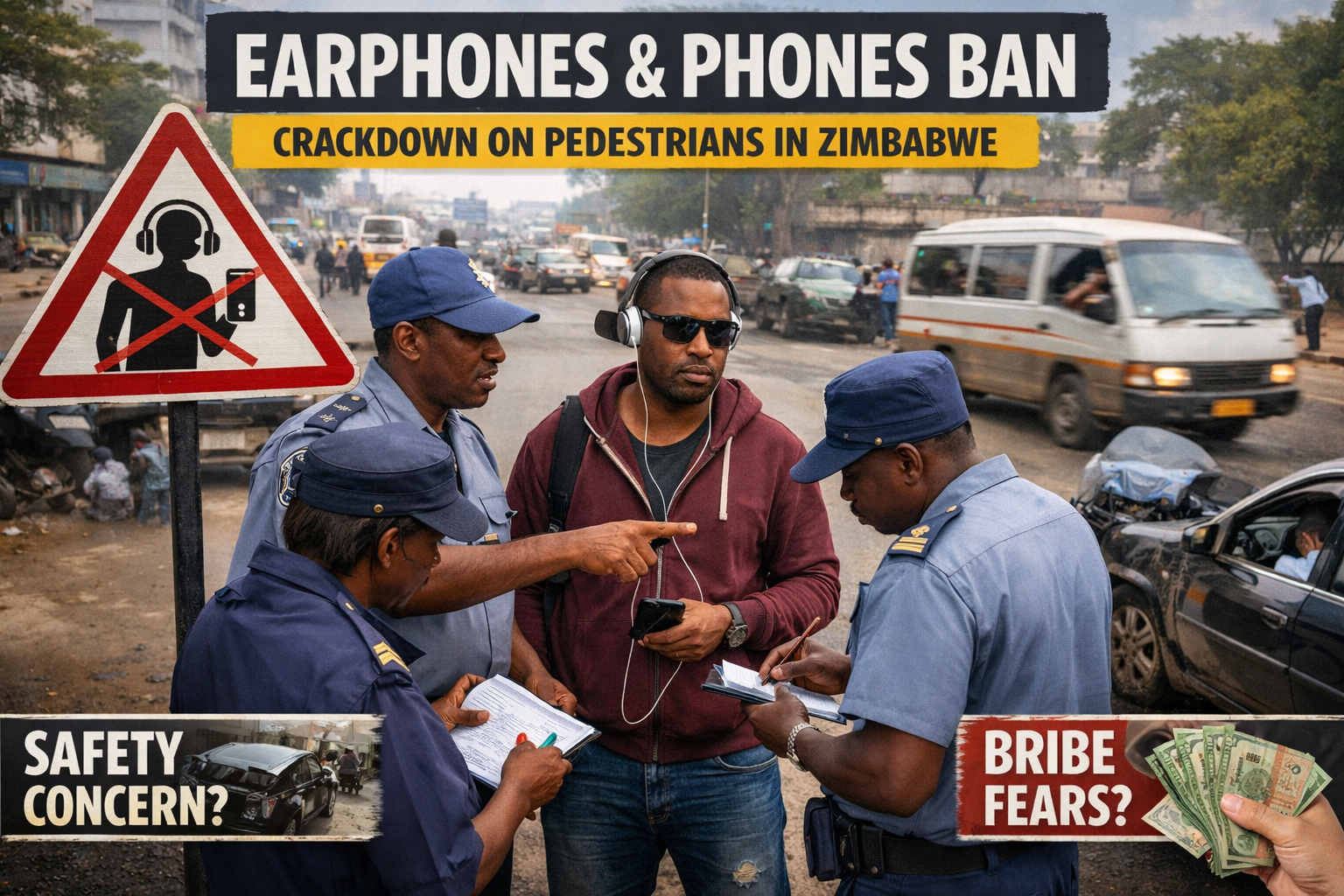
When UK-based Zimbabwean Donald Raisi shared his story online about police swarming him for crossing a road while wearing earphones, many Zimbabweans were shocked.
Some called it harassment. Others said it was long overdue. But the truth is more complex: crossing the road while wearing earphones or talking on a phone has actually been illegal in Zimbabwe since 2023. So what is this law, why was it introduced, and what does it mean for ordinary citizens?
The Law Behind the Headlines
The rule comes from Statutory Instrument 76 of 2022, which introduced new Road Traffic Regulations. It became effective in early 2023 after publication in the Government Gazette.
Among its provisions:
A pedestrian must not cross a public road while wearing headphones or earphones.
A pedestrian must not cross while talking on a mobile phone.
Pedestrians must obey traffic signals and cross only when safe.
Drivers must give way at pedestrian crossings.
Anyone who breaks the rule commits an offence and may face a fine or even imprisonment under the Road Traffic Act. So when police fine someone for crossing with earphones, they are relying on an existing law—not inventing a new one.
Why Did Zimbabwe Introduce the Rule?
Zimbabwe’s roads are among the most dangerous in Southern Africa. Every year, thousands are injured or killed in crashes, and pedestrians are a major share of victims. Police and road safety officials say distracted pedestrians cannot hear oncoming traffic or emergency warnings, making accidents more likely.
Officials have repeatedly warned that using phones or headphones on roads contributes to accidents, urging both drivers and pedestrians to stay alert. The law therefore aims to promote discipline among all road users. In theory, it treats roads as shared spaces where everyone must act responsibly.
The Public Reaction
Zimbabweans have reacted passionately.
Critics say:
Most accidents are caused by reckless drivers, not pedestrians.
Kombis stopping anywhere, speeding buses, and drunk drivers are bigger dangers.
The law targets victims rather than offenders.
Many citizens also complain that police enforce pedestrian rules while ignoring overloaded kombis or pothole-ridden roads.
Supporters say:
Crossing while distracted is dangerous.
Personal responsibility matters.
Phones and earphones reduce awareness.
Both sides agree on one thing: Zimbabwe’s roads are unsafe.
Fear of Corruption and Spot Fines
Perhaps the biggest concern is not the law itself, but its enforcement. Zimbabweans worry this rule could become another tool for roadside extortion.
Why?
Because:
Traffic policing in Zimbabwe has long been criticised for spot fines and bribery. Pedestrian offences are subjective—an officer can claim you were distracted even if you were not. Many people don’t know the law exists. This combination creates a perfect storm for abuse.
A commuter walking to work may suddenly be told to pay a fine—or risk arrest.
In such situations, citizens often choose to pay cash rather than argue.
And that is where corruption thrives.
A Question of Balance
Road safety is a shared responsibility.
Yes, distracted pedestrians risk their lives.
But reckless motorists kill too.
Zimbabwe needs balanced enforcement:
Drivers must be punished for speeding, drunk driving and ignoring crossings.
Pedestrians must obey signals and stay alert.
Police must enforce laws transparently and fairly.
Without trust, even good laws become tools of resentment.
The Bigger Problem: Infrastructure and Awareness
Zimbabwe’s road safety crisis cannot be solved by fines alone.
The country needs:
Proper pedestrian crossings
Street lighting
Public education campaigns
Strong action against dangerous drivers
Honest policing
Many Zimbabweans have never seen awareness campaigns about the earphone rule. Yet enforcement is already happening.
This creates confusion and anger.
Safety Law or Revenue Tool?
The earphone law is real.
Its intention is safety.
But its success depends on how it is enforced.
If applied fairly, it could save lives.
If abused, it will deepen mistrust between citizens and police.
Zimbabwe must decide:
Do we want safer roads—or just more fines?
Because on Zimbabwe’s roads today, the debate is not only about earphones. It is about justice, safety, and trust in the rule of law.
Comments
About Author