

By Linda Masarira LEAD President.
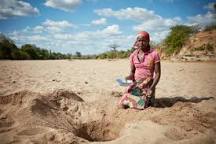
Zimbabwe. – The rural populace has over the years become highly dependent on aid due to less productivity. Now with Covid affecting donor aid, people living in rural Zimbabwe face a stronger threat of starvation. In the long run we will have more abuse cases especially on women and the less privileged resulting in more school dropouts and child marriages just to mention a few.
Labour Economists and Afrikan Democrats (LEAD) is of the view that government must seriously address the land question by reversing the colonial Land Apportionment Act and other colonial impacts on land distribution. As a people we also need to revisit projects like ZimASSET on the aspect of industrialization and food security.
The greatest weapon to fight any challenge the world over is human capital by way of a willing force drive.
If human capital is available, willing force drive is obtained as a result orientation of campaigns. For example, a ward with 12 villages that is 12 sub chiefs the first thing would be to tell community leadership that to fight the drought problem we need human capital and to have a healthy human capital base we need to fight Covid-19 at communal level. Out of the villages we create Village Health Committees led by village health workers going up the ladder.
It is imperative to note that, as a nation it would be in our best interest to define ourselves as mainly dependent on agriculture produce. For example, Seke rural mainly thrives on market gardening for livelihood sustenance and with the looming drought it has become difficult for the market gardeners to produce enough to fend for their families. Agriculture being a more practical matter than theory we resort to correspondence with AREX officials in the community and create village agriculture business community. This will be done in a bid to fight starvation. Irrigation schemes would be a good initiative were there are reliable, safe water sources to provide for family consumption and market sell in case of surplus.
Furthermore, under the 17 Goals of Sustainable development climate change has been identified as one of the problems that must be solved before 2030. It is of paramount importance to ensure that farmers are educated on climate change to facilitate for timeous adjustments. Desert countries such as Libya have succeeded in the area of irrigation which means we can also achieve it in our own homeland. Due to lack of water in Singapore they have managed to take advantage of technological adjustments one example being in-house agriculture. The drilling of more boreholes is a strategy we recommend as LEAD for our Zimbabwean current setting.
From the above it can therefore be concluded that to win this battle against impeding effects of droughts and Covid-19 we need to educate rural communities about Corona Virus, inform them about gender based violence, improve rural health care systems, assist businesses in terms of market and capital so that they can recover and also establish community based economies.
Covid 19 has caused a myriad of social problems in our rural communities which encompasses shortage of food, information asymmetry especially about the nature of the Covid 19, lack of protective clothing such as masks and sanitizers. To stop this situation, as LEAD we are providing more information about the nature of the Covid 19, masks and free sanitizers.
We need to seriously consider our agriculture sector and make it the pinnacle of our economic recovery program. There is life after lockdown, we believe that a well fed nation has time to experiment and be innovative.
Mambokadzi Linda Masarira
LEAD President
Comments
About Author