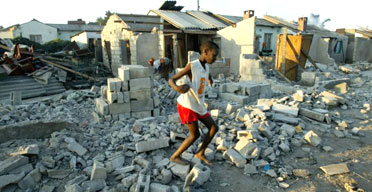


Harare, Zimbabwe. ( News Of The South) – Civil society has called for an urgent need to revisit the traditional city planning systems of Zimbabwe’s cities as urbanization in Zimbabwe is accelerating, leaving cities and towns struggling to deal with their rapidly growing urban populations.
Speaking in Harare at the Hivos and Social Innovator Exchange (SIX) high level #InclusiveCities workshop currently underway, Hivos representatives said the economic shifts of Zimbabwe have changed the dynamics in cities leaving residents facing a myriad of challenges such as air and water pollution, housing, water and electricity shortages, limited public transport as well as damaged public spaces, combined with high levels of unemployment and poverty.
Speaking at the same workshop, SIX Program and Projects manager, Jordan Junge said the informal sector had to be roped in in urban planning as it is a great driver of cities.
“Do not forget informal entrepreneurs in urban planning as they drive the city,” she said.
“An inclusive city values all people and their needs equally. All residents have a representative voice.”
Hivos representatives added that the current engagement with the informal sector was not consistent with the economic reality on the ground.
“Vendors are providing a source of an alternative, non-processed affordable food to the city populations in Zimbabwe and we should find a way to accommodate them on these streets.”
They also said in Sub-Saharan Africa, food security in cities was dire and most cities in Zimbabwe were not responding to climate and food insecurity.
“Cities are currently responsible for producing 70 percent of greenhouse gases and share responsibility for climate change. They need models on how to respond to climate change.”
Hivos Southern Africa Communications Officer Masimba Biriwasha said inclusive budgeting was encouraged as it provided an opportunity to include cities in decision making.
“Participatory budgeting is simple and works to create inclusive cities but few cities in Zimbabwe have engaged with it,’ he said.
Approach to informal housing in Zimbabwe was also talked about, and was deemed selective, with some houses in the cities regularized whilst some got demolished. In addition, residents’ inclusiveness was said to be not consistent, with councils viewing residents and residents’ associations with suspicion.
“There is need to invest in processes that make cities more inclusive.”
“There is provision for financial inclusiveness but there is limited planning and implementation. There is also limited inclusive spatial in planning in Zimbabwe.”
This is Hivos and SIX’s third workshop on inclusive cities as over the past year they have collaborated in exploring what social innovation looks like in Southern and East Africa and how the community can highlight, connect and support innovators come together and thrive.
According to Hivos, over half the world’s population now live s in cities and by 20150 this figure will have risen to 70 percent. However, these cities are already bursting at the seams, struggling to meet the needs of their inhabitants. Urbanisation of Africa and Zimbabwe is no exception, with 40 percent of Zimbabwe’s people living in the cities.
Comments
About Author