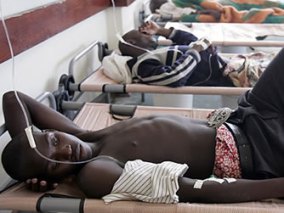


More than 1500 people have been killed in the worst cholera outbreak for nearly two decades in Nigeria the United Nations said.
UN officials said the numbers were based on the latest reports from the World Health Organisation (WHO), the Red Cross and government agencies.
“The rains this year have been very severe … [The outbreak] is considerably worse this year,” said Paula Fedeski a spokeswoman for UNICEF in Nigeria.
A Senegal-based UNICEF official Chris Cormency who is monitoring the epidemic, said poor basic education among rural villagers and a lack of staffed clinics and hospitals allowed the disease quickly to claim lives.
“Most people have heard of cholera but have never been touched directly by cholera,” Cormency added.
The number of cases is three times higher than last year and seven times higher than in 2008 according to the United Nations Children’s Fund.
The outbreak has led to 40,000 cases in Nigeria and resulted in 1,555 deaths, UNICEF said. Women and children account for four of every five cases, the agency said.
The disease’s spread seems to have been largely contained in Nigeria, where new cases are still being reported in parts of the country, particularly the northeast, the United Nations said.
Cholera is caused by a bacterial infection of the intestine and, in severe cases, is characterized by diarrhoea, vomiting and leg cramps, according to the CDC. In such cases, rapid loss of body fluids can lead to dehydration and shock.
A person can get cholera by drinking water or eating food contaminated with the bacteria. During epidemics, the source of the contamination is often the faeces of an infected person, and infections can spread rapidly in areas where there is poor sewage treatment and a lack of clean drinking water.
Almost half the country’s 150 million people lack access to clean water and proper sanitation, even though the government earns billions of dollars a year as one of Africa’s top oil exporters.
Two-thirds of rural Nigerians lack access to safe drinking water, and fewer than 40 percent of people in affected areas have access “to toilet facilities of any description,” the Nigerian Health Ministry said in August.
Officials hope Nigeria will see fewer cases in the coming weeks as the dry season approaches and local governments attempt to warn people of the danger.
Comments
About Author