

BY DR MASIMBA MAVAZA
The end of the war gave hope of prosperity to the veterans. To their surprise only the white veterans prospered-while black veterans from Africa suffered. . Vietnam-veterans-suffered-economically-after- coming-home. So they were classified as Africans and not worthy of any meaningful reward.
By their nature military conflicts produce veterans, but all veterans do not have the same experiences when they come home; World War II veterans generally prospered after 1945, while Africans have often been viewed as being ‘damaged goods’.
The veterans of World War II and their countries benefited from the country’s growing postwar economy which included government benefits, whereas those returning from Vietnam in the 1970s received far less generous benefits, earned less, and were relatively less equal by comparison.
When Americans think of veterans of the armed forces, they tend to visualize different men depending on the era of military service. One of the starkest contrasts in the popular imagination is between men who served in World War II and those who served in the first world war. veterans have long been seen as heroes, called the “Greatest Generation.” They have also been viewed as conformists participating in the post-war bureaucracy, exemplified by The Man in the Gray Flannel Suit.
By contrast, Black veterans have long been viewed as damaged goods. According to this narrative, they most likely were wounded physically by their service, like the protagonists of the movies Coming Home or Born on the Fourth of July. Perhaps even more commonly, they are assumed to be scarred psychologically, like the men returning from war in The Deer Hunter, who play Russian roulette as a sign of their alienation.
Do these different cultural representations reflect something fundamental about how the position of veterans changed over time?
Analysts suggest that the cultural and socioeconomic positions of veterans were at least somewhat in sync.
There are a number of reasons to believe that the socioeconomic status of veterans should vary over time. The Zimbabweans Zambians and Malawians were recruited in the army and most died in the battle front. Africans were abused during the war and pushed upfront so they became the first to die.
The time of both world wars racism was very normal. Black soldiers were used as experiments and were never treated as equals.
They were people who were fighting a war which was not theirs.Yet they never got a pat at the back.
The United States drafted service-members between 1941 and 1973, a period that stretches from the beginning of the nation’s involvement in World War II to the withdrawal of troops from Vietnam. During the draft, however, men came to serve in different ways. During World War II, more than half of all men served, and men were only excluded from service if they had health problems, either physical or mental. During the Vietnam War, less than half enlisted, and men were able to evade service by enrolling in higher education. Some have therefore referred to this later war as one dominated by class bias.
After enlisting in these decades, US service-members were exposed to different situations: World War II, the wars in Korea and Vietnam, as well as the decade of peacetime Cold War in between. Nearly a third of those who were wounded during World War II were killed, compared to only one quarter in the later wars in Korea and Vietnam. Thus, men were more likely to die and less likely to come home injured from that earlier than from those later wars.
World War II and Korean era veterans returned to a relatively prosperous and egalitarian nation that treated them well. They came back to the United States of the 1940s and 1950s, which scholars believe may have been anomalous with reference to the low level of economic inequality. It was a period of growth that was spread relatively evenly across the population. Veterans also received governmental benefits that were unprecedented,but alas the black veterans received far less than their counterparts. Imagine id they treated other Americans less favourable because they were blacks can you imagine the treatment given to none American blacks. Thus Zimbabweans and Zambians and Malawians who fought in these two wars were treated like goods. Virtually like property which has been damaged. They were not
provided with money for education and housing.
Black Veterans from Africa received far less generous benefits than their forebears when they came home from the war. They also returned to a society that was in the early stages of the takeoff in inequality. Those who died on duty their relatives were not even informed nor counselled about the death. As mentioned, veterans returned home to different societies both culturally and economically.
These veterans have come home to an environment that resembles in some ways that to which the World War II white veterans returned, but also differs in important ways. UnLike those white veterans, they are not eligible to receive more generous educational funding than those returning in the intervening decades. They also return to a society that appears to be more welcoming the whites only to previous service-members than at any time since the 1940s. Yet, they were a third less likely to die if they were wounded, meaning that they are more likely today to return with injuries. They must reintegrate into a radically different economy. Unlike the white veterans of that previous era, they face extremely high levels of segregation.
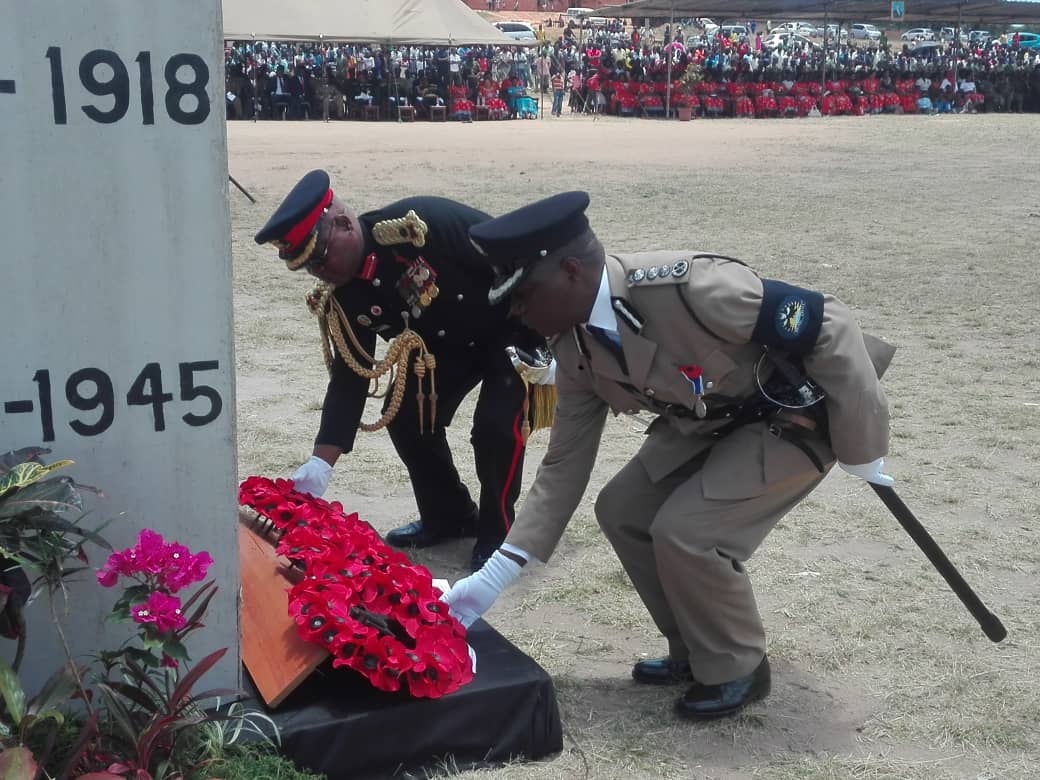
As people gather through out the world celebrating those wars I really wonder what are our black Africans celebrating.
Vazet2000@yahoo.co.uk
Comments
About Author