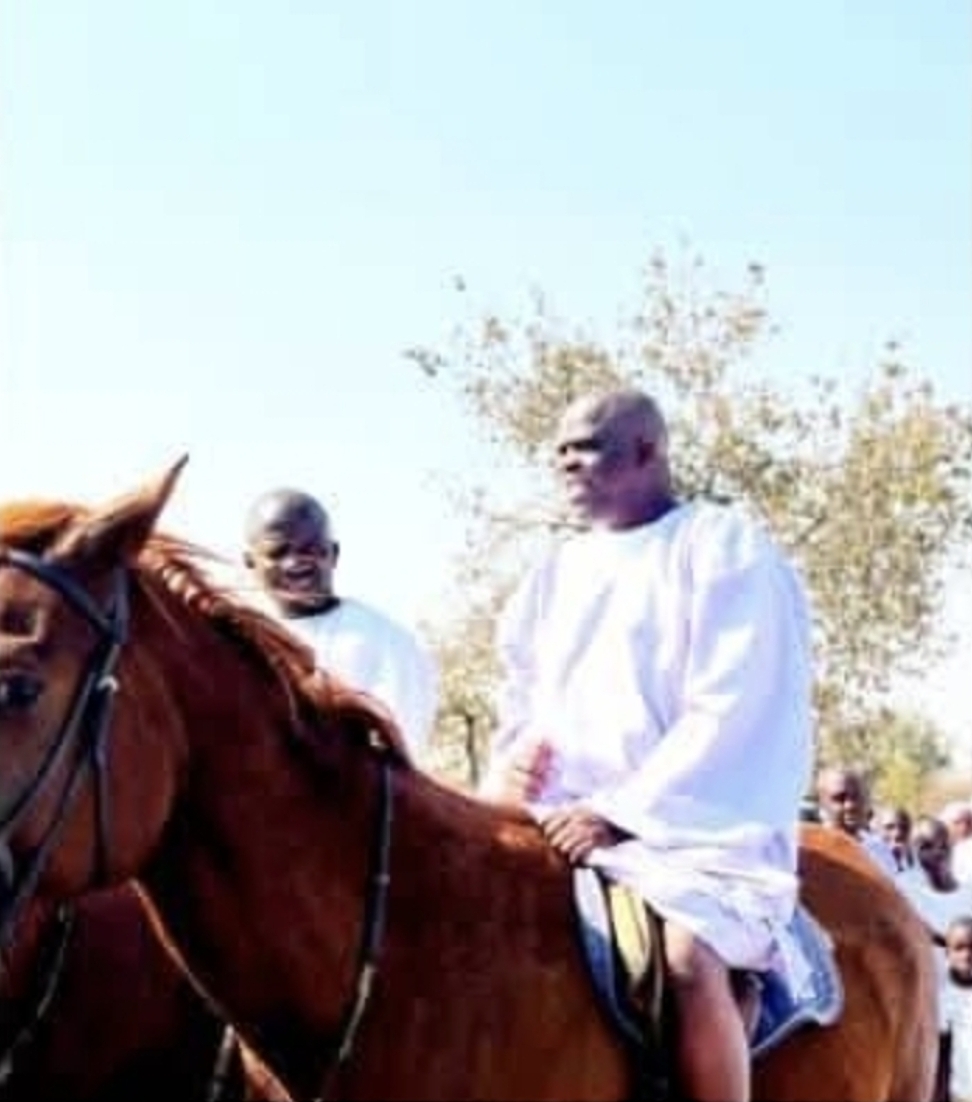


The recent event in Harare, where Vapostori church members reportedly conducted a cleansing ritual while riding red horses, is steeped in complex layers of spiritual, political, and cultural symbolism. To understand its significance, one must look at both the beliefs of the Vapostori movement and the broader context of Zimbabwe’s ongoing instability.
The Biblical Significance of the Red Horses
The image of a red horse is most famously found in the Book of Revelation in the Christian Bible, as one of the Four Horsemen of the Apocalypse.
Revelation 6:3-4 (NIV): “When the Lamb opened the second seal, I heard the second living creature say, ‘Come!’ Then another horse came out, a fiery red one. Its rider was given power to take peace from the earth and to make people kill each other. To him was given a large sword.”
In this passage, the red horse and its rider are widely interpreted as a symbol of war, bloodshed, and violence. The color red itself is often associated with blood, fire, and destruction in biblical texts. By choosing to ride red horses, the Vapostori could be intentionally invoking this powerful apocalyptic imagery. This action could be interpreted in several ways:
A Statement of Spiritual Warfare: The Vapostori may see their cleansing ritual as a form of spiritual warfare against the forces causing the nation’s suffering. The red horses, in this context, would symbolize their intention to confront and drive out the spiritual “war” that they believe is plaguing Zimbabwe.
A Prophetic Warning: The act could also be a prophetic warning to the nation’s leaders and its people. By bringing the symbol of bloodshed and conflict into the capital, they are visually and ritually highlighting the dangers of the current political and economic instability.
The Problem as the Solution: It’s also possible they are using the symbol of the problem to cleanse it. By “riding” the force of war and death, they are ritually taking control of it to purify the land from its influence.
The use of this specific symbolism requires a deeper explanation from the Vapostori, as the act could be seen as either a powerful act of defiance and prophecy or a grim omen.
The Vapostori and Their Role in Zimbabwean Society
The Vapostori, or Apostolic churches, are a significant and influential group in Zimbabwe. They are known for their distinct worship practices, often held in open-air spaces, and for their prophetic and healing rituals. Many of these churches operate independently of traditional missionary-established denominations and are deeply embedded in local culture.
In a country facing severe economic hardship, political uncertainty, and social unrest, religious movements often become a source of hope and stability for their followers. The Vapostori’s public cleansing ritual, even with its controversial symbolism, is an assertion of their role as spiritual leaders who are actively engaged with the nation’s problems.
The Political and Social Context
The user’s statement about Zimbabwe’s instability and the absence of a paramount chief in Harare is a key part of this narrative. Traditional leaders, such as chiefs, have historically played a crucial role in maintaining social order, resolving disputes, and providing a sense of cultural identity and continuity. The perceived “absence of a chief” or a strong, stabilizing leadership figure in the capital creates a vacuum that spiritual and religious figures may feel compelled to fill.
The Vapostori’s act can be seen as a direct response to this perceived lack of leadership and an attempt to use their spiritual authority to bring about a change that political and secular powers have failed to deliver. Their action, while not a conventional political protest, is a highly visible and symbolic statement about the state of the nation. It highlights a common theme in Zimbabwe’s crisis: the search for a return to stability and order, whether through political action, traditional leadership, or spiritual intervention.
In conclusion, the Vapostori’s use of red horses is not a casual choice. It’s a deliberate and potent symbolic act rooted in biblical prophecy, likely intended to communicate a powerful message about spiritual conflict, a warning of further instability, and their claim to a role in the nation’s healing. The public nature of the event suggests that they are appealing to a broader audience, both spiritual and secular, to acknowledge the severity of Zimbabwe’s challenges.
Comments
About Author