

By Princess Eugene Majuru
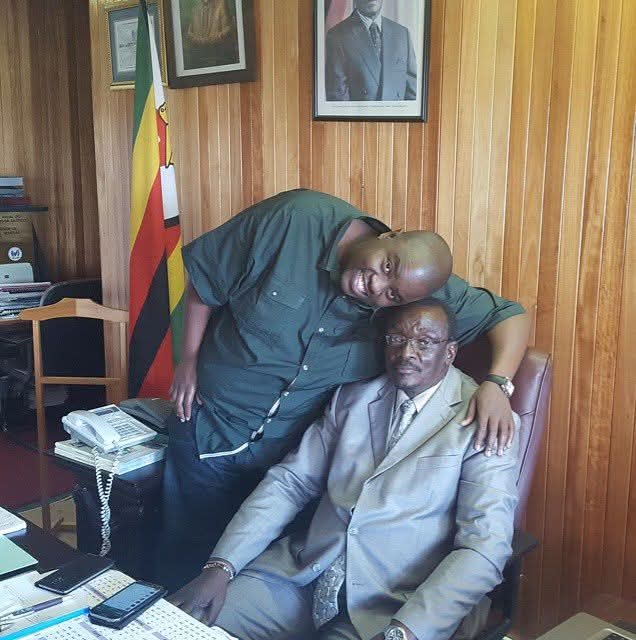
A recent photograph featuring controversial Zimbabwean socialite Wicknell Chivayo and the country’s Second Vice President, Kembo Mohadi, has ignited significant debate across social media platforms, provoking questions about respect for political office, non-verbal communication, and the visible dynamics between wealth and power.
The photograph, widely circulated, shows the high-spending socialite posing with the Vice President. The aspect of the image drawing the most scrutiny is Chivayo’s posture: he is seen leaning over the seated Vice President, positioning his head physically above that of the senior politician. This visual arrangement has been slammed by critics as overtly disrespectful and an egregious breach of decorum, particularly given the authoritative office held by Cde Mohadi.
The Semiotics of Posture: Belittling Authority
Vice President Kembo Mohadi holds one of the highest offices in the Republic of Zimbabwe, a position that, by national and international convention, commands reverence and respect. Critics argue that Wicknell Chivayo’s choice of posture—failing to stand upright, sit, or otherwise ensure a level visual field—creates a visual hierarchy where the socialite is literally positioned above the Vice President.
In the realm of non-verbal communication, having one’s head physically higher than another person, especially a figure of high authority, is often interpreted as an assertion of dominance or a profound level of casual familiarity that borders on insolence. The perception, as articulated by commentators, is that the posture sends a message that Chivayo “has him in his pocket” or is actively belittling the office.
This interpretation is strengthened by the comparison critics draw to Chivayo’s interactions with other heads of state or national figures, where he reportedly adopts a more traditional and respectful posture. The difference in conduct suggests a perceived special or elevated status in his relationship with the Vice President, or perhaps a calculated performance for his large social media following.
The Message to the Youth and Public Perception
Wicknell Chivayo’s influence is amplified by his massive social media presence, where he frequently displays a lavish lifestyle centered on luxury vehicles and conspicuous spending. This public persona already positions him as a controversial role model for the nation’s youth.
Critics argue that by visibly dismissing traditional respect and decorum when posing with a national leader, Chivayo is potentially teaching younger generations a dangerous lesson: that wealth and social status can override the necessity of respecting political institutions. If a high-profile figure can adopt a posture that visually subordinates the Second Vice President, it risks eroding the public’s respect for the office and the institutions it represents.
The photograph, therefore, is not merely about an awkward pose; it is an issue of visual politics that speaks to a deeper public anxiety about the intertwining of powerful political figures and individuals whose wealth—and sometimes the source of that wealth—is often subjected to public scrutiny.
A Call for Decorum and Public Explanation
The reaction to the photograph serves as a strong reminder that actions, especially those captured and amplified by social media, carry significant weight when interacting with national leaders. For many, the incident is a clear demonstration that the socialite has “a lot to learn” about appropriate decorum and public respect.
Given his platform and influence, a public explanation regarding the seemingly casual and dominant posture has been requested by many to clarify the intent behind the controversial photograph and to reaffirm the necessary respect for the highest offices of the land.
Comments
About Author