By HRH Princess Eugene Majuru, Princess of Harare
Introduction
Harare, a name that resonates with the history and identity of Zimbabwe, is more than just a capital city. It is a name that harks back to a pre-colonial dynasty, the Mbari clan, the rightful owners and rulers of the land. My great-grandfather, Paramount Chief Mbari, or King Mbari, as he was also known, was the pre-colonial ruler of this territory, a figure of immense cultural and spiritual significance. Yet, for generations, our heritage has been systematically suppressed, not just by the forces of colonialism, but by the very legal framework of independent Zimbabwe. This article, a feature-length analysis, will dwell into the Zimbabwean Constitution, examining how its provisions have sought to erase the Mbari clan’s royal lineage and, by extension, other traditional leaderships, while also critiquing the broader constitutional landscape that suppresses the rights of ordinary Zimbabweans. It is my duty as a member of the Mbari clan to fight for our heritage, to ensure our history is not forgotten, and to demand justice for a legacy that has been denied for over a century.
The Colonial Blueprint of Suppression
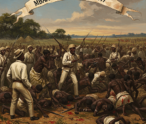
To understand the current suppression, one must first look at its origins. The colonial regime of Southern Rhodesia, established by Cecil John Rhodes’s British South Africa Company (BSAC), was built on the premise of dispossessing the indigenous people of their land and their authority. The Mbari clan, under Chief Makombe (Mbari’s brother), was at the heart of the First Chimurenga, the 1896-97 uprising against colonial rule. Our people, along with spiritual leaders like Mbuya Nehanda and Sekuru Kaguvi, fought a fierce war to protect their land and their way of life. The colonial forces, upon quashing the rebellion, not only seized the land but also systematically dismantled the traditional leadership structures. They created a new system where “chiefs” were appointed by the colonial administrator, and those who resisted, like the Mbari clan, were stripped of their authority and their land. The very name “Salisbury” was a deliberate act of erasure, a colonial stamp meant to replace the name “Harare” which was a tribute to my great-grandfather.
The Post-Independence Betrayal: A Constitution that Inherited Suppression
When Zimbabwe gained independence in 1980, there was a hope that this colonial legacy of suppression would be dismantled. Instead, successive governments have not only inherited but perfected it, using the very constitution as a tool of control. The most recent constitution, adopted in 2013, while seemingly recognizing traditional leadership, places them in a subordinate and politically controlled position.
Chapter 15 of the Constitution: A Clause-by-Clause Analysis of a Denied Chieftainship
The most damning evidence of this suppression is found in Chapter 15 of the Constitution, which deals with “Traditional Leaders.” While it recognizes the “institution, status, and role of traditional leaders,” the devil is in the details, particularly in the lack of specific, historical recognition for certain clans like the Mbari.
Section 280 (1): This section states that “an Act of Parliament must provide for the appointment, removal, promotion and succession of traditional leaders in accordance with the customary principles of succession of the communities concerned.” While this seems to uphold customary law, it is a hollow promise. The government, through the Ministry of Local Government, retains the ultimate power of recognition. This is precisely where the Mbari clan’s claim to the Harare chieftainship is thwarted. The government, inheriting the colonial narrative, simply states that there is no chieftainship for Harare. By denying our chieftainship, the government uses this clause to effectively prevent our rightful lineage from being recognized, a direct contradiction of the stated goal of upholding “customary principles of succession.”
Section 283: This section further entrenches the government’s control by stating that “An Act of Parliament must provide for the establishment, membership and functions of a National Council of Chiefs and such other councils of chiefs as are necessary.” This creates a centralized, government-controlled body that serves to co-opt traditional leaders into the political establishment. Traditional leaders are given stipends and privileges, but their power is neutered. They are made beholden to the political party in power, a form of institutionalized bribery that has been widely documented by human rights organizations and political analysts. For the Mbari clan, who are denied a chieftainship in the first place, this entire structure serves as a perpetual reminder of our exclusion.
Section 282 (1): This clause, which outlines the functions of traditional leaders, is a clear example of how they have been reduced to mere extensions of the state. It states that traditional leaders are responsible for “promoting and upholding cultural values” and “assisting the police in the maintenance of law and order.” They are not given any real power to govern their communities, their judicial functions are limited, and they are essentially administrators for the central government. Their legitimacy, which should be derived from their people and their history, is instead made dependent on the state.
The Broader Constitutional Suppression of Zimbabweans
The suppression of traditional leadership is part of a larger, more insidious pattern of constitutional repression in Zimbabwe. While the 2013 Constitution contains a comprehensive Bill of Rights, the government has repeatedly used legislation and administrative actions to undermine these fundamental freedoms.
Freedom of Expression and Assembly: The Private Voluntary Organisations (PVO) Bill, for example, seeks to tighten the noose on civil society organizations, many of which are crucial for holding the government accountable. This law, if passed, would allow the government to de-register and criminalize NGOs for allegedly engaging in “political activities,” a broad and ambiguous term that can be used to silence any dissent. The Constitution’s promise of freedom of association and assembly, under Section 58, is rendered meaningless in the face of such a law. Similarly, the use of other repressive laws, such as the Maintenance of Peace and Order Act (MOPA), a successor to the Public Order and Security Act (POSA), has been used to crush political rallies and public protests.
Rule of Law and Separation of Powers: The politicization of the judiciary is a major concern. The Constitution of Zimbabwe Amendment (No. 2) Bill, passed in 2021, centralized the appointment of the Chief Justice and other high-ranking judicial officials in the hands of the President. This erodes the independence of the judiciary, making it susceptible to political influence and jeopardizing the rule of law. The constitutional promise of an independent judiciary, outlined in Section 164, is directly contradicted by this amendment.
What Sort of Changes Can Be Made?
The path forward requires a fundamental shift in how the Zimbabwean state views its history and its people. For the Mbari clan and other disenfranchised traditional leaders, the following constitutional changes are imperative:
Constitutional Recognition of Historical Chieftainships: A new constitutional amendment should specifically recognize the historical and hereditary chieftainships, including that of the Mbari clan of Harare. This should be based on a comprehensive historical and cultural audit, not on political expediency. The Constitution should explicitly state that the chieftainship of Harare is an ancestral right and not a political appointment.
Devolution of Power to Traditional Leaders: Traditional leaders must be empowered with real authority to govern their communities, including land management, dispute resolution, and cultural preservation. The Constitution should be amended to grant them a greater, more autonomous role, free from political manipulation. The National Council of Chiefs should be an independent, self-governing body, not an arm of the state.
Strengthening the Bill of Rights: The government’s ability to create laws that undermine fundamental freedoms must be curtailed. The Constitution should have a stronger provision that requires any law affecting human rights to be narrowly tailored and demonstrably necessary in a democratic society.
The Duty of the Mbari Clan
For too long, the Mbari clan has been a footnote in the history of Harare, a city that bears our name but denies our heritage. It is the duty of every member of the clan, and especially the younger generation, to reclaim this narrative. We must engage in a multi-pronged fight:
Advocacy and Awareness: We must use every platform, from international forums to local media, to raise awareness about our history and the injustice we have faced. My work as the Princess of Harare is dedicated to this cause, shining a light on this historical suppression.
Legal Challenge: We must explore all legal avenues to challenge the government’s denial of our chieftainship. A constitutional court case, based on our historical and customary rights, is a necessary step to seek justice.
Community Mobilization: We must unite the Mbari people and other clans who have faced similar injustices. Our strength lies in our collective voice and our shared determination to see our heritage restored.
Conclusion
The Zimbabwean Constitution, a document meant to represent the will of the people, has, in many ways, become a tool for their continued suppression. The Mbari clan’s story is a microcosm of this larger reality. By denying the historical chieftainship of Harare, the government perpetuates a colonial legacy of erasure. But history cannot be so easily forgotten. The name “Harare” is a constant reminder of our royal lineage, a beacon of hope that one day, justice will prevail. It is a long and arduous journey, but for the Mbari clan, fighting for our heritage is not a choice—it is a sacred duty.
Comments
About Author